
Anyone who has ever queued at Bandaranaike International Airport after a red-eye flight knows that Sri Lanka’s border control has long operated on laws written when propeller planes ruled the skies and paper ledgers were cutting-edge technology. On Wednesday, November 18, Parliament took a decisive step toward retiring that bureaucratic museum piece, as the Sectoral Oversight Committee on Governance, Justice and Civil Protection, chaired by Member of Parliament Dr. Najith Indika, approved the new Immigration Bill subject to amendments mandated by the Supreme Court earlier this month.
In plain terms, the proposed legislation sweeps away two foundational statutes that have governed how people enter, leave, and obtain travel documents in Sri Lanka for generations: the Immigrants and Emigrants Act, originally enacted in 1948 right after independence, and the Passports and Exit Permits Act of 1971. While those older laws served an era of manual passport inspections, physical ink stamps, and separate exit permits, they have struggled badly to keep pace with digital travel, biometric identity systems, and sophisticated cross-border human smuggling rings.
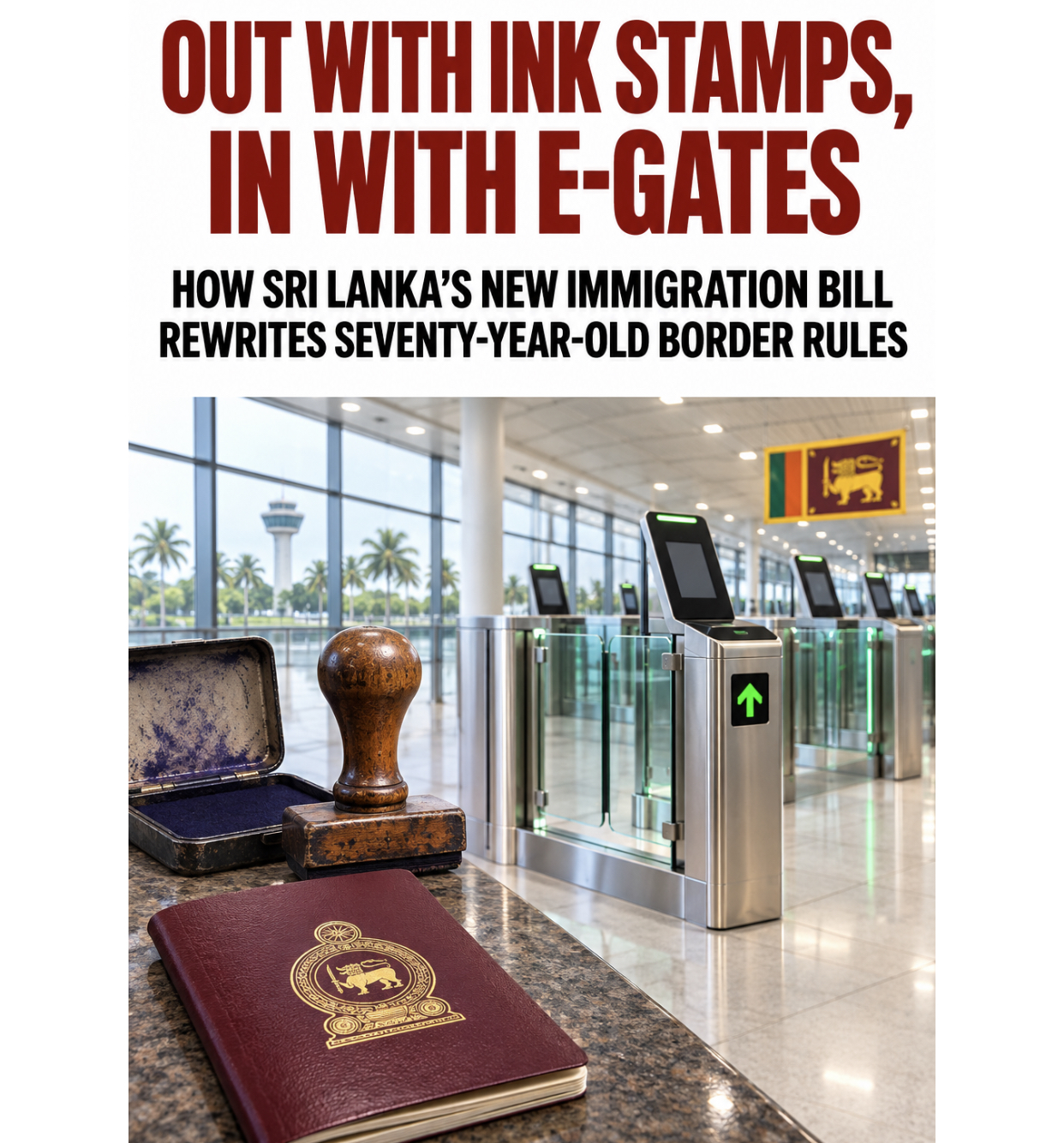
For the everyday traveler, the most visible transformation under the new law will be at airport arrival and departure halls. Where old regulations relied heavily on an immigration officer physically inspecting a booklet and thumping an ink stamp onto a page, the new Bill provides the legal backbone for automated electronic gates, known as E-Gates. Passengers carrying biometric passports will soon be able to scan their documents, verify their facial or fingerprint data, and walk through border clearance without waiting in line for a manual stamp. Crucially, unlike the 1948 framework that predated the internet entirely, the new legislation explicitly anchors the collection and storage of travelers’ biometric data to Sri Lanka’s Personal Data Protection Act, creating formal privacy guardrails around sensitive personal records.
Submit Your Press Release
Get your company news, announcements, launches, appointments and events in front of a wider audience.


Beyond airport convenience, the Bill sharpens the state’s teeth against transnational crime and irregular border crossings. Under the outdated legal framework, prosecuting Sri Lankan nationals or syndicates operating human trafficking rings abroad using forged travel documents was riddled with jurisdictional headaches, particularly if those individuals had originally left the country legally. The new law closes that loophole by empowering the High Court to prosecute offenders in Sri Lanka for overseas human trafficking and organized document fraud regardless of how they departed. At sea and along remote coastlines, the Bill also allows the President, via a formal Gazette notification requested by the subject Minister, to grant targeted powers to the Armed Forces and Coast Guard to intercept illegal entries, formalizing inter-agency border enforcement.
Even the administrative hierarchy gets a clean overhaul, upgrading the top posts from Controller and Deputy Controller to Controller General and Additional Controller General, while clarifying visa frameworks for foreign spouses of Sri Lankan citizens. Having incorporated the Supreme Court’s constitutional tweaks, the Bill now heads toward its Committee Stage in Parliament, poised to finally bring Sri Lanka’s border laws into the twenty-first century.



