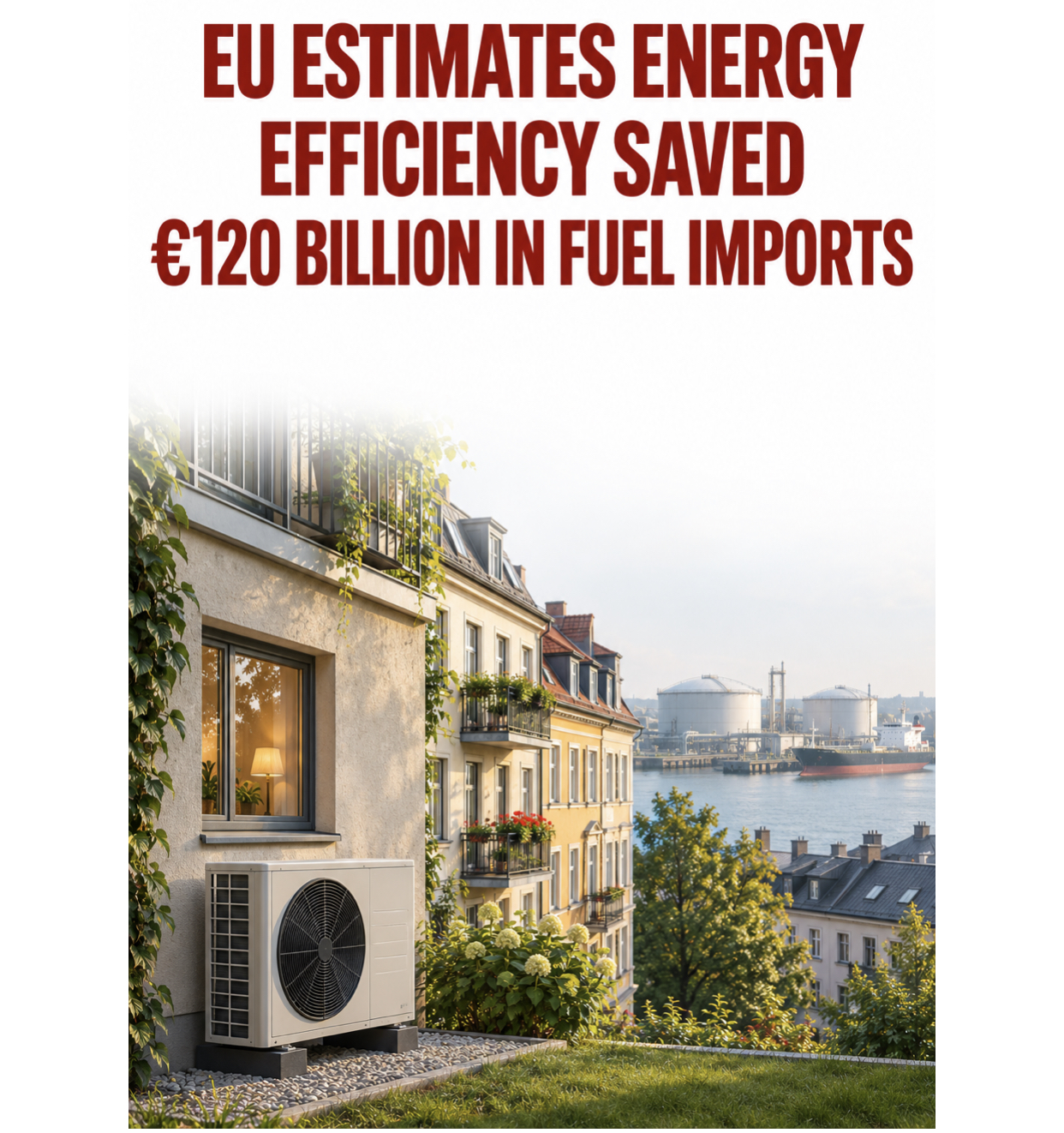
The European Commission estimates that energy-efficiency measures saved the European Union around €120 billion in oil and gas import costs from Russia’s invasion of Ukraine in February 2022 to the middle of 2026. The Commission says the savings reflect measures introduced between 2015 and 2021. Europe’s exposure to fuel prices during the years that followed gave those earlier measures a financial significance that became clearer once the crisis was under way.
The estimate measures import costs that the Commission calculates Europe avoided. An avoided import bill and a household energy bill are different things. Individual consumers pay according to their usage, tariffs and contracts, and the benefits of efficiency depend partly on whether they can afford to improve their homes or replace inefficient equipment. An economy that needs less fuel for the same services is still better placed when the international price of oil or gas rises suddenly.
The Commission is also seeking to raise electricity’s share of final energy consumption from around 23% to 46% by 2040. The intention is to reduce dependence on fossil fuels by switching more activities to electricity. The benefits will depend on where the additional power comes from and how efficiently consumers use it. Replacing a fuel-burning heating system with an electric one, for example, changes the source of energy. Improving the building can reduce the amount of energy required in the first place.
Submit Your Press Release
Get your company news, announcements, launches, appointments and events in front of a wider audience.


Environmental groups have warned that delays to planned efficiency and energy-labelling rules could undermine Europe’s strategy. The label on an appliance can help buyers compare two products at the point when they are about to spend their money. A cheaper model can cost more over its useful life if it draws considerably more power. Clear and comparable information matters to households, and it also matters to businesses buying equipment that will run for many hours a day.
Sri Lanka has a more immediate reason to pay attention to the Commission’s calculation. Imported fuel has to be paid for in foreign currency, and a rise in its price can put pressure on businesses even before the full effect reaches the consumer. Hospitals, hotels and factories could identify where electricity or fuel is being wasted, rank changes by the savings they are likely to deliver and begin with improvements that have a measurable payback. The resulting figures would help lenders decide which upgrades are worth financing.
A similar approach could inform public procurement. A department buying air conditioners, pumps or refrigeration equipment can compare purchase prices with expected running costs over the life of the equipment. It can then check actual power use after installation. Sri Lanka’s estimates would naturally differ from Europe’s. The Commission’s exercise offers a question Colombo can answer in its own figures. How much could the country save on imported energy by using less of it to provide services it already needs?