
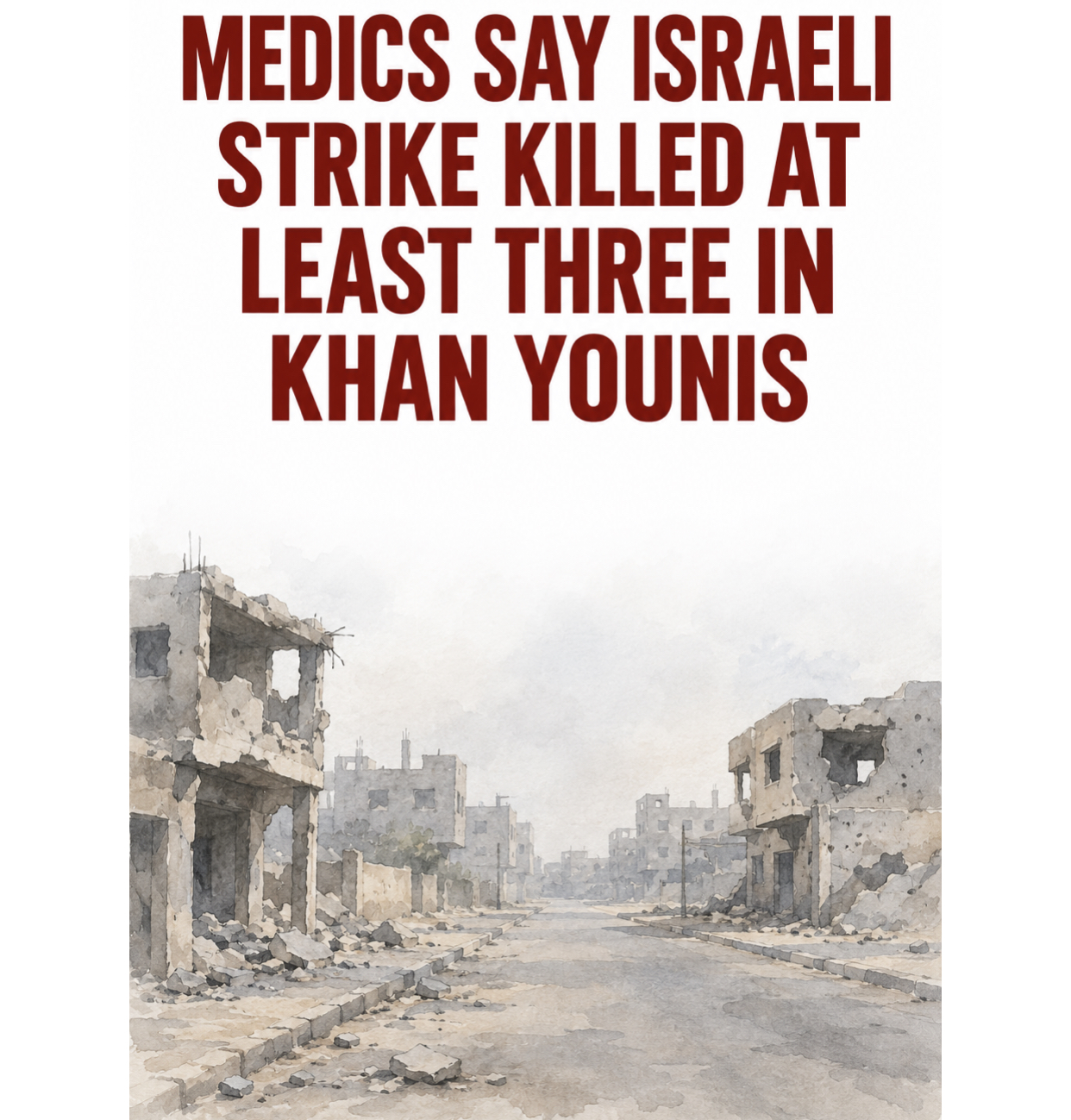
An Israeli airstrike killed at least three Palestinians near a police outpost in Khan Younis in the southern Gaza Strip on Tuesday, local health officials said. Medics reported that five others were wounded. The Israeli military had given no immediate comment when the strike was first reported. The initial accounts identified the area where the strike occurred but left open who was targeted and whether the people killed were connected to the outpost.
The strike came more than a year after a US-backed ceasefire took effect in October 2025. The agreement halted major fighting, but lethal attacks have continued. Palestinian and Israeli tallies respectively put the number killed since the truce began at at least 1,600 Palestinians and five Israeli soldiers. Israeli troops now control around two-thirds of the territory, compared with more than half when the agreement began.
The question for people living in Gaza is how the truce operates in the places where they have to move, work or seek help. A reported strike near a police post can leave residents trying to establish whether an adjoining road is open and whether it is safe to return. An ambulance crew may need to know whether it can reach the scene and which route it can use. These questions arise immediately, often before there is a public military account of what happened.
Submit Your Press Release
Get your company news, announcements, launches, appointments and events in front of a wider audience.


A credible account of the Khan Younis incident will require more than the first casualty figures. Medical staff can report whom they received and what injuries they treated. A military statement could disclose whether the outpost was the intended target and what prompted the strike. Witness accounts and verified information from the scene could help establish where people were when it occurred. The location alone leaves considerable uncertainty about the circumstances and the status of those killed or injured.
The ceasefire has also left unresolved the question of Hamas’s disarmament. As the parties dispute how to implement the agreement, those involved in mediation can still press for clearer procedures when a deadly incident is reported. A workable process would identify who receives notifications, how quickly the sides must respond and what information can be released to local residents. A reliable channel for coordinating medical access would address one of the most urgent needs after a strike.
For families in Khan Younis, the immediate concern is to establish who was killed, who is undergoing treatment and whether there is a continuing danger near the site. For the governments involved in the truce, the incident raises a wider question about how recurring violence is examined and addressed. A public account that separates verified facts from claims would give families and mediators a firmer basis for demanding answers.



