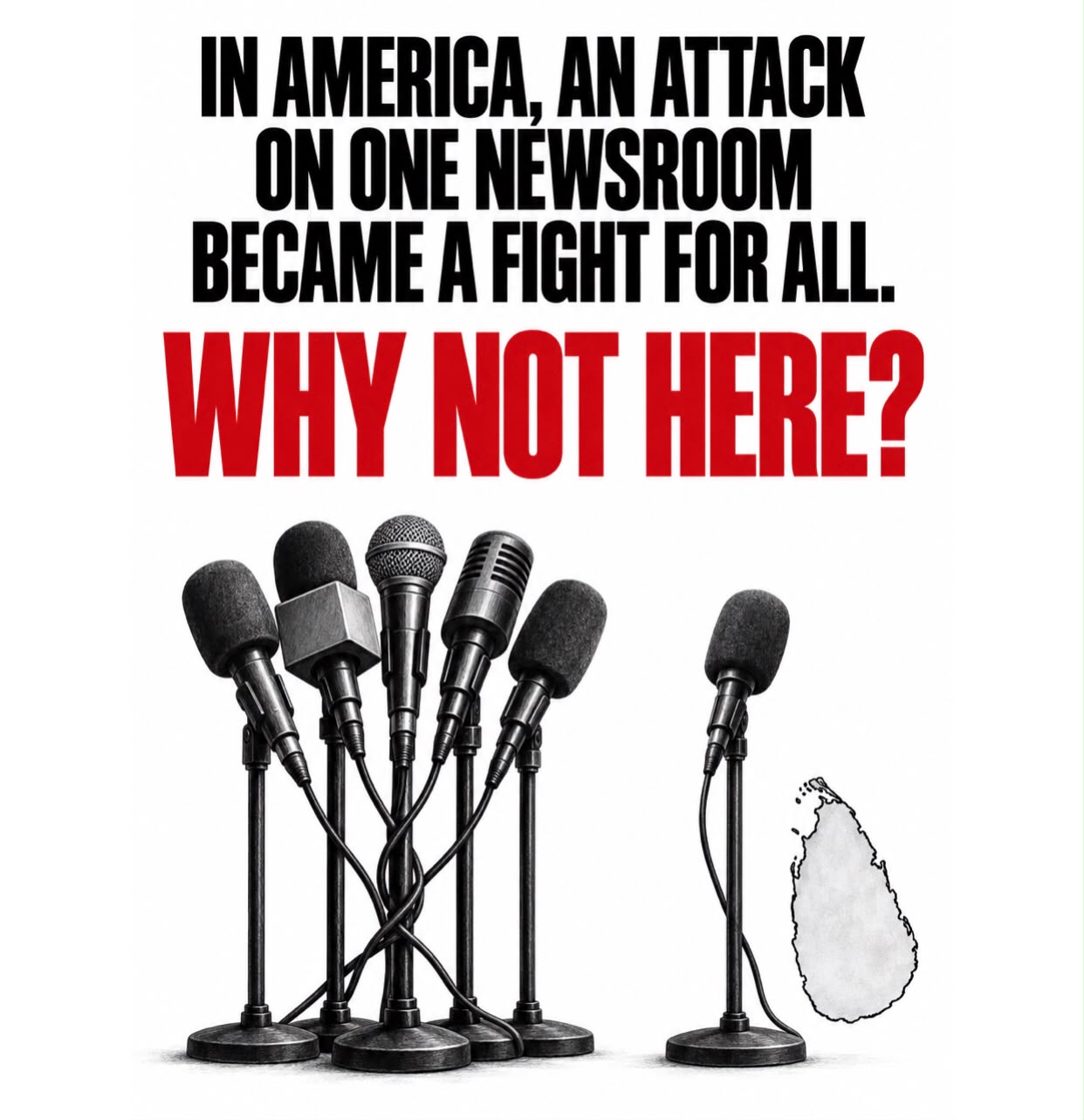
When the White House excluded CNN, MS NOW and Politico, competing American news organisations did not treat it merely as somebody else’s problem. Television networks that compete fiercely for viewers acted together because the principle at stake – whether a government may punish journalists for unfavourable reporting – was larger than any single newsroom. There was a marked absence of narcisscism.
The United States media industry is hardly one harmonious family. CNN and Fox News occupy markedly different political and editorial territory. ABC, CBS and NBC compete for audiences, advertising and access. Yet when the Trump administration barred journalists from CNN, MS NOW and Politico from the White House, the response extended beyond the three organisations directly targeted.
The affected organisations launched a joint legal challenge, arguing that the withdrawal of access amounted to retaliation for constitutionally protected reporting. The White House Correspondents’ Association condemned the action and demanded that access be restored. Associated Press and Reuters reported that the dispute had become a broader test of press freedom rather than simply an argument over three press passes.
Submit Your Press Release
Get your company news, announcements, launches, appointments and events in front of a wider audience.


More significantly, the television press pool reportedly acted collectively. Major networks including organisations that ordinarily compete with and criticise CNN suspended elements of their pool coverage after CNN was removed from an assignment. Their message was simple: a government should not be permitted to decide which established news organisation receives access according to whether it approves of that organisation’s reporting.
That was not a “joint enterprise” in the legal sense. It was something much more valuable in democratic terms: institutional solidarity.
The American networks did not have to agree with CNN’s editorial position. They did not have to endorse every CNN report, defend every presenter or abandon their commercial rivalry. They merely recognised that if the government could remove one newsroom today because it disliked its coverage, every newsroom could face the same treatment tomorrow.
The contrast with Sri Lanka is uncomfortable. And in Sri Lanka the people trust that their – not the – media will be mindful of the beast they are creating. Sri Lankan television networks, newspapers and digital platforms have all experienced political pressure in different forms. Journalists have been threatened, questioned, assaulted, sued, dismissed, quietly dropped even or subjected to organised campaigns of intimidation. Media institutions have faced restrictions on access, regulatory pressure and attempts to influence editorial decisions.
Yet the response is too often fragmented. One network’s difficulty becomes another network’s opportunity. Commercial rivalry, political alignment and ownership interests frequently determine whether an attack on journalism is treated as a national press-freedom issue or quietly ignored.
There are professional associations and individual journalists who speak courageously. Statements are sometimes issued and protests occasionally organised. But Sri Lanka rarely sees its major broadcasters act together with the speed, visibility and institutional force demonstrated by the American television pool.
Part of the explanation lies in ownership. Many Sri Lankan media organisations are linked to wider commercial interests whose relationships with governments matter. Part lies in political positioning: an attack on a rival newsroom may be viewed differently when that newsroom is perceived to support the opposing political camp. Part lies in the intense competition for advertising, access and audience share.
But these explanations do not excuse the failure. They describe precisely why stronger collective safeguards are necessary.
Press freedom is not protected only by constitutional language, legislation or court judgments. It is also protected by the knowledge that targeting one journalist or newsroom will provoke a response from the profession as a whole.
Sri Lanka’s leading media organisations should therefore consider a formal cross-industry compact. It need not require editorial agreement. It should simply establish that when a recognised news organisation or journalist is denied access, threatened, unlawfully searched, physically attacked or punished for legitimate reporting, the industry will respond collectively and immediately.
That response could include a common statement, shared legal assistance, prominent coverage across participating networks and, in the gravest circumstances, coordinated action over access or coverage. Such a compact would not protect dishonest journalism from criticism or lawful accountability. It would protect the principle that governments cannot decide who qualifies as a journalist according to whether the coverage is flattering.
In America, competitors recognised that CNN’s exclusion was not only CNN’s fight. Be that as it may, Sri Lanka’s media institutions must decide whether they are merely competing businesses or joint custodians of a democratic freedom that none of them can defend alone.