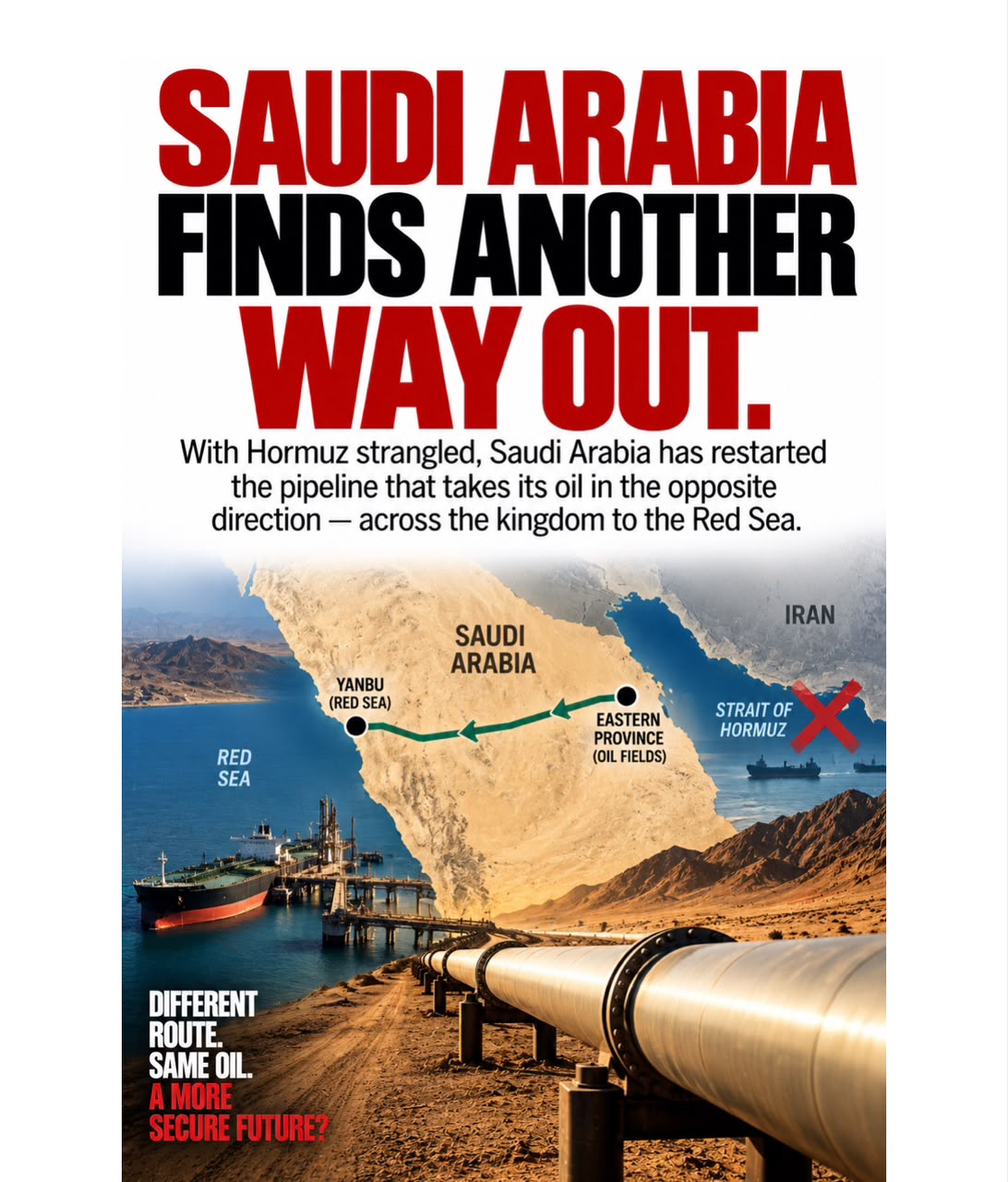
With Hormuz strangled, Saudi Arabia has restarted the pipeline that takes its oil in the opposite direction – across the kingdom to the Red Sea.
Saudi Arabia has restarted its strategically vital East-West oil pipeline, potentially restoring a route capable of carrying millions of barrels of crude every day without relying on the Strait of Hormuz.
The pipeline transports oil from Saudi Arabia’s eastern producing regions across the country to the Red Sea port of Yanbu. It had been shut since September 13 following drone attacks which halted crude loadings there.
Submit Your Press Release
Get your company news, announcements, launches, appointments and events in front of a wider audience.


The pipeline restarted yesterday at a relatively low pumping rate. Saudi Aramco is seeking to restore flows to around four million barrels a day, although one security source told Reuters that a complete restoration could take weeks. One cargo was already scheduled to load at Yanbu for China.
The significance goes far beyond Saudi Arabia.
Four million barrels a day represents roughly 4 per cent of global oil supply. Restoring the route therefore gives Riyadh a substantial means of getting crude onto world markets while avoiding the severely disrupted Hormuz passage.
Oil prices responded quickly. Brent fell by more than $2 a barrel during trading as markets considered the prospect of additional Saudi supply alongside Iran’s offer to reopen Hormuz.
For Sri Lanka, that movement matters. Every sustained fall in international oil prices potentially eases pressure on the country’s import bill, foreign exchange requirements and eventually domestic fuel pricing – although the extent and timing of any local benefit depend on purchasing, pricing and exchange-rate conditions.
There is an interesting irony here.
One Middle Eastern development is raising hopes that Hormuz itself might reopen.
The other demonstrates why Saudi Arabia has spent years ensuring that, when necessary, some of its oil does not have to pass through Hormuz at all.