
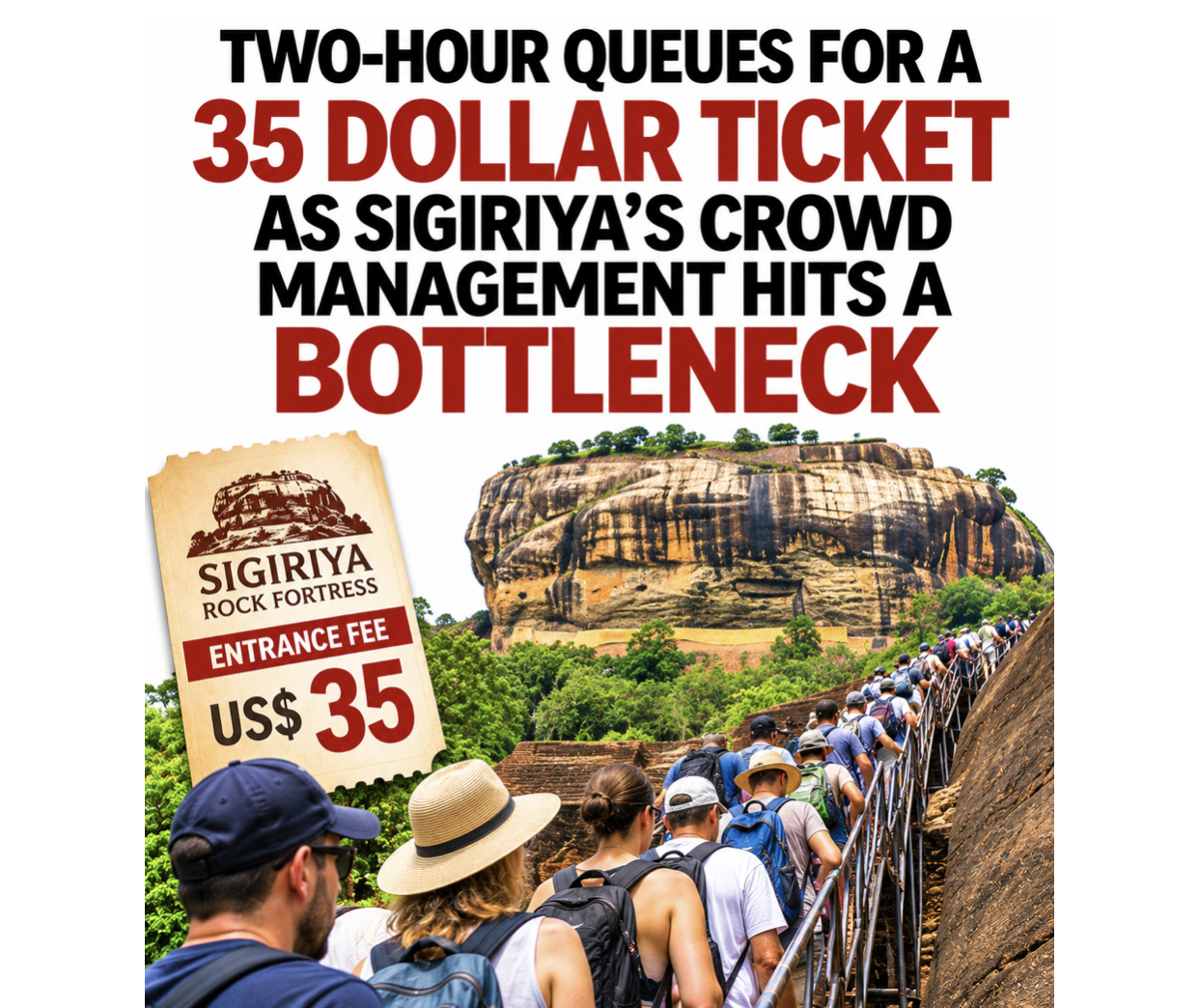
Paying 35 US dollars to stand motionless on an iron staircase for two hours is rarely the cultural immersion travelers book flights to Sri Lanka to experience. Yet that was the verdict delivered by travel YouTuber “Roman_onboard” in a recent video documenting his visit to Sigiriya Rock Fortress, where gridlock on the ascent forced him and his partner to turn back halfway. Calling the bottleneck “failed management of an object,” he urged the Ministry of Tourism to introduce timed, hourly entry slots so visitors can actually reach the summit without spending half their morning in a human traffic jam.
The numbers explain why the Lion Rock’s narrow staircases are groaning. Official Sri Lanka Tourism Development Authority data shows Sigiriya and its museum drew 1,086,918 visitors in 2025, comprising 582,687 foreign tourists and 504,231 domestic visitors. Put simply, nearly one in every four international arrivals to Sri Lanka last year climbed the rock. While the SLTDA releases site-level figures annually, Central Cultural Fund Director General Dr. Nilan Cooray noted in May 2026 that Sigiriya averages around 2,500 foreign visitors per day, generating close to Rs. 25 million in daily revenue.
When 2,500 foreign guests plus thousands of local visitors funnel toward the Lion’s Paw terrace between 7:00 a.m. and 11:00 a.m. to beat the tropical heat, physics takes over. A fifth-century palace complex designed for royal exclusivity was never engineered to process rush-hour commuter volumes on single-file metal walkways.
Submit Your Press Release
Get your company news, announcements, launches, appointments and events in front of a wider audience.


For the Central Cultural Fund, which manages the UNESCO World Heritage site, overcrowding is hardly a newly discovered phenomenon. Over the years, CCF officials and SLTDA visitor management reports have repeatedly acknowledged that Sigiriya operates beyond its comfortable carrying capacity during peak morning windows and holiday periods. While Dr. Cooray and CCF teams have earned credit for archaeological conservation, including recent work decoding the ancient hydraulic fountain system and restoring brickwork worn down by heavy footfall, crowd-flow technology has lagged behind. Existing online ticketing portals still sell open-ended day passes rather than capped time slots, and the 2027 Budget presented earlier this month earmarked funds for a unified attraction e-ticketing platform without setting a firm launch date.
Global heritage sites solved this problem years ago. Places from Peru’s Machu Picchu to Rome’s Colosseum enforce strict hourly entry quotas, staggered access windows, and dynamic pricing that nudges budget-conscious visitors toward quieter afternoon hours.
If Sigiriya already collects roughly Rs. 25 million a day from foreign tickets alone, why are visitors still queuing like commuters at Fort Railway Station? Why has the Central Cultural Fund not converted its existing digital portal into a capped, timed-entry reservation system, or offered discounted afternoon tickets to spread foot traffic across the day? Until authorities pair premium ticket prices with basic crowd engineering, Sri Lanka’s crown jewel risks turning paying guests around before they ever see the view.



