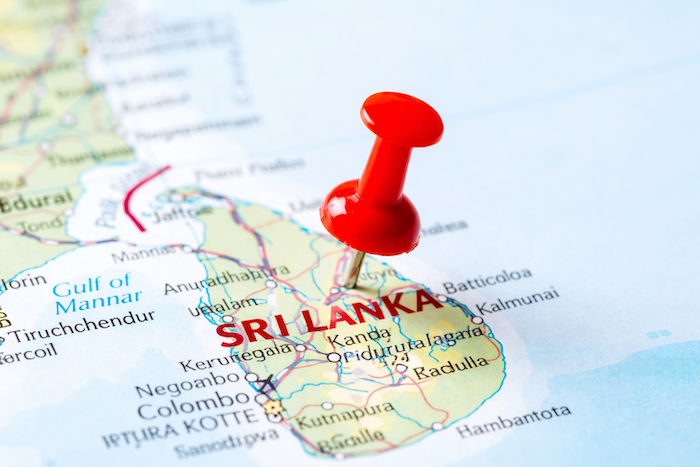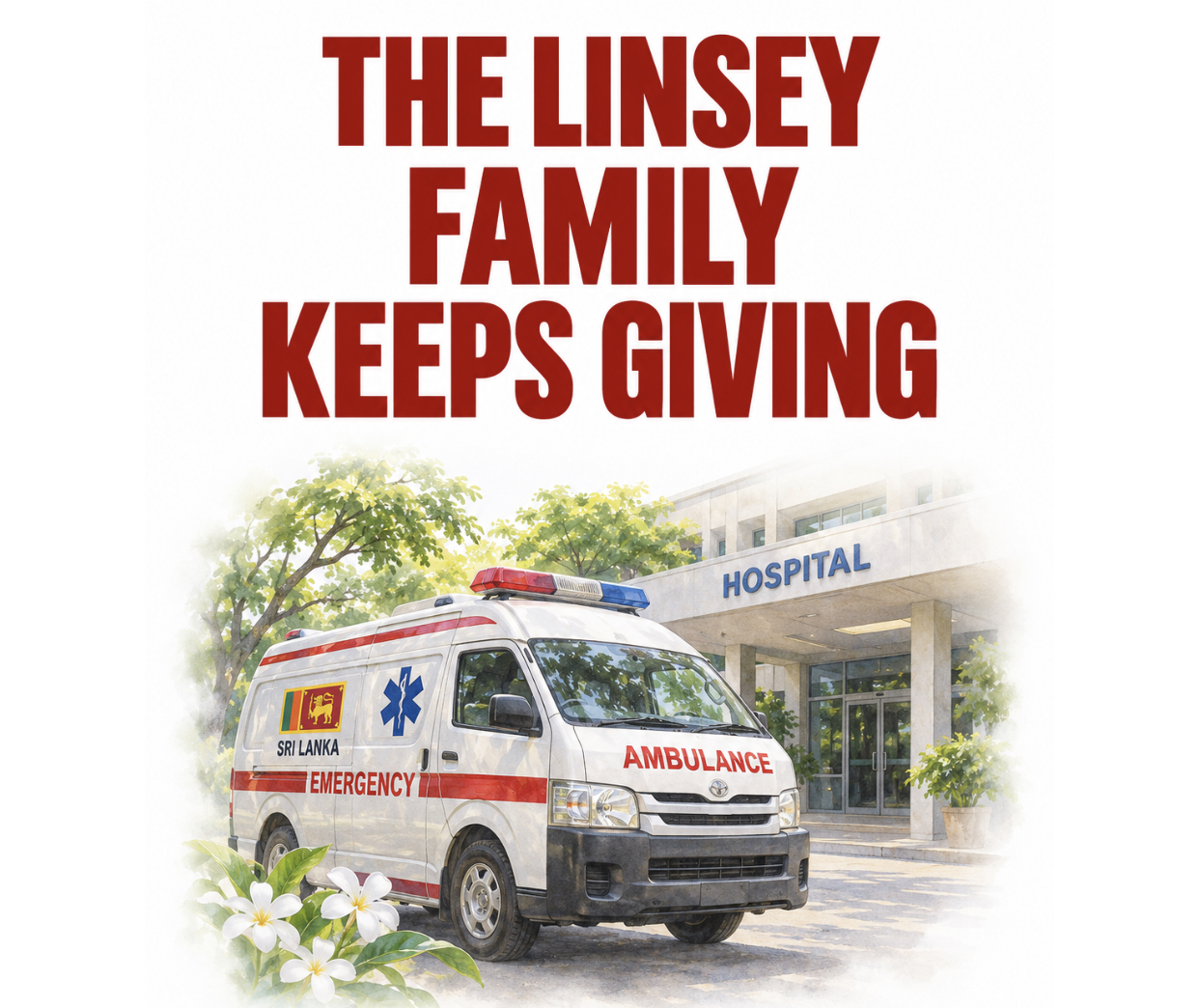
Even as the legal battles surrounding the 2019 Easter Sunday bombings remain locked in courtroom procedural delays, one British family scarred by that morning has spent the past seven years quietly building life-saving infrastructure across Sri Lanka. At its annual charity ball held recently at The Peninsula Hotel in London, the Amelie and Daniel Linsey Foundation announced that a newly procured emergency ambulance is already en route to Sri Lanka for the 1990 SuwaSeriya service, while fundraising is underway for a second unit dedicated specifically to Jaffna.
Foundation director David Linsey established the charity in memory of his younger siblings, 15-year-old Amelie and 19-year-old Daniel, who were killed on April 21, 2019, in the suicide bombing at Colombo’s Shangri-La Hotel. The teenagers had been on the final day of a family holiday with their father, Matthew Linsey, who survived the blast and carried his critically injured children through a chaotic hospital transfer in Colombo. Studying at the University of Oxford at the time, David resolved to ensure that his siblings’ names would remain tied to the recovery of Sri Lankan trauma care rather than solely to the violence that claimed their lives.
For a pre-hospital emergency network like 1990 Suwa Seriya, which operates islandwide without charge and maintains an average response time of roughly 15 minutes, expanding fleet capacity in northern districts such as Jaffna directly strengthens emergency survival rates where hospital distances remain wide.
Submit Your Press Release
Get your company news, announcements, launches, appointments and events in front of a wider audience.


The ambulance initiative builds on a sustained record of targeted medical and community assistance since 2019. Within eight months of the attacks, David Linsey had raised £350,000 for Sri Lanka’s healthcare sector, funding the delivery of 100 patient transfer trolley beds across nine state hospitals alongside essential trauma equipment including ventilators. Beyond hospital hardware, the foundation’s work in Sri Lanka funds educational scholarships for children who lost breadwinning parents in the Easter bombings, trauma counselling, and vocational training for affected families.
In the aftermath of April 2019, Matthew Linsey recalled how ordinary Sri Lankans rushed to help him carry his son down hotel stairwells and stood beside him in hospital corridors despite the terror unfolding around them. Seven years on, while Sri Lankan institutions still debate accountability in appellate chambers, the Linsey family’s response offers a quiet measure of what genuine solidarity looks like in practice.