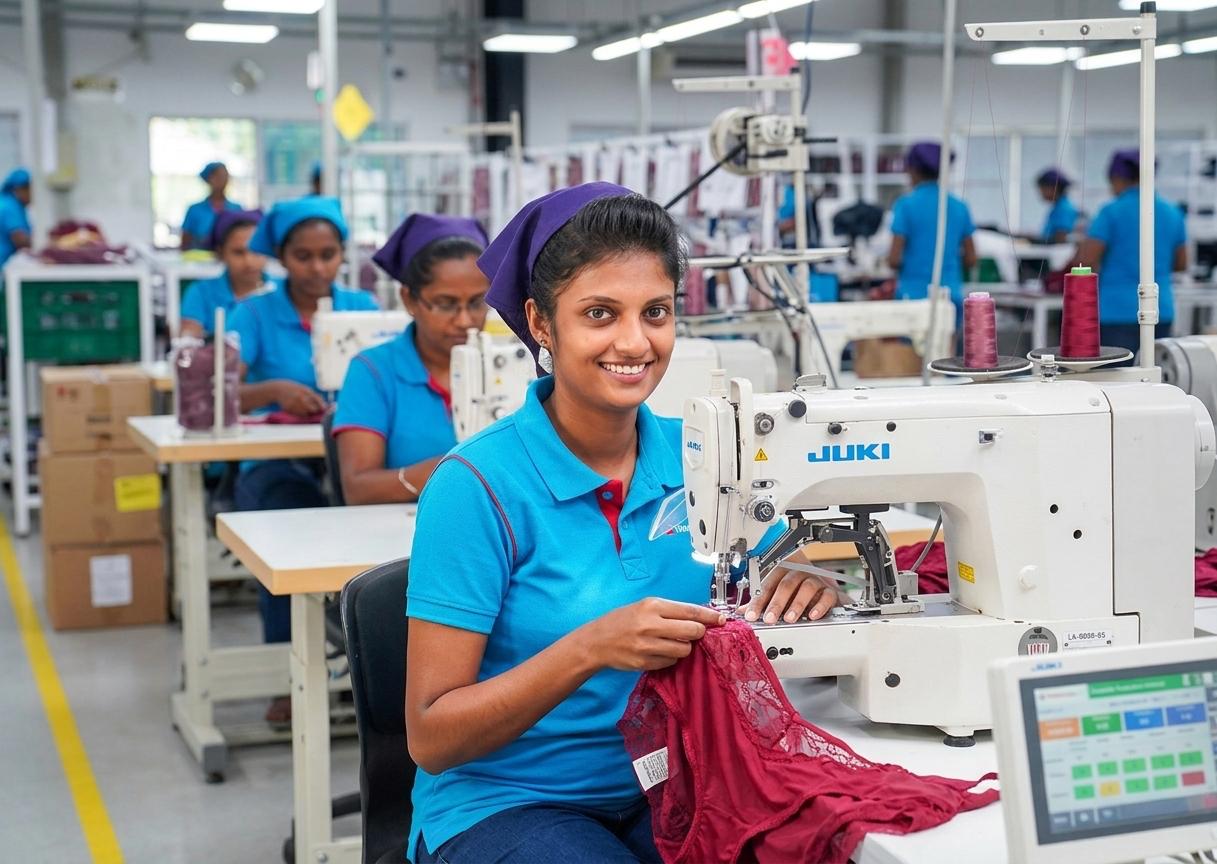
MAS is one of Sri Lanka’s most successful home-grown multinational businesses. Its decision to commit approximately US$93 million to an expansion in Tamil Nadu, potentially creating around 7,000 jobs, should therefore be celebrated as evidence of Sri Lankan enterprise reaching further abroad. But it also presents Colombo with an important question: what has Tamil Nadu done to make itself the preferred location for this investment?
Newsline Special Report
There is no reason to make MAS Holdings the villain of this story.

Quite the contrary.
A company born in Sri Lanka has grown into an international apparel and technology business capable of making major investments beyond our shores. That should be regarded as a Sri Lankan corporate success.
The more interesting question is why Tamil Nadu?
MAS has been identified as committing approximately US$93 million to an expansion involving apparel, textiles and wearable technology across several districts of the Indian state. The investment is expected to create around 7,000 jobs.
For MAS, there may be compelling commercial reasons for doing so.
India offers a huge domestic market. Tamil Nadu has one of the region’s most developed textile and apparel ecosystems, extensive supply chains, industrial infrastructure, ports and a substantial manufacturing workforce.
The State Government has also been aggressively courting investors.
It has spoken of dealing with approvals, licences and NOCs associated with investment within 21 days, while offering incentives intended to encourage industrial and textile investment.
That ought to interest Sri Lanka.
Because Sri Lanka possesses something enormously valuable too: decades of apparel expertise, a skilled workforce, strong international relationships and some of the most sophisticated manufacturing companies produced by a relatively small economy.
MAS itself proves the point.
The question is therefore not why a Sri Lankan company should be permitted to invest in India. It requires no permission from public opinion to make a legitimate commercial decision.
The question is whether Sri Lanka could have competed for some or all of that investment.
Could we have offered the labour? The energy? The infrastructure? The tax certainty? The speed of approvals? The supplier ecosystem? The investment incentives?
And, perhaps most importantly, did anyone ask?
That is where the MAS investment becomes a legitimate matter of public interest.
If Tamil Nadu can persuade a company created in Sri Lanka to commit approximately US$93 million and potentially create 7,000 jobs there, Sri Lanka should be studying the decision rather than complaining about it.
We should want to know what Tamil Nadu offered.
There is therefore another document of considerable interest: the Memorandum of Understanding connected with the investment.
Its importance is not that it might reveal some wrongdoing by MAS. There is presently no basis for making such a suggestion.
Its value is that it may help explain the commercial environment Tamil Nadu is offering an international investor.
What incentives are available? What commitments have been made? What infrastructure support is involved? What is the timetable? What exactly will MAS establish?
Those answers could provide Sri Lanka with a useful lesson.
Because investment promotion is ultimately a competition.
Tamil Nadu appears to understand that. Other Indian states understand it. Countries across Asia understand it.
Sri Lanka cannot assume that companies will continue putting their next factory here simply because their previous factory was built here.
Capital has choices.
Be that as it may, MAS going to Tamil Nadu is not necessarily the story Sri Lanka should worry about.
The real story is whether Sri Lanka could have persuaded MAS to invest that US$93 million here – and, if not, why not?