On Sunday, November 22, Yemen’s Houthi movement announced that its forces had scored a direct hit on Saudi Arabia’s Rabigh oil refinery. In separate statements across the November 21 to 22 weekend, Houthi military spokesmen also claimed a strike on a Saudi radar site and launched a drone attack that killed 3 people in the southern Yemeni port city of Aden.
As of yesterday, Riyadh has not confirmed any damage at Rabigh. The Saudi-led coalition reported intercepting a Houthi drone headed toward the kingdom’s western region on Sunday, following the interception of 3 ballistic missiles aimed at Riyadh a day earlier. Neither Saudi Aramco nor the Interior Ministry has reported an outage at the facility.
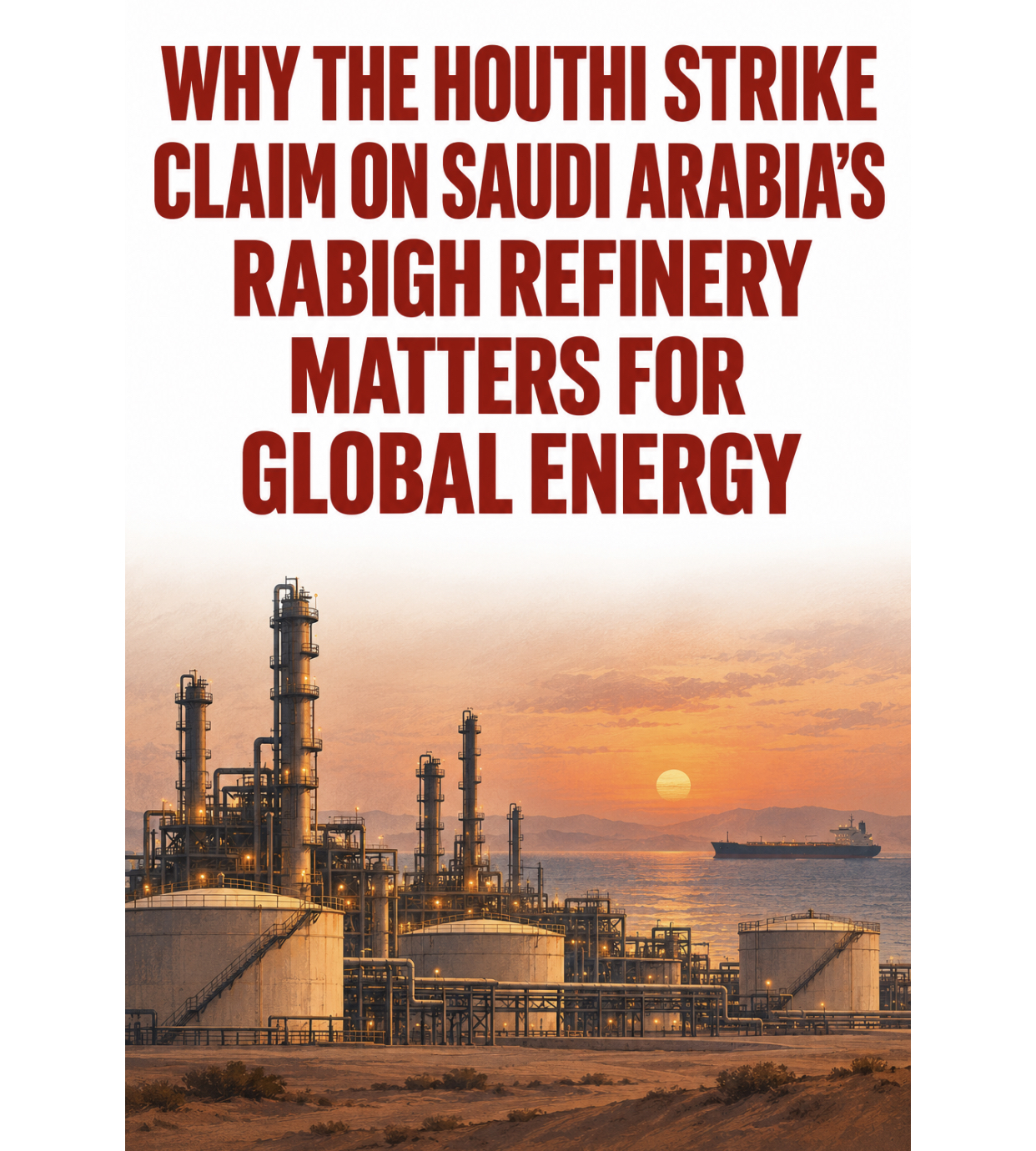
Even so, the geography around Rabigh explains why every claim aimed at that coastline draws immediate scrutiny. Sitting roughly 165 kilometres north of Jeddah on the Red Sea, Rabigh hosts Petro Rabigh, a 400,000-barrel-per-day refining and petrochemical complex jointly developed by Saudi Aramco and Japan’s Sumitomo Chemical. More importantly, it sits at the western end of Saudi Arabia’s East-West pipeline. Since Iran closed the Strait of Hormuz in February 2026 during its wider war with the United States and Israel, Riyadh has relied heavily on that pipeline to move crude to Red Sea export terminals at Rabigh and Yanbu.
Submit Your Press Release
Get your company news, announcements, launches, appointments and events in front of a wider audience.


Over recent months, the Houthis have repeatedly claimed strikes on that same pipeline as well as refineries in Jazan and Ras Tanura. While Saudi officials have left most of those claims unconfirmed, confirmed incidents earlier in 2026, including a fire at Jazan and a precautionary shutdown at Ras Tanura after drone activity, showed how exposed the kingdom’s western export route has become. Oil markets took Sunday’s news in stride for now, with Brent crude edging down 0.22% to US$92.35 a barrel in early Monday trading, though shipping insurers continue to watch the Red Sea corridor closely.
Inside Yemen, the exchange of fire has grown steadier since fighting flared back up in July 2026 alongside the broader US-Israeli conflict with Iran. Over the past 4 months, Houthi fighters have seized territory from Yemen’s internationally recognised government, while Saudi warplanes have stepped up air raids on Houthi strongholds. On Sunday alone, Houthi-run media reported coalition airstrikes hitting an oil facility in Sanaa and residential areas in Taiz, leaving at least 2 dead and 11 injured.
Between unverified refinery claims in Saudi Arabia and deadly strikes across Sanaa, Taiz, and Aden, the pattern is clear enough. As long as the wider regional war keeps Yemen’s frontlines active, Riyadh’s Red Sea export lifeline sits squarely within range.
What makes this confrontation acutely dangerous for Riyadh is simple arithmetic. In the second quarter of 2026 alone, Petro Rabigh and Yansab generated US$779 million in combined profit precisely because their Red Sea location shielded them from the Strait of Hormuz blockade, where freight rates surged fivefold and Gulf-facing plants lost money. Yet September’s drone strikes on the East-West pipeline, which forced a precautionary shutdown and required 6 to 8 weeks to restore capacity, proved that bypassing Hormuz only trades one vulnerability for another. Riyadh cannot insulate its oil revenues behind air defences forever while fighting a multifront proxy war on its southern border; without a political settlement in Yemen, every functioning export terminal along the Red Sea remains a permanent hostage to low-cost drones.