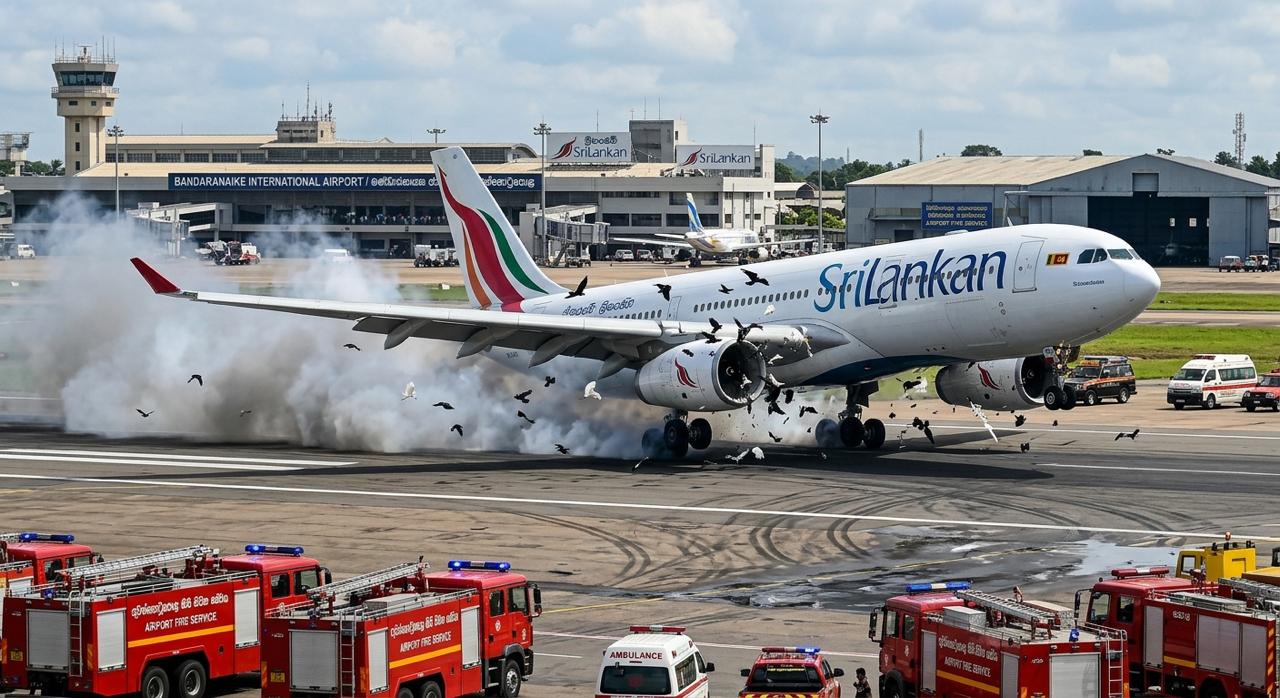
Passengers aboard SriLankan Airlines flight UL503 bound for London Heathrow were met with an abrupt jolt of runway adrenaline when a sudden engine bird strike forced pilots to slam the brakes mid-takeoff roll at Bandaranaike International Airport. The October 28 afternoon flight, carrying 269 passengers and 15 crew members, was accelerating down the tarmac for its scheduled 12:55 p.m. departure when a stray bird was ingested into the aircraft’s right turbine, triggering immediate cockpit alarms and halting the transcontinental journey before the jet could leave the ground.
While aviation headlines often sensationalize mid-air emergencies, this incident underscores the invisible hazards that haunt commercial aviation across South Asian airports. Wildlife strikes around runway perimeters remain an enduring operational menace. When thousands of pounds of thrust suck feathered wildlife into turbine blades spinning at thousands of revolutions per minute, the resulting mechanical damage can transform a luxury passenger carrier into a grounded liability in milliseconds.
Fortunately, quick thinking in the flight deck prevented what could have been a catastrophic airborne disaster. Once the aircraft returned to the gate, all 269 passengers, including four young children, disembarked safely into the terminal terminal. Ground operations scrambled to organize refreshments while sourcing a replacement aircraft, with the substitute jet eventually getting airborne by 4:30 p.m., roughly three and a half hours behind the original schedule.
Submit Your Press Release
Get your company news, announcements, launches, appointments and events in front of a wider audience.


While the stranded travelers eventually caught their connecting routes to Europe, the incident leaves lingering questions for airport authorities. As civil aviation regulators launch a formal inquiry into the Katunayake perimeter breach, the focus must shift beyond reactive flight swaps. Protecting national carriers from avian hazards requires rigorous wildlife management around airport perimeters, ensuring that future flights make it safely into the clouds without a flock of birds rewriting their itinerary.