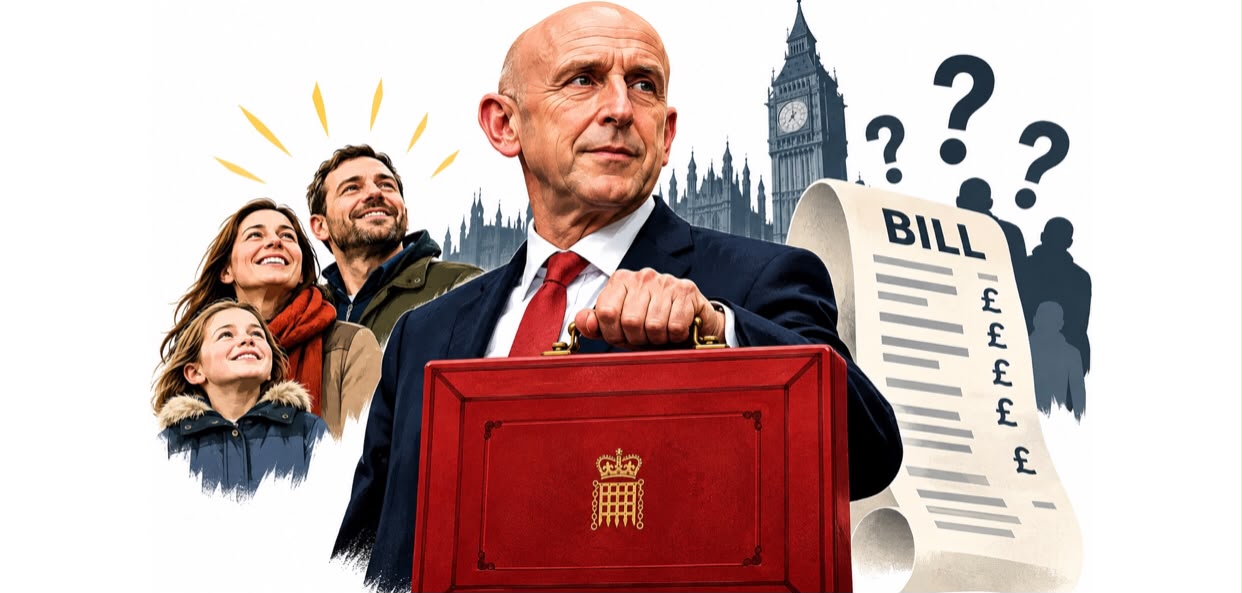
Britain’s Chancellor John Healey has offered households some relief from rising costs. The accompanying question is who pays, how much, and for how long.
Around 20 million households in council tax bands A to D are to receive a £100 energy payment. Gas standing charges will be abolished from next year, although their fixed costs will move into unit prices.
That detail matters. Removing a charge from one line of a bill does not make the underlying cost disappear. The Treasury estimates that 60 per cent of households will save an average £45 annually.
Submit Your Press Release
Get your company news, announcements, launches, appointments and events in front of a wider audience.


Banks will face a temporary doubling of their corporation tax surcharge from three to six per cent for 15 months. Savings and property income tax rates will rise by two percentage points from April 2027.
The £20,000 cash ISA limit stays. Fuel duty remains frozen. Minimum wage rates will rise by 3.9 per cent, while the Carer’s Allowance earnings cliff edge is to give way to a taper.
Be that as it may, the country’s financial breathing space is also narrowing. The fiscal buffer falls to £15 billion in 2029–30, against £22 billion previously envisaged.
For families, the verdict will come through their bills and bank balances. For the government, it will come through growth, borrowing costs and whether today’s relief survives tomorrow’s economic pressures.