
Two railway disasters. Nine months apart. At least 110 lives lost.
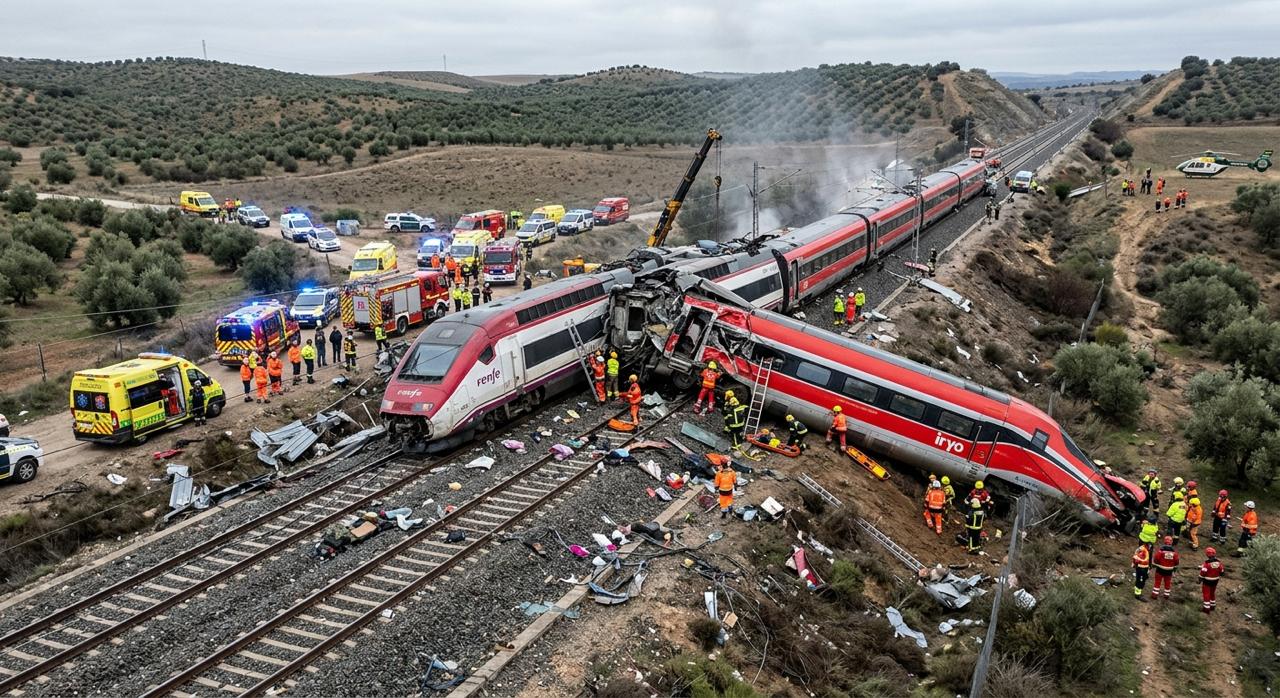
Spain is confronting another national tragedy after two high-speed trains collided near Urda, in Toledo province, on Wednesday, killing at least 64 people. Combined with the 46 deaths in January’s Adamuz disaster, the toll from the two collisions presents a devastating picture.
Wednesday’s figure remained provisional as emergency teams searched the wreckage. Carriages had derailed, debris lay scattered down an embankment, and families faced the agonising wait for news.
Submit Your Press Release
Get your company news, announcements, launches, appointments and events in front of a wider audience.


Initial accounts indicated that a Renfe service struck a stationary Iryo train. The circumstances remained under investigation. Reports of signalling difficulties require examination before responsibility can be established.
But the questions are already unavoidable.
What safeguards should have prevented one high-speed train from striking another? What did the control room know? What instructions were issued? And what lessons from January had actually reached the railway?
Be that as it may, public anger cannot replace evidence. Equally, an investigation cannot become a waiting room in which accountability quietly expires.
Spain’s authorities owe the bereaved a precise account of events, supported by signalling records, communications and maintenance evidence.
The combined figure of at least 110 relates to these two disasters. Behind that arithmetic are families whose journeys have ended, and a country entitled to know why.



