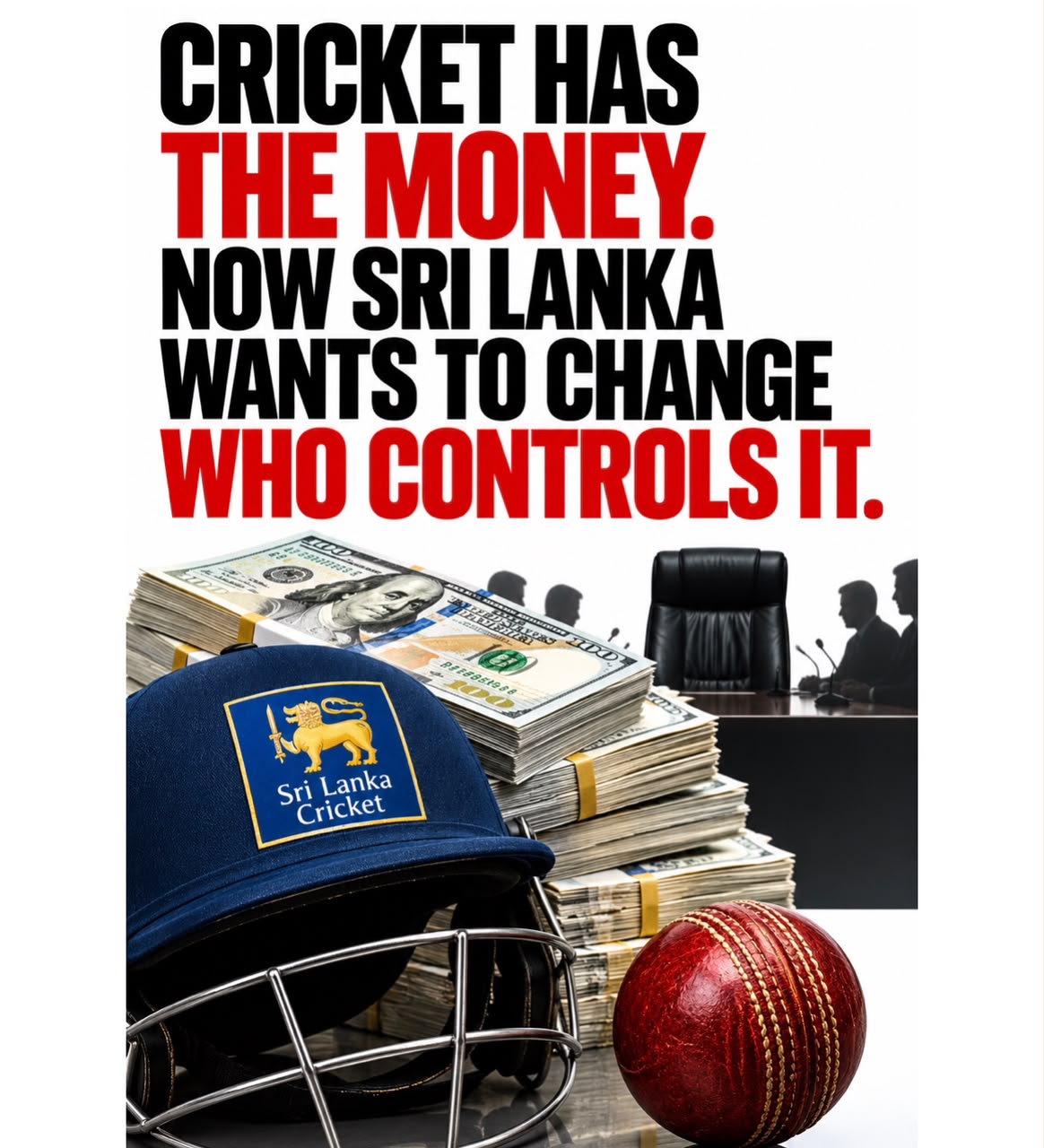
Sri Lanka Cricket is about to get something rather more substantial than another committee report. A new Sri Lanka Cricket Bill has been gazetted, proposing a fundamental restructuring of how the country’s richest and most powerful sporting body is governed. The stated objectives are admirable: good governance, integrity, transparency and accountability. The interesting question is who gets to provide them.
The Bill follows Cabinet approval originally granted in June to prepare legislation restructuring Sri Lanka Cricket. The Legal Draftsman has now completed it, the Attorney General has given clearance, Cabinet approved its publication and the legislation is headed towards Parliament.
That matters because this is no longer merely another proposal for cricket reform. Parliament is being asked to create the statutory framework under which Sri Lanka Cricket will be controlled, governed, regulated, promoted and administered.
Submit Your Press Release
Get your company news, announcements, launches, appointments and events in front of a wider audience.


At the centre of the proposed arrangement is a Board of Directors containing both elected and independent directors. The elected directors would come through Sri Lanka Cricket’s voting membership. The independent directors would enter through a nominations process established by the legislation.
Therein lies the really interesting bit.
For years one of the central complaints about Sri Lankan cricket administration has been its electoral structure. Cricket clubs and associations vote. Alliances are assembled. Administrators campaign. Votes matter.
The argument for changing that system is hardly difficult to understand. A modern sporting organisation handling billions of rupees and negotiating broadcasting, sponsorship and international cricket agreements needs people who understand finance, law, marketing, technology and corporate governance.
Running cricket is no longer simply about understanding cricket.
But independence is a rather particular word.
An independent director is useful only to the extent that the mechanism producing that director is itself demonstrably independent. Change the people who control the nominations and independence can rather quickly become another word for appointment.
That is why the composition and operation of the proposed Nominations Committee deserves considerably more scrutiny than the attractive language surrounding the reform.
Who chooses the selectors of the independent directors? What criteria will they apply? What interests must candidates disclose? Who can remove them? What happens when an independent director disagrees with the people responsible for putting him there?
Those are not arguments against reform. They are precisely the questions reform should be able to answer.
There is another delicate consideration. Sri Lanka Cricket does not operate by itself. It belongs to the international cricket system governed by the ICC, which has previously demonstrated its willingness to act when it believes political interference has crossed the line.
Sri Lanka therefore has to perform a rather sophisticated balancing act. It wants legislation strong enough to prevent cricket administration becoming a private kingdom, while avoiding a structure that effectively allows whichever government happens to occupy office to control cricket through another door.
The Bill itself says it intends to protect cricket from corruption and other malpractices. Few Sri Lankans are likely to object to that objective.
But legislation does not become good governance merely because the words “good governance” appear in it.
The real test will be considerably less glamorous: appointments, conflicts of interest, accounts, procurement, disclosure, audit, removal procedures and the ability of those running cricket to make decisions without owing their positions to somebody expecting something in return.
Be that as it may, Sri Lankan cricket may finally be getting a new constitution.
Before Parliament passes it, perhaps somebody should establish precisely who will control the people who will control the cricket.