
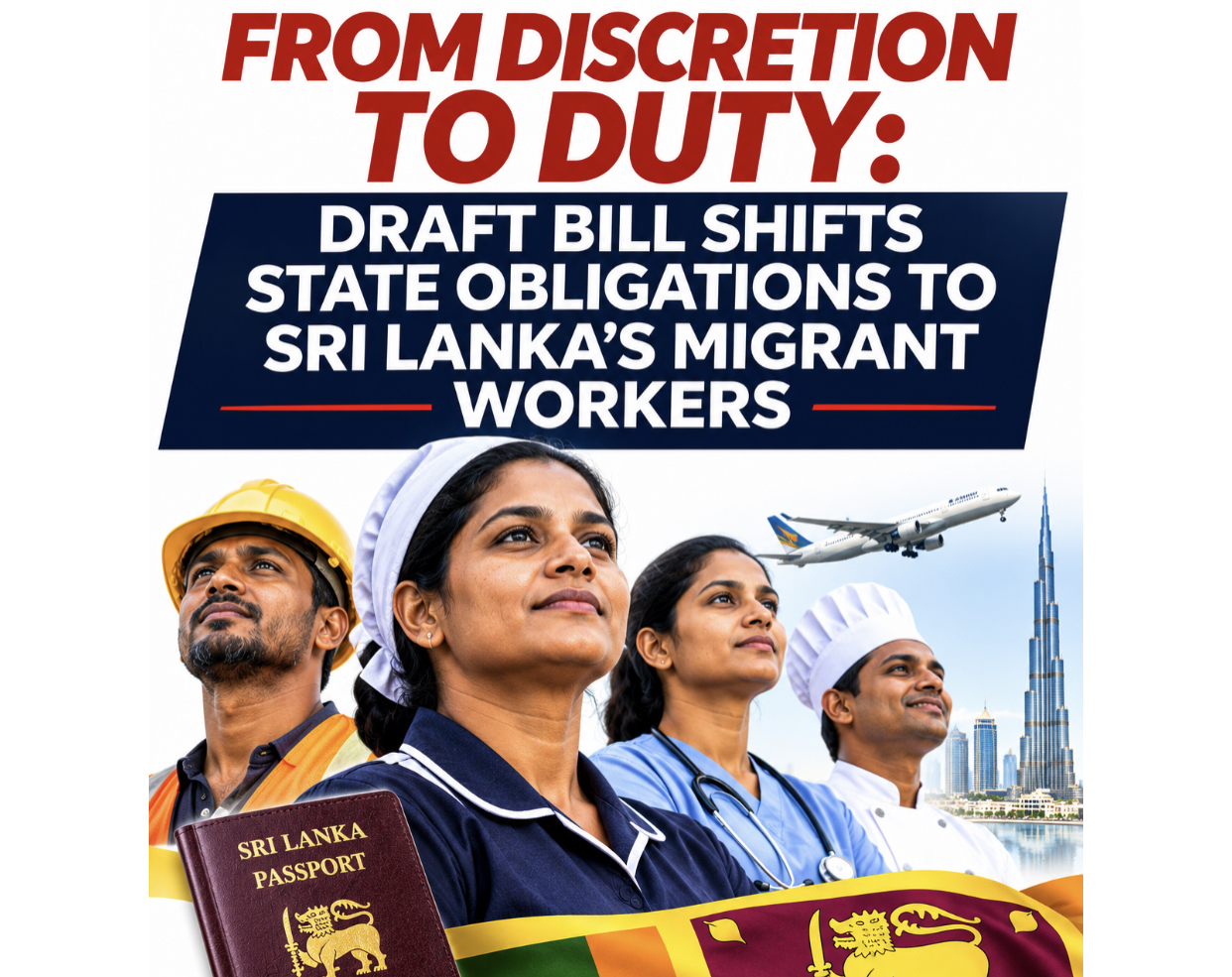
For decades, the millions of Sri Lankans who travel abroad to clean homes, build skyscrapers, and staff Middle Eastern commercial centers have carried the financial burden of the nation on their shoulders. Their foreign remittances remain the single largest line of defense for the country’s foreign exchange reserves, pumping billions of dollars into state coffers during our deepest economic crises.
Yet, when those very workers face catastrophic distress abroad, the state apparatus routinely treats emergency relief as a diplomatic favor rather than an absolute legal obligation.
That systemic indifference may finally hit a statutory wall. President’s Counsel and Member of Parliament FaiszerMusthapha has formally submitted a Private Member’s Bill to Parliament seeking to amend the Sri Lanka Bureau of Foreign Employment Act, No. 21 of 1985. The draft legislation introduces a new Section 48A, turning emergency legal aid and repatriation from an administrative exercise into a strict statutory duty for the Sri Lankan state.
Submit Your Press Release
Get your company news, announcements, launches, appointments and events in front of a wider audience.


Under the proposed amendments, the government will be legally mandated to provide free legal representation through qualified attorneys in the destination country, absorb all court costs, and arrange return travel. That coverage includes economy-class air tickets, transit logistics, and emergency medical clearance for verified distressed workers.
Qualifying circumstances for state intervention are clearly defined in the bill. They include non-payment of contractual wages for three consecutive months, documented physical, psychological, or sexual abuse, premature or illegal contract termination, and exposure to armed conflict, political violence, or natural disasters in host nations.
The timing and authorship of this bill carry significant weight. Musthapha recently led a high-level legal delegation to Saudi Arabia that successfully appealed the death sentence imposed on Anojan Sivarasa. Sivarasa, a young Sri Lankan worker, was facing execution over a controversial social media post before high-level legal intervention secured a reprieve at the appellate level.
While Sivarasa’s case ended with an appeal victory, history shows how often Sri Lankan workers are left completely defenseless against hostile legal frameworks.
The haunting ghost of Rizana Nafeek still hangs over Sri Lanka’s migration policies. In 2013, Nafeek, a 17-year-old domestic helper whose passport age had been forged by unscrupulous recruiters, was executed by beheading in Saudi Arabia. She had been accused of smothering an infant in her care, despite her consistent testimony that the child choked during bottle feeding.
Nafeek had no access to an attorney during her initial interrogation, spoke no Arabic, and was forced to sign a translated confession under physical assault. The Sri Lankan state was painfully slow to act, scrambling for legal intervention long after lower courts had ratified the death penalty. Her execution highlighted a structural failure: Sri Lanka was dispatching its poorest citizens into foreign jurisdiction under the restrictive Kafala sponsorship system without providing a basic legal safety net.
The stories of domestic workers returning to Sri Lanka with severe physical injuries, or families waiting months to repatriate the bodies of dead relatives from foreign morgues, are not isolated incidents. They represent a long-standing pattern where state intervention depends entirely on public outcry, media pressure, or individual ministerial goodwill.
Musthapha’s bill directly addresses these failures by embedding pre-departure training into the law. Registered workers must undergo mandatory training on host-nation legal structures, cultural norms, and local cyber laws to prevent situations like Sivarasa’s online dispute. Furthermore, the legislation empowers the Minister to set up a dedicated review committee to process emergency relief applications within specified timeframes.
If passed by Parliament, Section 48A will create real financial and administrative obligations for the government. Foreign embassies and missions across the Gulf and East Asia will no longer be able to turn away desperate workers claiming non-payment of wages or employer abuse. Diplomatic staff will be bound by law to retain local counsel and secure safe passage home.
Sri Lanka cannot continue to celebrate remittances while treating the human beings who generate them as disposable labor. Codifying state-funded legal defense and repatriation is not a matter of political generosity. It is a long-overdue act of state responsibility to citizens who routinely risk their lives and dignity to keep the national economy afloat.



