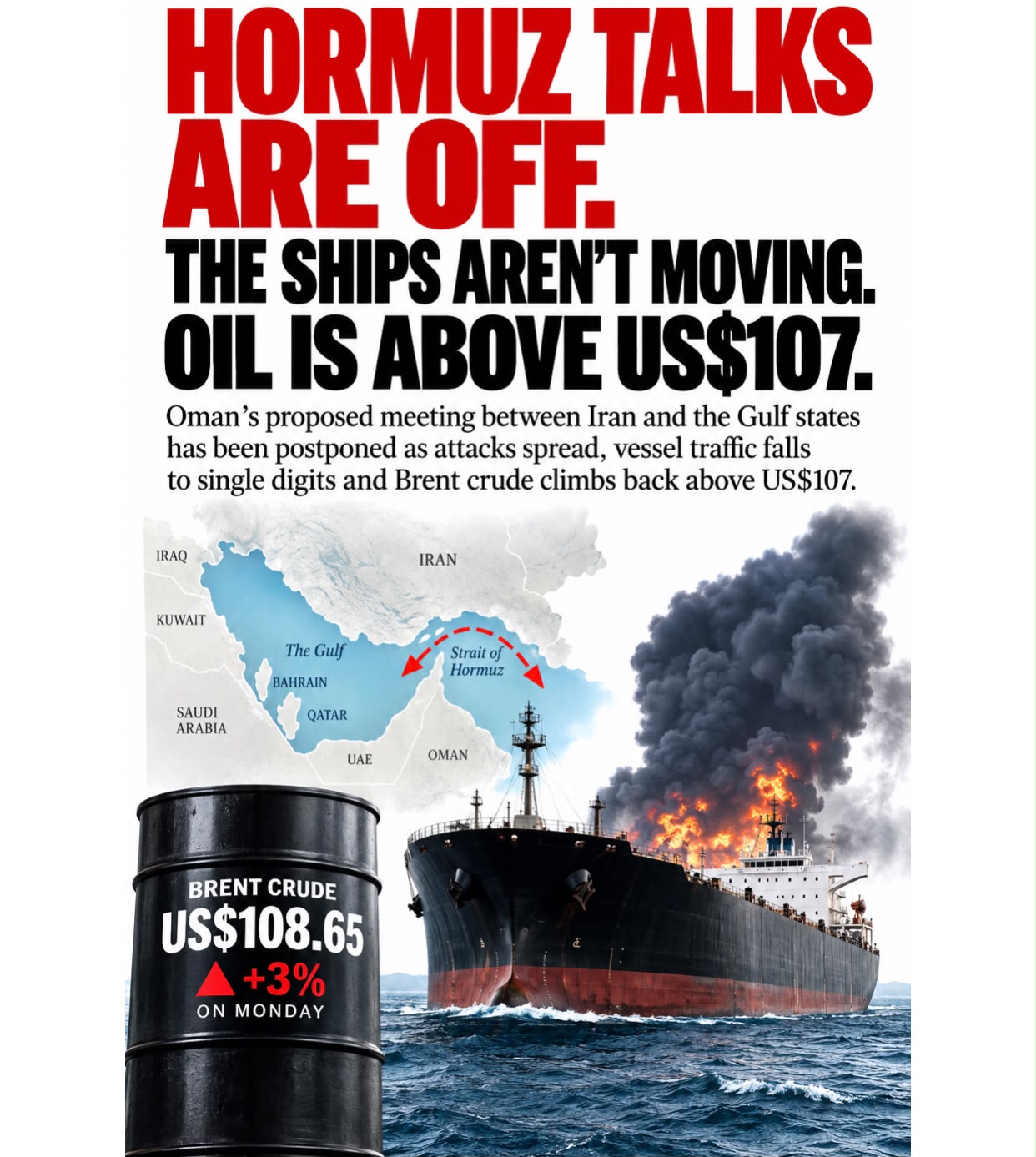
Oman’s attempt to bring Iran and the Gulf states together over a temporary arrangement for shipping through the Strait of Hormuz has stumbled before the meeting even began. Vessel traffic has collapsed from pre-war levels, Saudi Arabia’s alternative oil route has been attacked and the world’s most important energy passage is becoming more dangerous by the day.
The diplomatic attempt to find a way through the Strait of Hormuz crisis has suffered a serious setback.
A meeting scheduled in Oman yesterday between Iran and Gulf states to discuss arrangements for commercial shipping through the Strait was postponed, extinguishing hopes of an immediate regional agreement capable of restoring confidence to one of the most important waterways in the world.
Submit Your Press Release
Get your company news, announcements, launches, appointments and events in front of a wider audience.


Oman had hoped to bring the parties together around a temporary framework governing shipping through Hormuz. The meeting was postponed amid an absence of sufficient regional consensus and growing tensions between Iran and Saudi Arabia.
While the diplomats struggle, the ships are already voting with their propellers.
Preliminary tracking data shows commodity-vessel movements through Hormuz fell into single digits per day over the weekend. Only four commodity vessels were recorded leaving the Gulf while ten entered, compared with a recent ten-day average of approximately 14 vessels a day in each direction.
The comparison with normal conditions is extraordinary.
Before the Iran war began in February, approximately 125 large commercial vessels typically passed through the Strait every day. Tankers, LNG carriers, container ships and bulk vessels using the passage carried energy and goods that connected the Gulf with economies across Asia and the rest of the world.
Around one-fifth of global crude oil and liquefied natural gas supply normally moves through Hormuz.
The danger is no longer theoretical.
A commercial vessel was struck by an unidentified projectile while transiting the Strait over the weekend, adding another layer of risk for shipowners, crews and insurers already deciding whether the voyage is commercially or physically worthwhile.
There is now trouble at the other end as well.
Saudi Arabia’s East-West pipeline, capable of moving crude from the Gulf side of the Kingdom to the Red Sea and thereby bypassing Hormuz, has been damaged by drone attacks and temporarily shut. The pipeline had become increasingly important precisely because it offered Saudi oil an alternative route around the Strait.
Meanwhile, the conflict in Yemen has intensified, further threatening shipping around the Bab el-Mandeb and Red Sea.
The result arrived immediately on international markets.
Brent crude climbed more than three percent yesterday, trading around US$108 a barrel and touching approximately US$108.65 during the session. West Texas Intermediate moved above US$102.
For Sri Lanka, none of this is distant Middle Eastern geopolitics.
Every additional dollar on a barrel of oil eventually finds its way into the country’s import bill. Higher marine insurance and freight charges affect considerably more than petroleum. The rupee, inflation, electricity, transport and the Government’s fiscal calculations can all feel the consequences.
Sri Lanka spent years rebuilding after an economic crisis in which the inability to pay for imported fuel became one of the defining images of national collapse.
It now faces a very different problem. The country may have the dollars.
The question is what those dollars will buy if Hormuz continues to close.