When India Starts Speaking the Language of Sacrifice, Colombo Should Listen Very Carefully
Be that as it may, governments do not casually begin telling their citizens to cut fuel consumption, postpone foreign travel, embrace work-from-home culture and reconsider discretionary spending unless something deeper is beginning to worry policymakers behind closed doors.
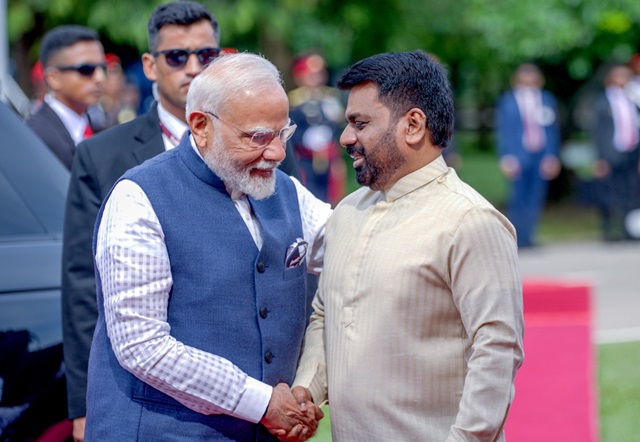
And that is precisely why Prime Minister Narendra Modi’s latest public messaging is beginning to resonate far beyond India itself.
Submit Your Press Release
Get your company news, announcements, launches, appointments and events in front of a wider audience.


According to reports carried by Indian media, including India Today and other regional outlets monitoring the growing instability surrounding Iran and the Strait of Hormuz, Modi has urged Indians to begin thinking more conservatively about energy consumption, overseas travel and unnecessary imports as global uncertainty deepens.
Importantly, this was not framed as a formal emergency declaration.
There was no fuel rationing. No dramatic wartime decree. No compulsory restrictions imposed upon the public.
But perhaps that is exactly what makes the messaging politically significant.
Because experienced governments understand something profoundly important: populations are easier to guide before fear fully arrives than after panic begins.
And Sri Lanka, perhaps more than most countries in the region, should understand that lesson painfully well.
This island has already experienced what happens when an import-dependent economy collides with fuel shortages, collapsing reserves, public anxiety and delayed political realism. Sri Lankans still remember the queues stretching for kilometres. The cooking gas shortages. The endless uncertainty surrounding electricity cuts, fuel deliveries and whether basic economic life itself could continue functioning normally.
Most importantly, the public remembers the feeling that the political system appeared unwilling to speak honestly until the crisis had already become impossible to conceal.
That collective memory still lingers beneath the surface of Sri Lankan society.
Which is why Modi’s comments tonight deserve attention not merely inside India, but across South Asia itself.
India remains one of the largest energy importers in the world. Any major escalation in Middle Eastern instability immediately affects New Delhi’s inflation management, transport costs, industrial production and foreign exchange pressures. Gold imports similarly remain deeply tied to India’s external account vulnerabilities because of the country’s enormous domestic appetite for physical gold as both cultural tradition and financial security.
So when India’s leadership begins openly discussing restraint, conservation and behavioural adjustment, smaller economies nearby should not dismiss the signals lightly.
Especially not Sri Lanka.
Because despite recent stabilization, Sri Lanka remains exceptionally exposed to precisely the type of external shocks now threatening global markets.
Yes, foreign reserves have improved. Yes, inflation has fallen sharply compared to crisis levels. Yes, tourism earnings have partially recovered.
And yes, IMF-supported restructuring has brought a degree of stability back into the economy after the trauma of 2022.
But stability and resilience are not the same thing.
Sri Lanka still operates within a fragile balancing framework heavily dependent on imported fuel, stable shipping routes, tourism inflows, remittances and external confidence. Any sustained disruption to Gulf energy flows would ripple rapidly through transport, electricity, logistics, food prices and overall cost of living across the country.
And perhaps that is the larger issue quietly emerging underneath this story.
The world itself increasingly feels structurally unstable.
Wars no longer remain geographically contained. Energy markets react instantly. Shipping insurance costs move overnight. Maritime routes become vulnerable. Commodity prices spike globally within hours. Smaller economies do not control these shocks.
They absorb them. That is why Modi’s messaging matters.
India appears to be attempting something Sri Lanka largely failed to do before its own economic collapse accelerated: psychologically preparing the public early for conservation, discipline and adjustment before panic conditions emerge.
Because once fear begins spreading through markets and society, economics stops being merely technical.
It becomes emotional. Confidence disappears faster than fuel supplies.
Trust collapses faster than reserves. And governments suddenly find themselves no longer managing economics, but managing public anxiety itself.
Sri Lanka learned that lesson the hard way.
Which perhaps explains why Colombo tonight should listen carefully to the language now emerging from New Delhi.
Not because India has declared a crisis.
But because serious governments often begin quietly preparing their populations long before smaller neighbours fully appreciate the scale of the risks ahead.
And in many ways, Modi’s remarks feel less like political theatre and more like strategic conditioning for a world entering a more volatile and uncertain phase.
The irony, of course, is that Sri Lanka already possesses the lived experience India is now attempting to avoid.
Which raises a difficult but unavoidable question for policymakers here:
if India is already preparing its citizens psychologically for possible turbulence, exactly how prepared is Sri Lanka for another major external shock?
Because economic collapses rarely begin on the day queues appear.
They begin much earlier.
Usually at the precise moment leaders convince themselves the warning signs can still be ignored.
Colombo must listen very carefully. It’s no longer about maintaining the public perception. Prime Minister Narendra Modi’s call for people to be prepared is also a call well within his Neighbourhood First policy. Sri Lanka must listen very very carefully.