
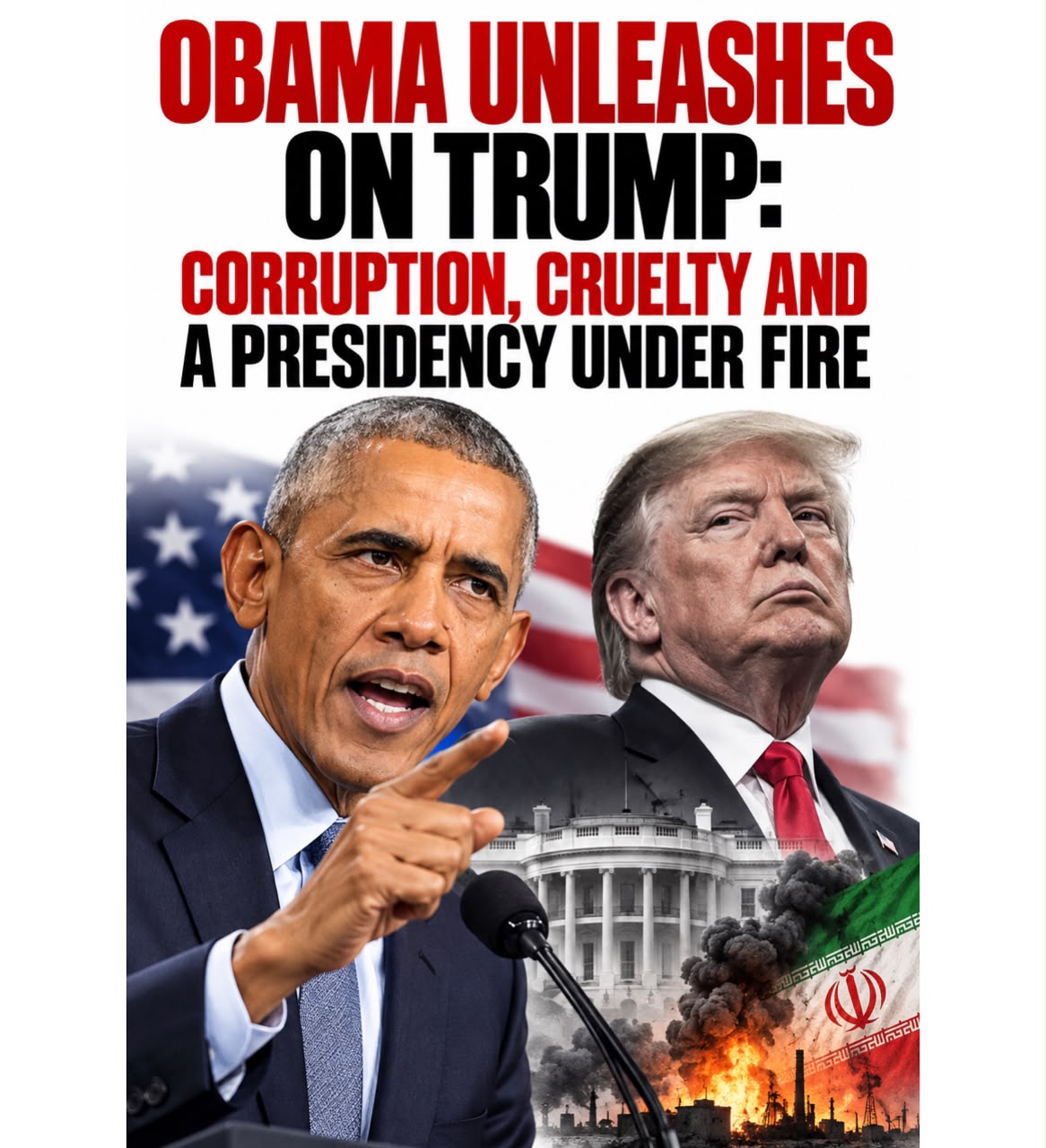
Former US President Barack Obama has launched one of his most forceful attacks on Donald Trump’s second administration, accusing it of corruption, incompetence and pursuing an unnecessary war against Iran. With America’s midterm congressional elections approaching, Obama has returned to the campaign trail with a warning about the direction of American democracy.
Barack Obama has abandoned the diplomatic restraint traditionally associated with former American presidents, delivering a series of blistering attacks on Donald Trump during Democratic campaign rallies in Ohio and Michigan on Saturday.
Speaking just ten days before the November 3 midterm elections, Obama accused the Trump administration of presiding over an extraordinary period of political disorder, questionable financial conduct and damaging foreign policy decisions.
Submit Your Press Release
Get your company news, announcements, launches, appointments and events in front of a wider audience.


His language was unmistakably confrontational.
Referring to Trump’s conduct in office, Obama accused the President of exploiting public office for personal financial advantage, describing what he considered an unprecedented culture of profiteering within the administration.
He also attacked Trump’s handling of the conflict with Iran, describing the war as unnecessary and arguing that American military intervention had strengthened Tehran’s leverage over international oil supplies.
Obama maintained that Iran’s ability to threaten shipping through the strategically important Strait of Hormuz had created additional uncertainty for global energy markets.
The criticism is particularly significant because Trump has repeatedly portrayed his administration’s military operations against Iran as successful.
Obama challenged that assessment, suggesting that the consequences for international trade and energy security told a different story.
The former President also ridiculed Trump’s expensive White House renovations, questioning the administration’s priorities while American households continue confronting financial pressures.
His criticism extended to Defence Secretary Pete Hegseth, whom he accused of concentrating on displays of military masculinity rather than substantive defence responsibilities.
But beyond the personal attacks lay a broader political argument. Obama portrayed the November elections as an opportunity for voters to impose greater congressional scrutiny on the White House.
In Detroit, he described the elections as a mechanism through which Americans could restore accountability to government.
Trump’s Republican allies have rejected the Democrats’ criticisms and defended the administration’s record, arguing that Republican policies on taxation, immigration and government spending better serve American interests.
The confrontation also reflects the increasingly active role Obama is assuming in Democratic campaigning.
Although former American presidents traditionally avoid sustained public confrontation with their successors, Obama has become increasingly outspoken about what he regards as threats to democratic institutions and standards of public conduct.
His intervention follows recent criticism of the Trump administration’s investigation of Democratic Congresswoman Ilhan Omar, which Obama characterised as an attempt to intimidate a political opponent. The administration’s investigators have pursued allegations concerning immigration documentation, while Omar’s lawyers have challenged aspects of the investigation.
Be that as it may, Obama’s latest intervention illustrates the intensity of America’s political divisions. The approaching congressional elections will determine not merely the composition of Congress, but the extent of legislative oversight confronting Trump’s administration during the remainder of his presidency.



