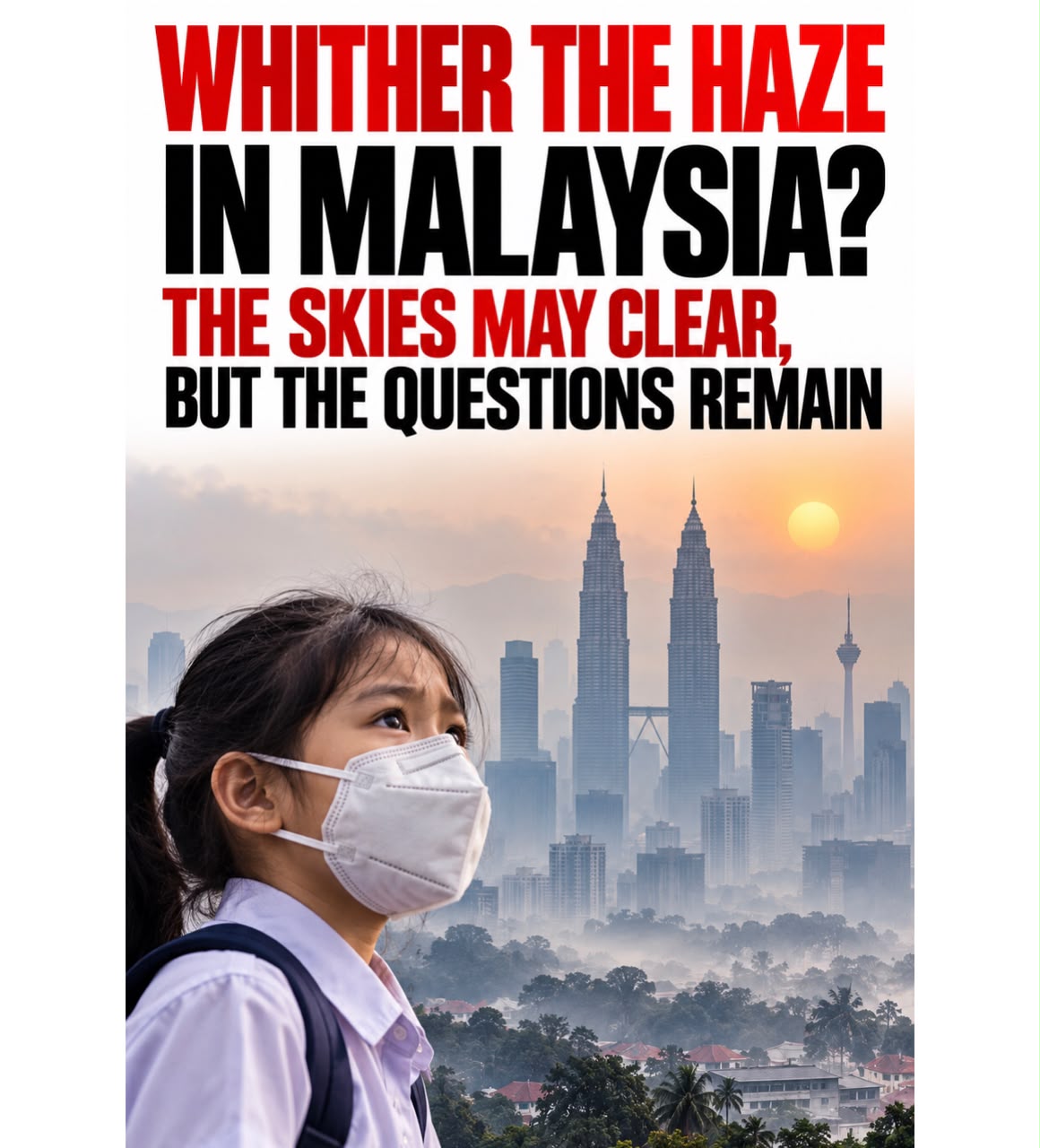
Malaysia’s prolonged battle with toxic transboundary haze is showing signs of improvement, with schools in Johor preparing to reopen on Monday. Yet unhealthy air persists in parts of the country, raising questions about public health, regional cooperation and whether Southeast Asia can finally bring its recurring environmental crisis under control.
Malaysia is beginning to emerge from another debilitating episode of transboundary haze, with improving air quality allowing authorities in Johor to announce the reopening of schools on Monday, October 26.
The decision follows weeks of disruption caused by smoke drifting across national boundaries from extensive forest and peatland fires in Indonesia.
Submit Your Press Release
Get your company news, announcements, launches, appointments and events in front of a wider audience.


More than 617,000 students across 1,198 schools in Johor were affected by the closures, illustrating the considerable educational and economic consequences of an environmental problem that has troubled Southeast Asia for decades.
But the improvement is uneven.
Air-quality readings on Sunday indicated that Kuala Lumpur had returned to moderate pollution levels, while parts of Sarawak, Terengganu and Johor continued to record unhealthy conditions.
The immediate question is whether changing winds, increased humidity and anticipated rainfall will provide lasting relief or merely a temporary respite.
Malaysia’s authorities have also revised their approach to school closures. Under the new guidelines, schools are required to close when the Air Pollutant Index exceeds 200, while outdoor activities must be suspended when readings reach 100.
Previously, closures were triggered at lower pollution thresholds.
Education officials argue that the revised arrangements balance children’s health against the considerable disruption caused by repeated school closures.
But the policy raises legitimate questions about the risks faced by children with asthma, respiratory conditions and other vulnerabilities.
The broader concern is that Malaysia cannot solve this problem through domestic measures alone.
Smoke from Indonesian forest fires has repeatedly crossed international boundaries, affecting Malaysia, Singapore and other neighbouring countries.
The resulting pollution has disrupted education, tourism, transport and commercial activity while exposing millions to potentially harmful airborne particles.
ASEAN has long recognised transboundary haze as a regional environmental challenge. Yet the recurrence of severe pollution demonstrates the continuing difficulty of preventing fires, enforcing land-management regulations and coordinating effective responses.
Malaysia and Indonesia must therefore confront a question extending beyond emergency firefighting.
What measures will prevent the same crisis from returning?
For ordinary Malaysians, the issue is considerably more immediate.
Parents need confidence that schools are safe. Workers require protection from prolonged exposure. Businesses need predictable operating conditions.
And citizens deserve reliable, accessible information about the air they breathe.
Be that as it may, the return of clearer skies should not be mistaken for the resolution of Malaysia’s haze problem. Until the underlying causes are addressed, Southeast Asia risks repeating the same environmental emergency, with the same consequences, year after year.