In Sri Lanka, obtaining a medical degree requires years of grueling clinical rotations, sleepless nights over anatomy textbooks, and rigorous licensing exams. Yet if you walk down almost any suburban high street, it appears you can bypass the medical faculty entirely simply by spending a few months behind a pharmacy counter memorizing the color of the boxes.
According to a sobering disclosure by the Association of Community Medicine Specialists, approximately forty thousand individuals with zero formal medical qualifications are currently operating across the island as self-styled dispensers of medicine, turning everyday ailments into an accelerating public health emergency.
Speaking at a media briefing at the Health Promotion Bureau, the association’s President, Consultant Community Physician Dr. Ruwan Ferdinando, painted an alarming picture of an unregulated shadow healthcare system operating in plain sight.
Submit Your Press Release
Get your company news, announcements, launches, appointments and events in front of a wider audience.


While Sri Lanka’s state medical infrastructure is routinely praised across the region, the ground reality at street level resembles a pharmaceutical free-for-all. Ferdinando explained that many of these forty thousand unqualified practitioners acquired their entire clinical education through casual osmosis while working inside retail pharmacies, eventually graduating themselves to diagnosing illnesses and handing out potent drugs to unsuspecting citizens.
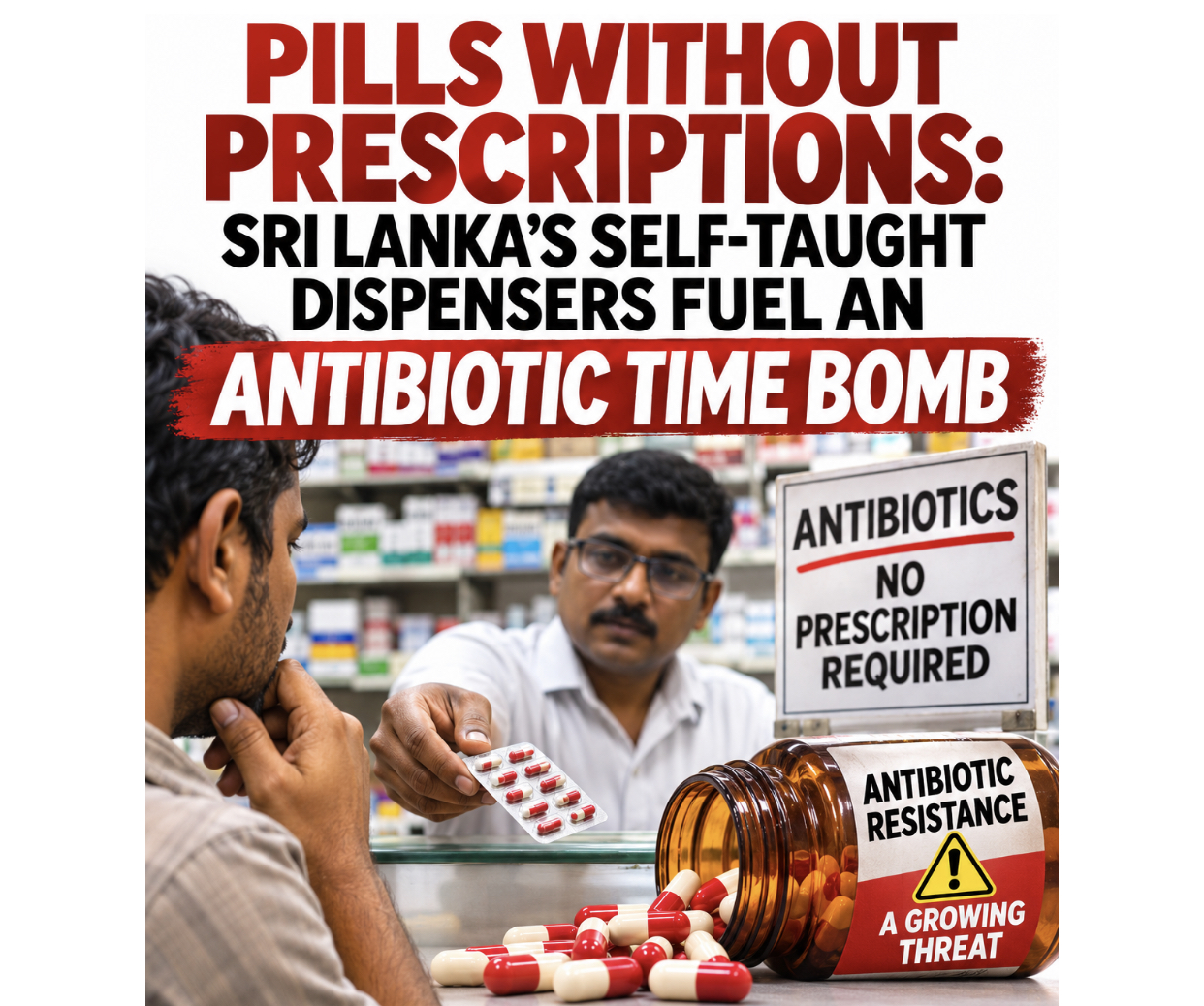
The most dangerous consequence of this amateur pharmacology is the unchecked distribution of antibiotics. Under the National Medicines Regulatory Authority Act, antibiotics are strictly prescription-only drugs intended to combat specific bacterial infections under trained medical supervision. In practice, however, they are frequently handed across counters like breath mints for everything from a mild viral sniffle to a seasonal headache. Ferdinando noted that the crisis is compounded by a deeply ingrained national habit of self-medication, where patients raid leftover home medicine cabinets, actively demand antibiotics from physicians in search of an instant cure, or rely on practitioners who prescribe broad-spectrum drugs simply to keep impatient customers satisfied.
Medical experts warn that this casual relationship with powerful pharmaceuticals is steering Sri Lanka directly toward the cliff edge of antimicrobial resistance. When bacteria are repeatedly exposed to incorrect dosages or unnecessary courses of antibiotics, they adapt, mutate, and render standard treatments completely useless.
Globally, health authorities describe antimicrobial resistance as a silent pandemic, and for a developing healthcare system already managing tight medical budgets, losing first-line antibiotics means routine surgeries, minor wounds, and common infections could once again become life-threatening ordeals requiring prohibitively expensive last-resort drugs.
Regulatory enforcement under existing pharmacy and health ordinances has long struggled to keep pace with the sheer volume of unauthorized dispensaries and under-supervised counters scattered across urban and rural towns alike. Dr. Ferdinando emphasized that permitting unqualified individuals to prescribe and dispense antibiotics is an acute systemic failure that demands immediate national debate and decisive regulatory intervention.
Unless authorities tighten oversight over retail drug outlets and curb the island’s appetite for unprescribed pills, Sri Lanka risks waking up to a medical reality where the local chemist has plenty of capsules on the shelf, and none of them actually work.