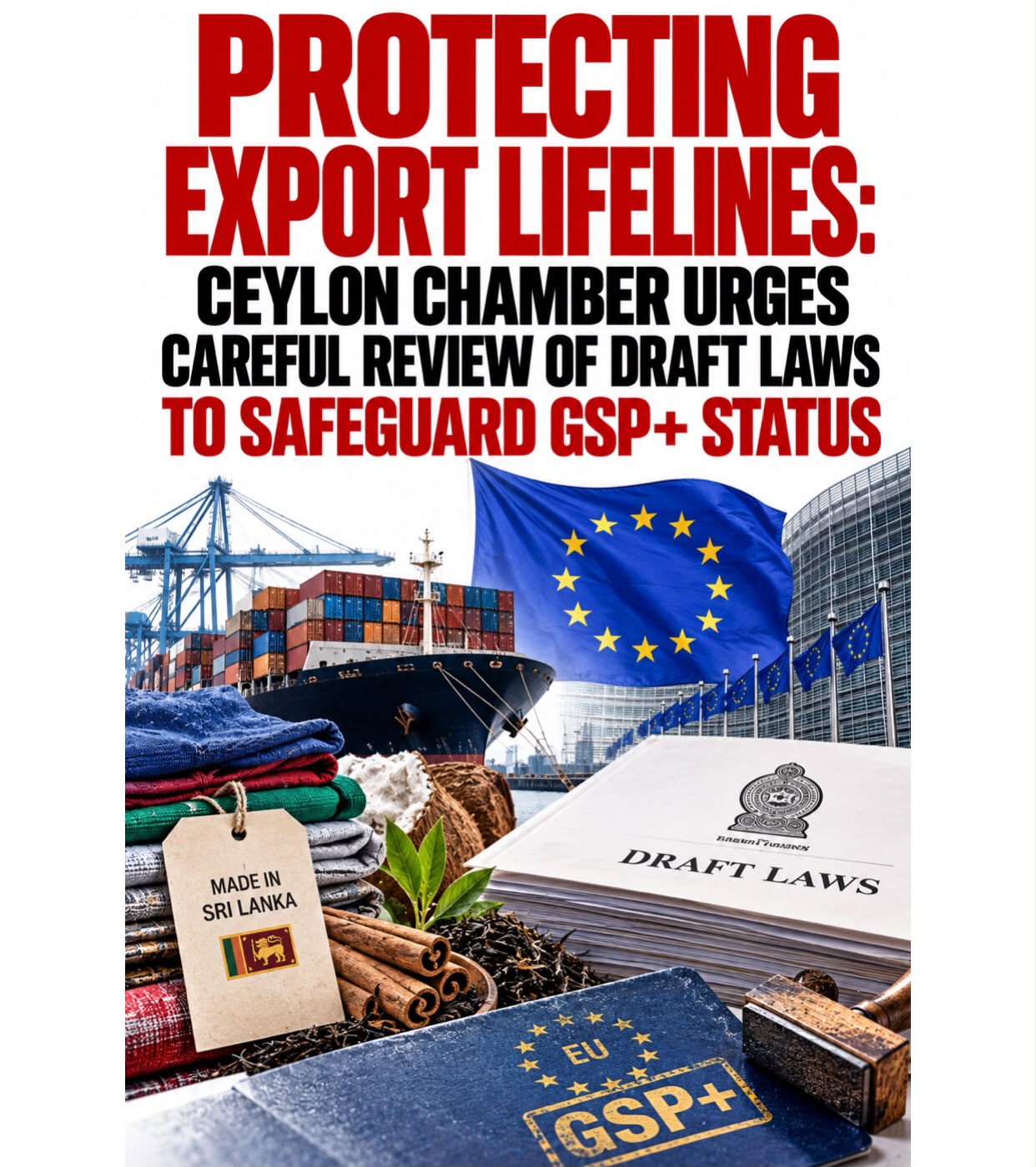
The Ceylon Chamber of Commerce has issued an urgent call for a rigorous review of newly drafted legislative proposals, warning that a failure to align domestic laws with international standards could jeopardize Sri Lanka’s vital Generalised Scheme of Preferences Plus status with the European Union.
In its formal observations submitted regarding recent draft legislation, the Chamber emphasized that maintaining uninterrupted access to preferential tariff markets requires complete harmony between local statutes and international commitments. The warning arrives as the European Union rolls out its revised GSP framework, which introduces a significantly stricter compliance architecture for beneficiary developing countries.
Under the updated EU system, the threshold for retaining duty-free market access has become substantially more demanding. The framework expands the mandatory international conventions that beneficiary nations must ratify and effectively implement from 27 to 32 agreements. These expanded commitments cover critical benchmarks across human rights, labor standards, environmental protection, climate commitments, governance, and anti-corruption frameworks. Furthermore, the revised EU regulations introduce faster withdrawal mechanisms, enhanced transparency requirements, and more frequent compliance assessments.
Submit Your Press Release
Get your company news, announcements, launches, appointments and events in front of a wider audience.


For Sri Lanka, the stakes could not be higher. Sectors such as apparel, rubber manufacturing, and processed foods rely heavily on European markets as their primary export destination. Without GSP+ preferences, local producers would face prohibitive tariff barriers, severely eroding export competitiveness against rival nations that enjoy full duty-free access or long-term structural advantages. As the country navigates post-crisis economic recovery and foreign debt restructuring, preserving stable export revenues remains an absolute economic necessity.
The private sector’s intervention highlights a recurring structural tension within national policymaking. While successive governments introduce domestic laws to address immediate administrative or security priorities, failure to evaluate these bills against international treaty obligations can trigger severe trade fallout from Brussels. The Chamber’s appeal serves as a timely reminder that legislative drafting cannot occur in a vacuum. Lawmakers must carefully scrutinize pending bills to ensure that domestic policy objectives do not inadvertently sacrifice the export lifelines sustaining the national economy.