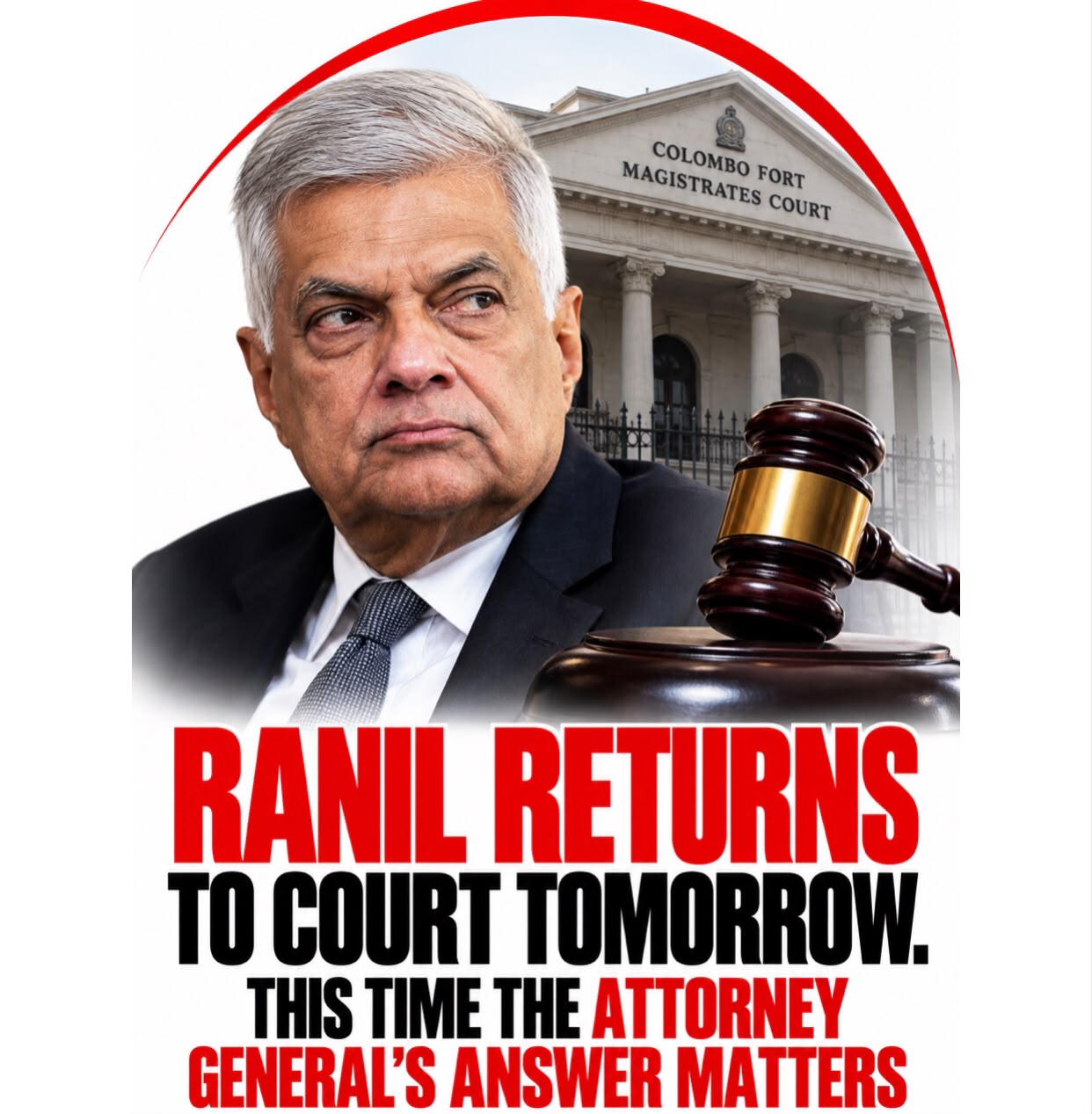
The investigation into more than Rs 16.6 million in State expenditure associated with former President Ranil Wickremesinghe’s 2023 visit to Britain returns to court tomorrow. The investigation is said to be complete. The question now is what the Attorney General intends to do with it.
Former President Ranil Wickremesinghe is due back before the Colombo Fort Magistrate’s Court tomorrow in a case that has produced plenty of politics, considerable argument and one question that can no longer be indefinitely postponed.
Is there a prosecutable case?
Submit Your Press Release
Get your company news, announcements, launches, appointments and events in front of a wider audience.


The investigation concerns more than Rs 16.6 million in public expenditure connected with Wickremesinghe’s visit to Britain in September 2023 while he was President. Investigators have alleged that State funds were improperly used in connection with a portion of the visit they regard as private.
Wickremesinghe’s position has been very different. His lawyers have challenged the characterisation of the expenditure and disputed important elements of the case advanced against him.
That distinction matters.
An allegation is not a conviction and an investigation is not proof. Former presidents enjoy neither immunity from legitimate investigation after leaving office nor exemption from the presumption of innocence merely because an allegation makes an attractive headline.
The Criminal Investigation Department has told court that its investigation has been completed and the relevant material forwarded to the Attorney General. When the matter was last taken up, the court fixed September 30 for the Attorney General’s position on what legal action, if any, should follow.
That makes tomorrow important.
The case has always contained a question larger than Rs 16.6 million.
Sri Lanka has had an uncomfortable relationship with the use of public money by political leaders. Presidential travel, entourages, vehicles, residences and official expenditure have repeatedly generated controversy, usually accompanied by arguments over where legitimate State business ends and personal benefit begins.
That boundary matters irrespective of who occupies the Presidency.
A President does not stop having a private life merely because he or she holds office. Equally, public office cannot convert private expenditure into public expenditure simply by attaching an official itinerary to it.
The State therefore needs rules capable of surviving changes of government.
If investigators believe public money was criminally misused, the allegation should be tested through the legal process and the evidence placed before the appropriate court. If the evidence does not sustain criminal proceedings, that should become clear too.
What would be unhealthy is allowing a high-profile investigation involving a former President to remain indefinitely suspended between allegation and prosecution.
There is another reason this matters.
Sri Lanka is attempting to demonstrate that accountability is no longer determined by political status. That principle cannot mean prosecuting former officeholders because they are former officeholders. It must mean applying the same evidential and legal standards to them that would apply to anybody else.
That is a more demanding test than political rhetoric.
Tomorrow’s hearing may provide an indication of whether the Attorney General believes the investigation has produced sufficient material for further legal action. It may also produce another procedural step rather than a final answer.
Either way, NewsLine will watch what happens rather than prejudge it.
Ranil Wickremesinghe has already been President, Prime Minister six times, Leader of the Opposition and a Member of Parliament across several political generations. Rs 16.6 million is a relatively modest figure when compared with many of the financial scandals Sri Lanka has confronted.
But accountability is not supposed to begin at a particular number.
The question tomorrow is whether the evidence begins at all.