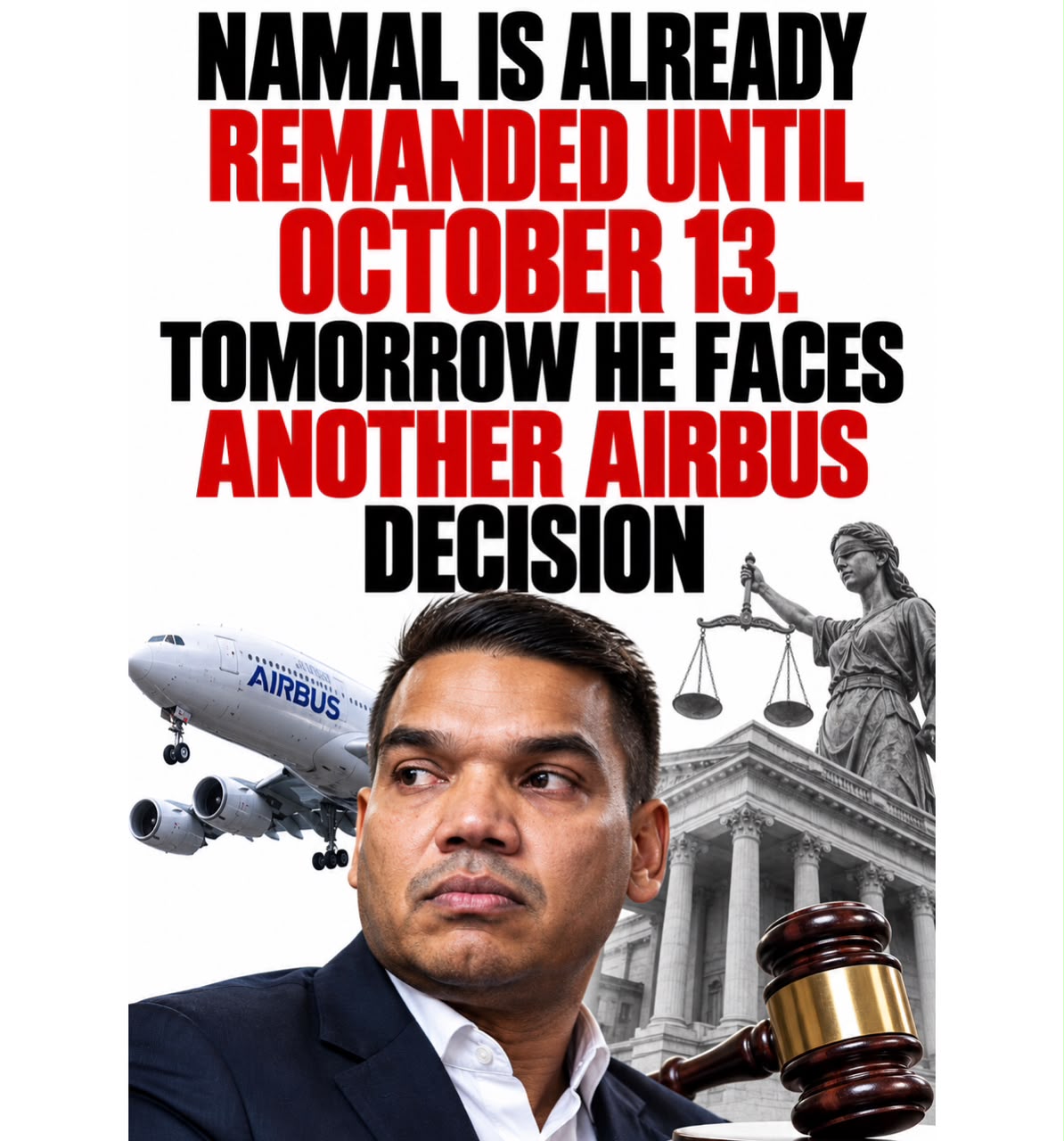
One court yesterday refused bail to Namal Rajapaksa in the Airbus bribery case and remanded him until October 13. Tomorrow another court considers the separate money-laundering proceeding arising from the same aircraft transaction. The legal question is becoming almost as complicated as the allegations themselves.
Namal Rajapaksa spent yesterday in court and is due to return to another court tomorrow.
The Colombo Chief Magistrate’s Court yesterday refused his application for bail in the bribery proceedings associated with the SriLankan Airlines Airbus procurement and further remanded him until October 13.
Submit Your Press Release
Get your company news, announcements, launches, appointments and events in front of a wider audience.


Prosecutors told court that investigations into the alleged bribery transaction and related money-laundering allegations had been completed, with extracts sent to the Attorney General and steps being taken towards a joint indictment.
That is important because tomorrow Rajapaksa faces another proceeding arising from the same underlying Airbus transaction.
The Colombo Fort Magistrate’s Court has kept him in remand until September 30 in the separate money-laundering investigation. The court deferred its decision on bail while seeking clarification from prosecutors about the relationship between the two investigations.
The distinction is important and easily lost.
One proceeding concerns allegations of bribery associated with the procurement of Airbus aircraft for SriLankan Airlines. The other concerns alleged money laundering arising from financial transactions connected with the affair. They may share evidence and originate from the same transaction, but bribery and money laundering are different alleged offences and the proceedings have remained legally separate.
Rajapaksa denies wrongdoing and the allegations against him have not been established by a court. He remains entitled to the presumption of innocence.
Tomorrow’s hearing is therefore not a determination of guilt.
The Fort Magistrate has asked prosecutors to clarify whether the money-laundering investigation conducted by the CID and the bribery investigation conducted by the Commission to Investigate Allegations of Bribery or Corruption are being conducted jointly. The court has also sought clarity on whether the proceeding before it should be transferred to the Colombo Chief Magistrate’s Court, where the bribery matter is being heard.
A further issue concerns a certificate under Section 149 of the Anti-Corruption Act in the separate proceeding.
These may sound like procedural technicalities, but procedure matters enormously when the State prosecutes anybody, particularly in a politically sensitive case.
Investigators cannot simply decide that because two allegations arise from the same broad transaction they can be moved between courts at convenience. Jurisdiction, investigative authority and the statutory basis upon which proceedings are brought all matter.
The Airbus affair itself reaches back more than a decade.
SriLankan Airlines agreed to acquire Airbus aircraft in 2013 during the presidency of Mahinda Rajapaksa. International investigations later exposed corrupt payments associated with Airbus sales in several countries, and the Sri Lankan transaction has subsequently produced investigations into alleged payments and the movement of money through overseas entities.
The present proceedings against Namal Rajapaksa form part of that much wider history.
But the political prominence of the accused must not be allowed to decide the case in either direction.
Being the son of a former President is not evidence of guilt. Neither should being the son of a former President provide insulation from investigation where investigators believe evidence exists.
That is precisely why the courts matter.
Yesterday one court decided that grounds had not been established to grant Rajapaksa bail in the bribery proceeding and remanded him until October 13. Tomorrow another court must deal with the outstanding questions surrounding the money-laundering proceeding and his application for bail there.
The State appears to be moving towards bringing the strands together.
Whether the law permits it, what evidence ultimately supports it and whether prosecutors can prove any allegation are different questions.
Be that as it may, after thirteen years of controversy surrounding the Airbus procurement, Sri Lanka is finally reaching the point where allegations may have to become evidence rather than headlines.