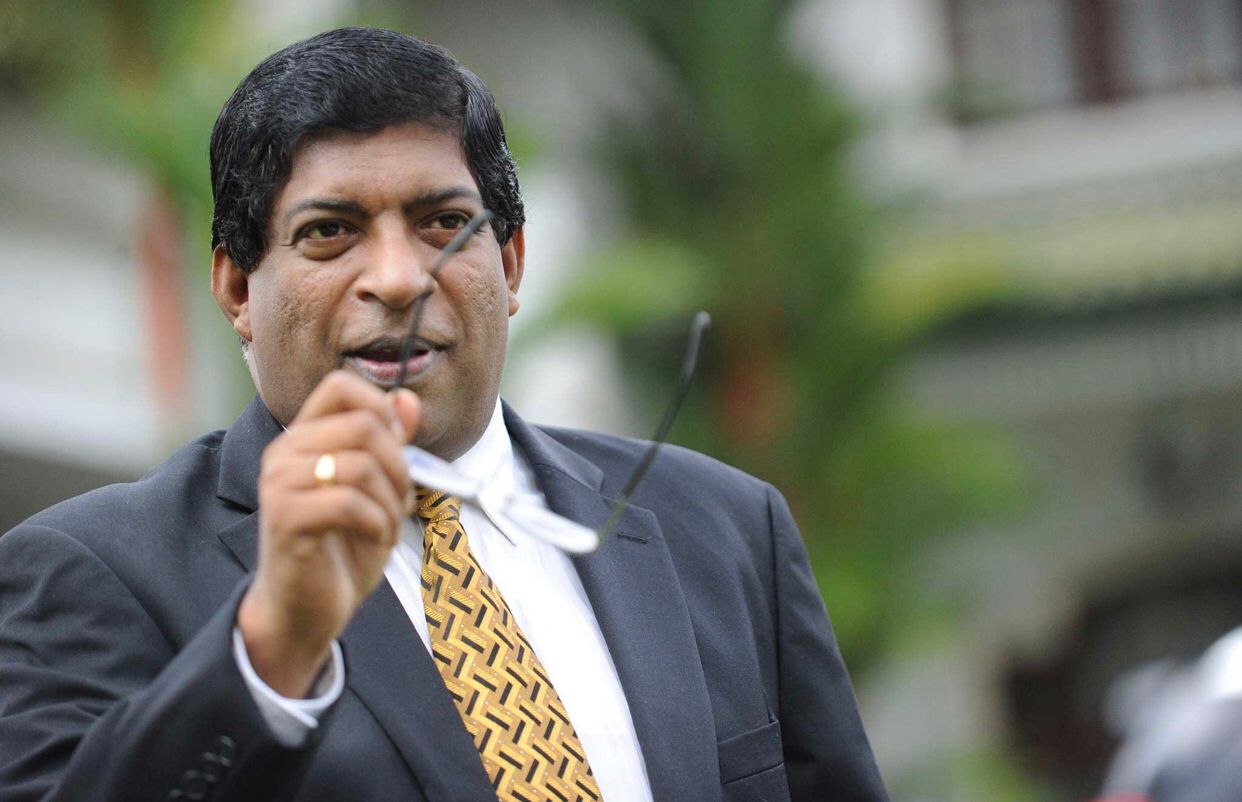
Former Finance Minister Ravi Karunanayake was arrested by the anti-corruption authorities and released on bail hours later. Behind the familiar procession of arrest, court and bail lies a rather more important question about who was paying whom – and for what. And how much does it cost to actually bring such cases to trial. This is not theatre. Must you bring cases to court where investigations are incomplete?
Former Finance Minister and Colombo District MP Ravi Karunanayake was arrested by the Commission to Investigate Allegations of Bribery or Corruption yesterday after being questioned for several hours over allegations concerning employees recruited to the National Lotteries Board.
Karunanayake was subsequently produced before the Colombo Chief Magistrate’s Court and released on bail, bringing to an end the immediate drama of an arrest involving one of Sri Lanka’s best-known political figures.

The investigation, however, is about something rather less dramatic and potentially more important: the alleged use of public resources for purposes unrelated to the jobs for which State employees were recruited.
According to the allegations under investigation, individuals were recruited to the National Lotteries Board outside approved procedures and were subsequently assigned to duties connected with Karunanayake’s personal staff. That is the allegation.
CIABOC is examining whether public funds were consequently spent paying salaries and other expenses for personnel who were not performing the functions for which they had ostensibly been employed.
The allegations remain allegations. Karunanayake is entitled to the presumption of innocence and the prosecution, if the matter proceeds, will have to establish its case according to law.
But the investigation raises a broader question that extends well beyond one politician.
Sri Lanka has lived for decades with an extraordinarily blurred boundary between the resources of the State and the requirements of those temporarily entrusted with running it. Government vehicles, employees, offices and other publicly funded facilities have too often been treated as though they accompany political office.
They do not.
A State employee’s salary is ultimately paid by the taxpayer. If someone is recruited by a State institution but is actually working for the personal or political purposes of a minister, the question is not merely whether an administrative rule has been breached. It is whether public money has been used for a purpose for which it was never authorised.
That is precisely the sort of distinction an effective anti-corruption regime should examine.
There is also a larger test for CIABOC. The Commission has become considerably more visible under Sri Lanka’s new anti-corruption framework, with investigations and prosecutions involving several prominent political and public figures.
Visibility, however, is not the same thing as success.
The credibility of an anti-corruption institution will ultimately be measured not by the number of famous people photographed entering its offices or appearing outside courthouses, but by the quality of its investigations, the fairness of its prosecutions and the outcomes it is able to secure before independent courts.
That standard must apply irrespective of the political identity of the person being investigated.
Karunanayake has occupied some of the most powerful positions in government, including the finance and foreign affairs portfolios. His political prominence inevitably ensures considerable attention whenever his name becomes connected to a criminal investigation.
The law, however, should be considerably less interested in prominence.
The relevant questions are much simpler. Were people employed by a State institution? Were they paid from public funds? What work did they actually perform? Who authorised the arrangements? And if public money was improperly spent, who bears responsibility?
Those questions will remain long after yesterday’s arrest and bail have disappeared from the headlines.
Be that as it may, an arrest is not a conviction and bail is not an acquittal. What matters now is whether the evidence can answer the one question taxpayers are entitled to ask: what exactly were they paying for?