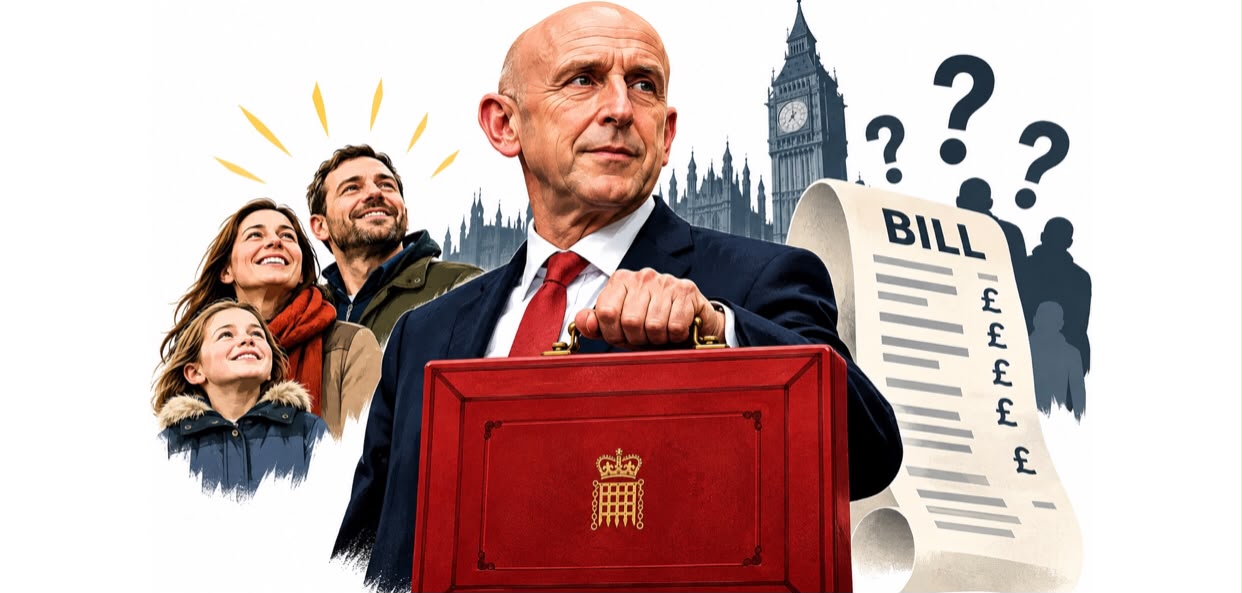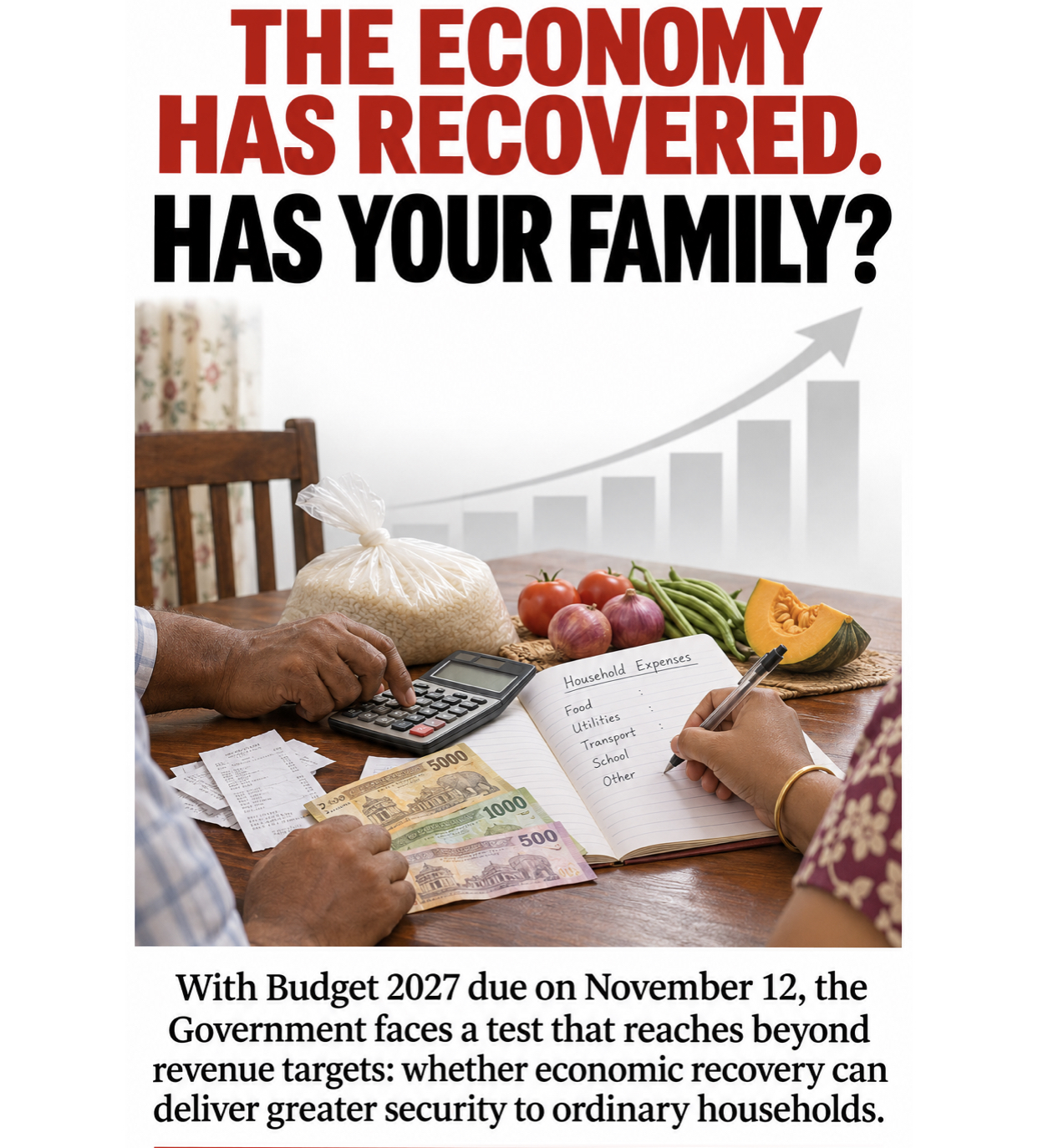
With Budget 2027 due on November 12, the Government faces a test that reaches beyond revenue targets: whether economic recovery can deliver greater security to ordinary households.
Sri Lanka approaches next week’s Budget with a question that no parliamentary majority can answer on the public’s behalf: how much of the recovery has reached the family budget? President Anura Kumara Dissanayake will present his proposals on Thursday, November 12. The national accounts will matter, but so will what remains of a salary after food, transport, electricity and school expenses.
The Government has defended its recent tax measures, arguing that they correct inconsistencies, protect foreign exchange and distribute obligations more fairly. Deputy Finance Minister Dr. Anil Jayantha Fernando has explained changes affecting vehicle imports, bank interest, service exports and digital services. His position is that individual changes must be assessed within the wider tax framework.
Submit Your Press Release
Get your company news, announcements, launches, appointments and events in front of a wider audience.


That explanation deserves scrutiny on its merits. Consolidating existing taxes is different from introducing an additional charge, while a deduction creditable against an annual tax bill is different from a final tax. Equally, the Government must explain what each measure means in rupees, who qualifies for relief and how easily that relief can actually be obtained.
Be that as it may, fiscal recovery cannot be judged solely by the Treasury’s capacity to collect. A household needs dependable earnings, affordable essentials and public services that reduce the need to spend privately. A small business needs customers with money to spend, alongside predictable rules and a reasonable chance of expansion.
There are legitimate constraints. Sri Lanka must sustain its recovery as the IMF programme approaches its scheduled conclusion in March 2027, while higher energy costs place renewed pressure on households. Promising relief without explaining its financing would offer little protection against another crisis.
The Budget should therefore make its choices visible. Who receives assistance, when will it arrive, and what expenditure or revenue will fund it? Parliament should demand measurable commitments on service delivery and spending efficiency, alongside the familiar targets for revenue and deficits.
For NEWSLINE, the test is straightforward: will these proposals make ordinary lives more secure without mortgaging their future? The President has the opportunity to connect economic discipline with public confidence. On Thursday, he must explain how the figures will become improvements people can recognise in their own homes.