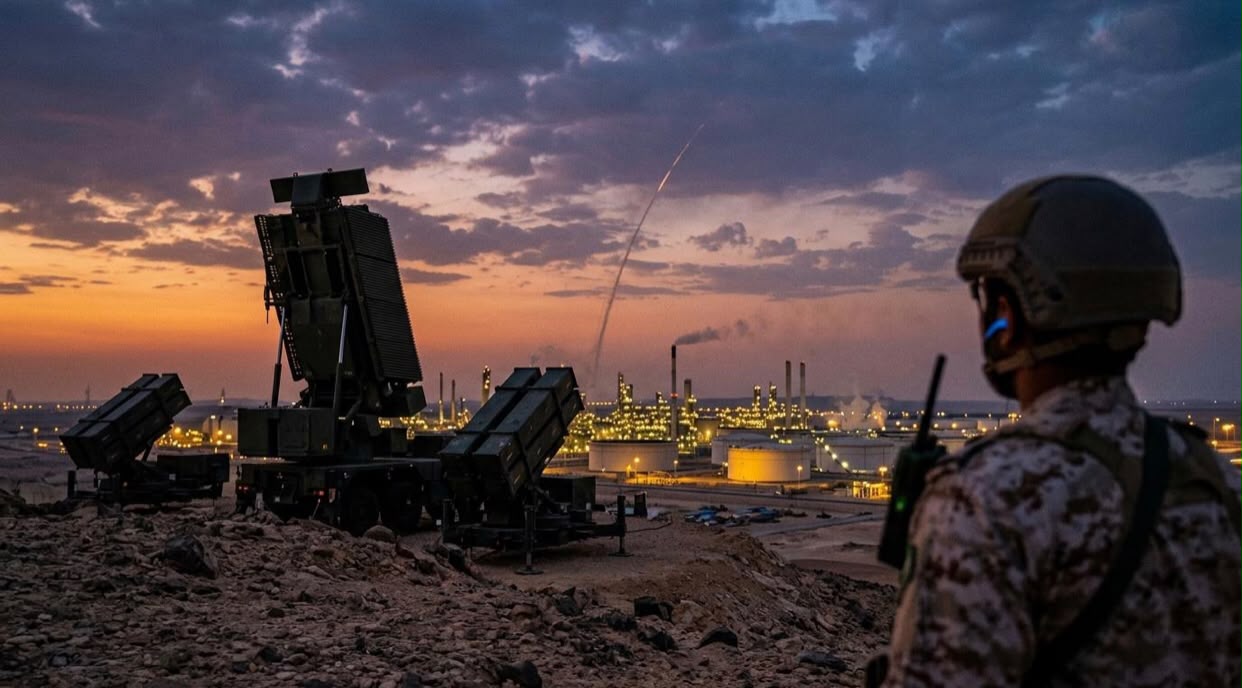
The United States has reportedly deployed two additional Patriot missile batteries to Saudi Arabia and Qatar to protect critical oil and gas installations if fighting with Iran resumes. Only yesterday the larger question was whether the Gulf could continue depending upon America’s security umbrella. Washington has now provided part of an answer, and it arrived on a missile launcher.
There is a useful difference between a diplomatic reassurance and an air-defence battery.
Saudi Arabia and Qatar have spent months worrying that another round of American attacks against Iran could produce retaliation against Gulf energy infrastructure. Those fears are hardly theoretical. The conflict has already demonstrated Iran’s ability, directly and through aligned forces, to threaten energy, shipping and other strategic assets across the region.
Submit Your Press Release
Get your company news, announcements, launches, appointments and events in front of a wider audience.


The United States has now reportedly responded by deploying two additional Patriot batteries to the Gulf.
One was sent to Saudi Arabia to protect an important oil facility. Another was deployed to Qatar to defend a natural-gas installation. The deployments took place in recent weeks as Washington prepared for the possibility that major military operations against Iran could resume.
That is significant for several reasons.
The first is obvious. Patriot systems are not symbolic. They are designed to detect, track and intercept incoming aircraft and missiles, and the decision to position additional batteries around energy infrastructure indicates that Washington considers the possibility of renewed attacks sufficiently serious to devote scarce military resources to it.
Scarce is an important word.
Patriot batteries and their interceptors are in enormous global demand. The United States and its allies require them across several theatres, while modern conflicts have demonstrated how quickly sophisticated air-defence ammunition can be consumed during sustained missile and drone attacks.
Sending additional systems to Saudi Arabia and Qatar therefore represents an actual allocation of military capability rather than another declaration of friendship.
It also complicates the developing argument about America’s future role in the Gulf.
Regional governments have been exploring ways to diversify their security relationships. Saudi Arabia has strengthened defence ties with Turkey and Pakistan, Qatar has discussed a broader regional security framework and Gulf capitals have increasingly questioned whether Washington can be assumed to provide the same ultimate guarantee it did in previous decades.
The Patriot deployment does not make those questions disappear.
But it does demonstrate that America is not simply packing up.
Washington retains extensive bases, forces and defence relationships across the Gulf. Qatar hosts major American military facilities, while Saudi Arabia remains one of America’s most important regional security partners. The additional missile batteries reinforce the point that diversification by Gulf governments does not necessarily mean replacement of the United States.
There is nevertheless an uncomfortable circularity to the deployment.
Saudi Arabia and Qatar are receiving additional American protection partly because they fear Iranian retaliation if America itself resumes attacking Iran.
In other words, Washington may be protecting its partners from some of the consequences of Washington’s own military policy.
That helps explain why Gulf governments have repeatedly urged restraint.
Saudi Arabia and Qatar may have profound disagreements with Tehran, but they also understand geography. Iran is nearby. Their oil fields, gas installations, ports, airports and desalination plants cannot be relocated if relations deteriorate.
The economic stakes extend far beyond the Gulf.
Saudi oil and Qatari liquefied natural gas are fundamental components of global energy supply. A successful attack against major production or export infrastructure could affect prices from London to Colombo within hours.
Protecting those facilities is therefore not simply about defending Saudi or Qatari property.
It is part of protecting the international energy system.
The Patriots consequently tell us two things at once.
America is still deeply engaged in Gulf security.
And Washington is sufficiently worried about what may happen next to send more missiles before it does.