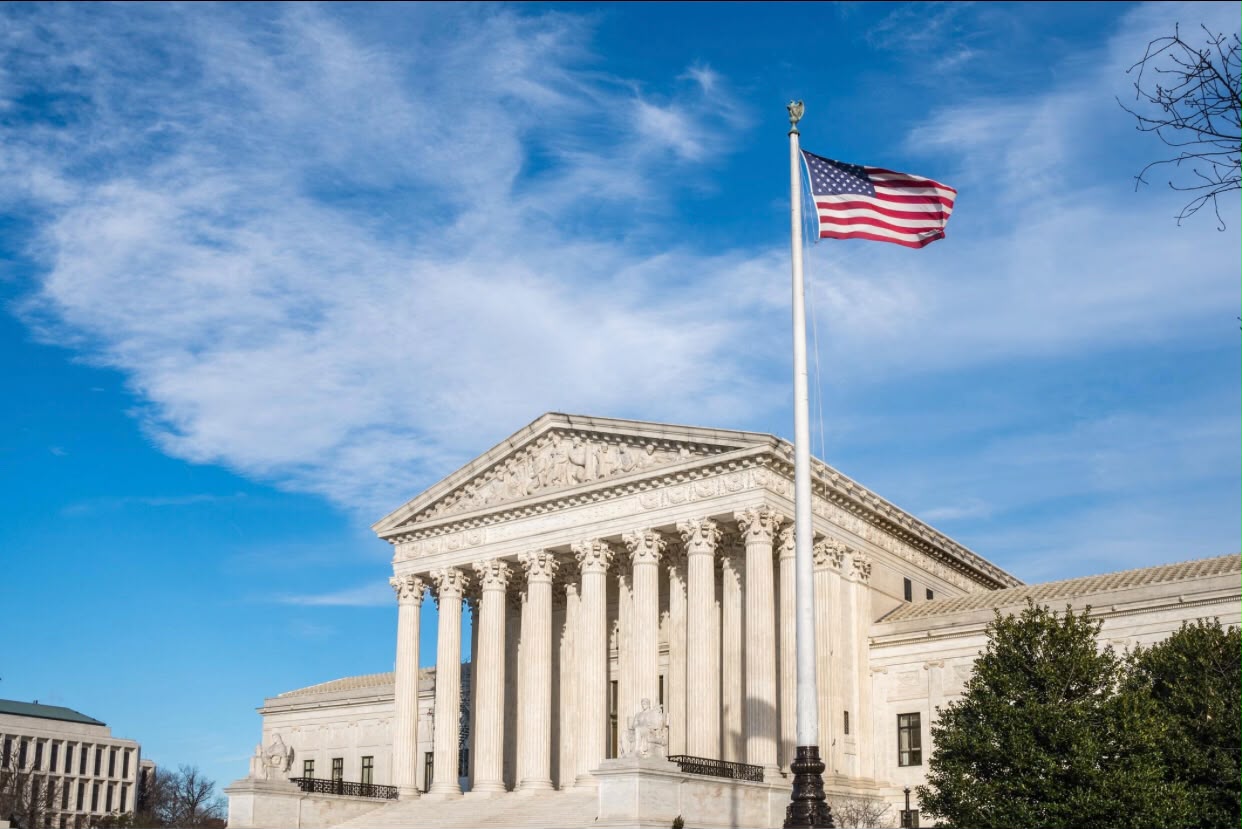
America’s Supreme Court begins its new term on Monday with immigration, voting rights, guns, climate litigation and presidential authority among the issues before it. Donald Trump won important battles at the Court last term and lost others. The recurring question is becoming larger than any particular policy: where does presidential power end and the power of Congress begin?
Nine judges will walk back into the United States Supreme Court on Monday and begin another term that will inevitably place them at the centre of American politics. That does not mean the Court is supposed to make political decisions. It means politicians have increasingly left the judges to determine where the constitutional boundaries around political power actually lie.
President Donald Trump provides much of the immediate context.
Submit Your Press Release
Get your company news, announcements, launches, appointments and events in front of a wider audience.


Trump has used executive authority aggressively since returning to office, particularly on immigration, government agencies, trade and the organisation of the federal executive. His administration has frequently acted first and defended the legal authority for doing so afterwards when opponents went to court.
The Supreme Court has not responded with a simple yes or no.
Its six-member conservative majority has allowed several important Trump policies to proceed and has endorsed a strong conception of presidential authority in some areas. It has also stopped the President when a majority of the justices concluded that he had crossed boundaries established by federal law or attempted to exercise powers belonging elsewhere.
That distinction will again matter during the new term. The Court has already agreed to consider the Trump administration’s policy requiring mandatory detention for large numbers of undocumented immigrants while deportation proceedings are underway. The dispute turns partly on whether people who have been living inside the United States can be denied the opportunity to seek release on bond while their immigration cases are decided.
Another case involves deportations to third countries. The administration wants the power to remove migrants to countries other than their own without first providing the opportunity to demonstrate that they may face serious harm there. The Supreme Court recently allowed that policy to continue temporarily while the underlying legal argument proceeds.
Then there is voting.
The justices will consider an Arizona dispute involving tougher proof-of-citizenship requirements for voter registration and provisions intended to remove alleged non-citizens from electoral rolls. Supporters argue that states must be able to protect the integrity of elections. Opponents argue that the requirements conflict with federal law and can place additional obstacles before legitimate voters.
The Court will also return to guns, considering challenges involving state restrictions on assault-style semiautomatic rifles. It will hear a major climate case involving attempts by Boulder, Colorado, to pursue ExxonMobil and Suncor Energy for costs associated with climate change.
Different cases, different laws, different constitutional provisions.
But running through much of the docket is a recurring institutional question.
Who gets to decide?
America’s constitutional structure deliberately divided authority between Congress, the President and the courts. Congress writes laws. The President executes them. Courts interpret them. In reality, the boundaries have never been quite that tidy, and modern government has given presidents enormous administrative power.
The problem becomes acute when a president interprets a law passed by Congress as providing authority to do something Congress never specifically authorised.
Trump has repeatedly tested that boundary.
His attempt to impose sweeping global tariffs provided one example. The Supreme Court ultimately rejected the administration’s reliance upon emergency economic powers for such broad tariffs. The issue was not whether tariffs were wise or foolish. It was whether the President possessed the legal authority to impose them in that manner.
That distinction matters far beyond Donald Trump.
Every power recognised for one president becomes available to another.
A person who supports an expansive interpretation of presidential authority when his preferred president occupies the White House may feel rather differently when somebody else inherits exactly the same powers.
That is why separation of powers can appear frustratingly inefficient. It is supposed to be.
Constitutional government deliberately makes some things difficult because concentrating power in one institution may make government faster while simultaneously making restraint weaker.
Sri Lanka should find that argument familiar.
Different constitution, different institutions, different history, but exactly the same fundamental democratic problem: how much power should be entrusted to one office merely because the person occupying it presently enjoys public confidence?
America’s Supreme Court begins another term on Monday.
The cases will involve immigrants, guns, corporations, voters and government agencies.
Behind many of them sits the same question.
Who gets to say no to the President?