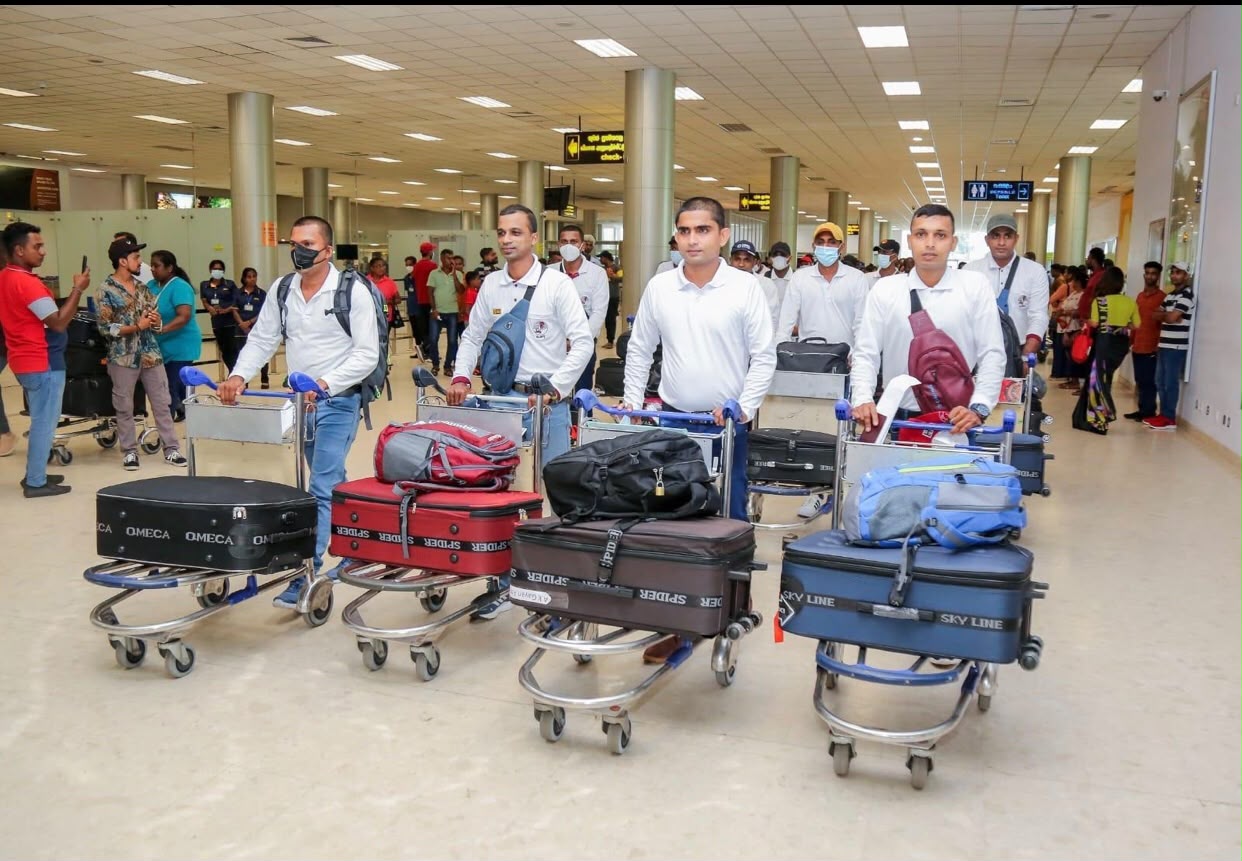
Sri Lanka loves tourists. We count them when they arrive, celebrate the millions, worry when the numbers fall and spend considerable amounts of money trying to persuade still more of them to come. Yet another group of people has quietly delivered almost three times as much foreign exchange to this country this year. They are Sri Lankans who left it.
Workers’ remittances reached US$6.1 billion during the first eight months of 2026, rising 19.8 percent from a year earlier. Tourism earnings over precisely the same period were US$2.1 billion and actually fell 10 percent. Tourist arrivals themselves were down 2 percent.
The comparison is not entirely like-for-like. Tourism creates employment and economic activity throughout the country. A dollar spent in a hotel does rather more than simply become a dollar in the banking system. It pays wages, buys vegetables, hires vehicles, keeps restaurants open and supports businesses ranging from laundry services to whale watching.
Submit Your Press Release
Get your company news, announcements, launches, appointments and events in front of a wider audience.


But US$6.1 billion against US$2.1 billion is rather difficult to ignore.
In August alone Sri Lankan workers abroad sent home US$749 million. Tourism generated US$264 million. Remittances therefore produced nearly three tourism dollars for every one tourism earned that month as well.
There is an irony here. Sri Lanka desperately needs foreign exchange, but one of its most successful foreign-exchange industries consists of exporting Sri Lankans.
Some are doctors, engineers and accountants. Many more are caregivers, domestic workers, drivers, construction workers and other employees who spend years away from their families because the salary available somewhere else makes separation worthwhile.
We receive the dollars. Their families absorb much of the price.
The question is what Sri Lanka does with this extraordinary river of money.
Remittances are overwhelmingly private money and the State has no business telling families how to spend them. But government can create reasons for Sri Lankans abroad to keep more of their accumulated savings here. Credible diaspora investments, housing products, retirement accounts and properly protected investment opportunities could turn part of this annual flow into longer-term capital.
That requires trust, and trust cannot be gazetted.
A Sri Lankan working in Dubai, Doha, London or Milan has to believe that the rules governing an investment made today will still make sense tomorrow. He must believe he can take his money out again. She must believe the institution holding her savings will be properly supervised.
There is another number worth putting alongside the US$6.1 billion. Sri Lanka’s gross official reserves stood at US$6.9 billion at the end of August, including the People’s Bank of China swap. The two figures represent entirely different things, but their proximity demonstrates the sheer scale of what migrant workers are sending home.
Be that as it may, perhaps the next great Sri Lankan foreign-exchange strategy does not begin with another slogan at a tourism exhibition.
It may begin at the departure gate.