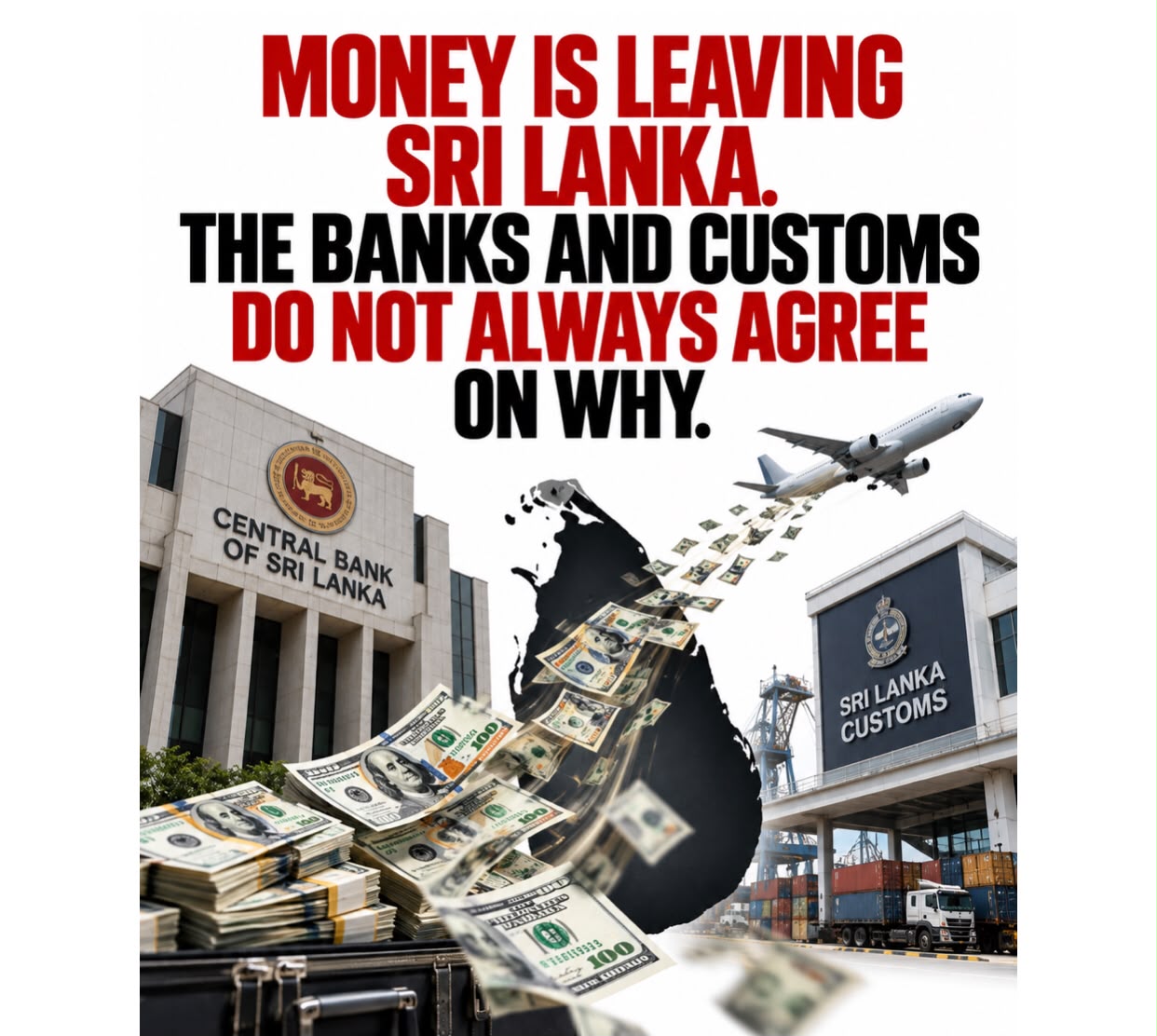
Sri Lanka spent years desperately searching for dollars. Now Parliament’s Committee on Public Finance is examining something that ought to make everyone pay attention: unauthorised foreign-exchange outflows and discrepancies between banking and Customs records covering imports and exports. Somewhere between the invoice, the bank and the container, the numbers apparently do not always shake hands.
The Committee, chaired by Dr Harsha de Silva, brought together officials from the Finance Ministry, Customs, the Department of Trade and Investment Policy, Import and Export Control and the Central Bank, including its Foreign Exchange Department.
That is quite a collection of institutions. It also tells us something about the problem.
Submit Your Press Release
Get your company news, announcements, launches, appointments and events in front of a wider audience.


Sri Lanka has rules governing how foreign exchange leaves the country. Importers legitimately need dollars to pay overseas suppliers. Businesses invest abroad. People emigrating are entitled, subject to the applicable rules, to transfer funds. International commerce cannot function if every dollar leaving Colombo is treated as suspicious.
But neither can a country with Sri Lanka’s history afford to shrug when the records used to account for those dollars do not properly correspond.
The Committee specifically examined mechanisms for reducing discrepancies between banking and Customs data relating to imports and exports and strengthening coordination between the agencies responsible for monitoring foreign exchange. It also considered regulations covering overseas investment by Sri Lankan residents and transfers by emigrants.
The important word here is coordination.
An importer buys US$100,000 from the banking system to pay for goods supposedly worth US$100,000. Customs should have a corresponding record of what entered the country and what value was declared.
That sounds beautifully simple. International trade rarely is.
Prices vary. Freight costs move. Goods can arrive in separate shipments. Credit terms differ. Customs valuation and commercial invoices can produce legitimate differences. None of that proves wrongdoing.
But mismatches also create the obvious possibility of over-invoicing imports, under-invoicing exports or otherwise shifting money across borders disguised as legitimate trade.
Sri Lanka should know which is which.
There is a danger in responding to this by simply adding another layer of regulation. The Committee itself warned that unnecessary restrictions could discourage legitimate business and hinder economic growth. That matters. A company waiting weeks for permission to pay a genuine foreign supplier will eventually decide that somewhere else is easier to do business.
So the answer cannot be another form, another signature and another official behind another counter.
The answer ought to be data.
Customs knows what was declared. Banks know what was paid. The Central Bank knows where foreign exchange moved. Import and Export Control knows what required permission.
In 2026 those systems should be capable of speaking to one another.
The timing could hardly be more appropriate. Sri Lanka’s merchandise trade deficit has widened to US$7.2 billion during the first eight months of this year. Every legitimate dollar required for trade must be available.
Which makes every illegitimate dollar leaving the country rather more important.
Be that as it may, before Sri Lanka invents another regulation to stop dollars escaping, perhaps somebody should make sure the government computers already watching those dollars are watching the same transaction.