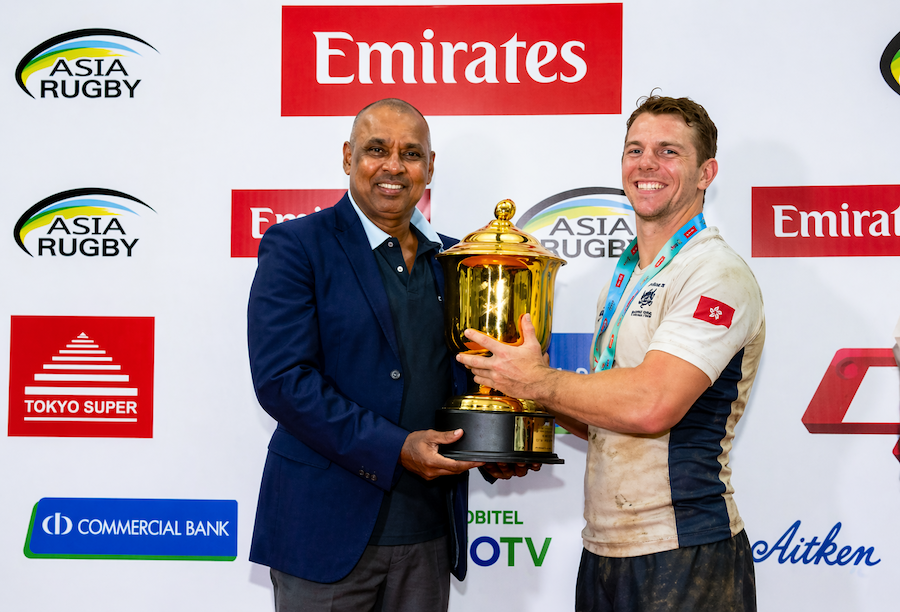
The Olympian race is on with one sport administrator in the lead
Sport in Sri Lanka today does not merely require administrators. It requires stabilisers. The National Olympic Committee of Sri Lanka stands at a delicate intersection where governance, athlete welfare, international credibility, sponsorship confidence, and institutional reform must now converge. In such an environment, the question is no longer who is the loudest voice in the room, but who possesses the experience, networks, resilience, and practical understanding to steady the system.
It is within that context that the candidature of Asanga Seneviratne deserves serious consideration. A sporting legend in Sri Lanka told NewsLine that, “Asanga Seneviratne has all the right connections including the ability to deal on a one on one basis with corporates and others when it comes to truly representing sport here.”
For years, Sri Lankan sport has oscillated between promise and paralysis. Administrations have changed. Committees have shifted. Allegations, suspensions, factionalism, and political interference have often overshadowed the athletes themselves. International confidence has fluctuated accordingly. Sponsors have become cautious. Governance standards have increasingly come under scrutiny. What many sporting bodies now require is not another ceremonial figurehead, but someone capable of navigating pressure, complexity, and reform simultaneously.
Supporters of Asanga Seneviratne argue precisely that point.
His background offers a combination not commonly found within local sporting administration.
He has operated within the private sector, worked within high-pressure sporting environments, engaged international sporting structures, and understands the realities of both governance and commercial sustainability. Whether one agrees with every chapter of his public journey or not, few would dispute that he understands how modern sporting ecosystems function beyond ceremonial administration.
And that matters.
The future of the NOCSL is unlikely to be determined merely by speeches about patriotism or nostalgia for past sporting glory. Increasingly, Olympic structures worldwide are measured by governance discipline, athlete development pathways, transparency, international engagement, sponsorship capability, and institutional professionalism. Sri Lanka cannot afford to remain disconnected from that global reality.
There is also another factor often overlooked in public debate. Leadership in sport is rarely about managing calm conditions. It is about surviving difficult periods, rebuilding confidence, and maintaining operational continuity when institutions themselves are under pressure. In that sense, experience gained through adversity can sometimes become an asset rather than a liability.
Critics may point to past controversies or political associations. That is inevitable in Sri Lanka’s public sphere where almost every visible figure carries both support and baggage. Yet the more relevant question may not be whether a candidate has faced criticism, but whether they possess the capacity to function under scrutiny while still delivering outcomes.
Those who support Asanga Seneviratne believe he offers precisely that combination. A figure comfortable in both boardrooms and sporting environments. Someone able to engage international stakeholders while understanding local sporting realities. A personality with the confidence to negotiate sponsorships, restore relationships, and potentially reposition Sri Lankan sport as something more structured, accountable, and commercially credible.
Importantly, his supporters also position him not as a revolutionary outsider, but as a practical reformist. That distinction is significant. Sporting institutions often collapse not because of lack of ambition, but because reforms are attempted without operational understanding. Incremental but firm restructuring may now be more valuable than dramatic promises.
The NOCSL today requires credibility abroad and coherence at home. It requires someone capable of calming factional divides while strengthening governance standards. Above all, it requires leadership that understands that athletes themselves must once again become the centre of the sporting conversation.
Whether Asanga Seneviratne ultimately becomes that leader will depend on the confidence of stakeholders and the strength of his vision. But one thing is increasingly clear. The conversation around Sri Lankan sport is shifting from symbolism to capability.
And in that environment, experience, resilience, international access, and administrative practicality may matter more than ever before.