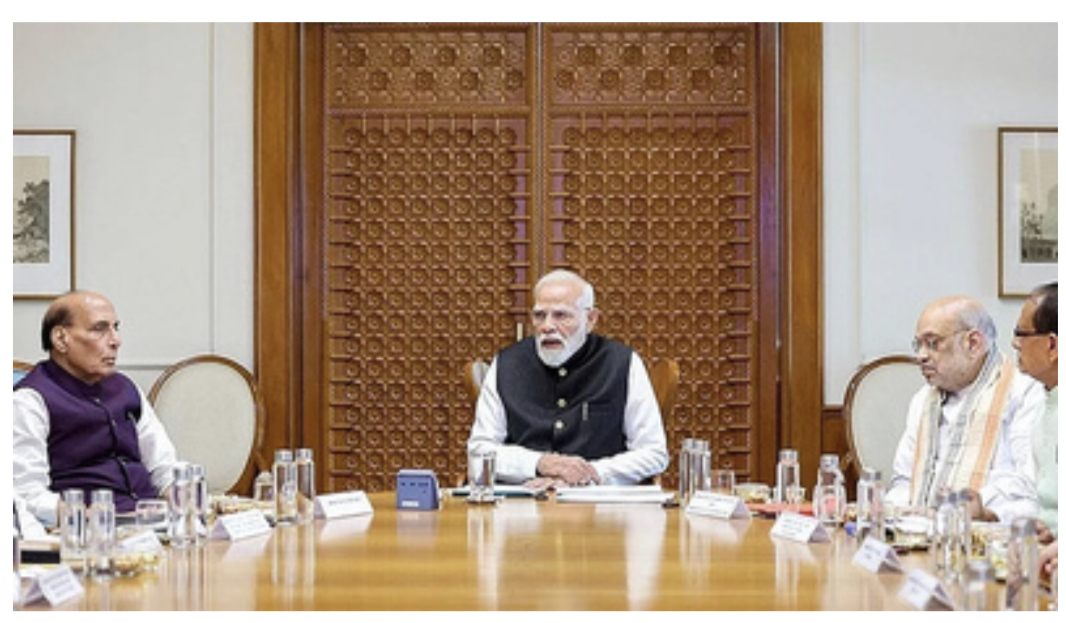
India’s Union Cabinet approved a revised Constitution Amendment Bill on Friday to roll out a 33 percent reservation for women through delimitation, proposing a uniform 50 percent increase in Lok Sabha seats across all states while freezing the existing population based representation ratio until 2051. For Sri Lankan observers tracking neighbourhood politics, the decision marks a major recalibration in Indian federalism ahead of a special parliamentary sitting scheduled to open on November 30, following the defeat of an earlier version of the bill in April.
For decades, redrawing parliamentary boundaries has tested New Delhi’s relationship with its southern states, whose politics and trade ties closely shape regional dynamics around the Indian Ocean. Southern states that stabilized population growth earlier have long warned that strict population weighting after a fresh census would reduce their share of seats in favour of faster growing northern states. When the earlier Constitution (131st Amendment) Bill came before the Lok Sabha in April 2026, opposition unity defeated it by falling short of the two thirds majority required, with critics objecting to tying women’s representation to census and delimitation timelines.
By pairing an across the board 50 percent expansion in state seats, which would lift the Lok Sabha toward roughly 850 members, with a 25 year freeze on inter state representation ratios anchored to the 1971 baseline, New Delhi is trying to ease southern resistance. That formula directly mirrors demands pressed by regional parties such as Tamil Nadu’s ruling DMK and Sharad Pawar’s NCP faction, whose backing is vital if the ruling coalition is to clear the special majority threshold in Parliament.
Submit Your Press Release
Get your company news, announcements, launches, appointments and events in front of a wider audience.


Even so, the compromise introduces fresh constitutional questions for Sri Lanka’s largest neighbour. Freezing inter state seat proportions until 2051 while enlarging the lower house tests the balance between federal accommodation and voter equality, and raises questions about how a much larger Lok Sabha affects parliamentary weight relative to the Rajya Sabha and expands the upper limit on the union council of ministers. Critics have also continued to ask why implementing the 33 percent women’s quota remains tied to delimitation rather than taking effect independently.
Political stability in New Delhi and bargaining power in southern states like Tamil Nadu routinely ripple across regional diplomacy. Whether a uniform seat increase and a quarter century freeze settle India’s delimitation impasse or merely postpone a deeper federal debate will soon be tested on the floor of Parliament.