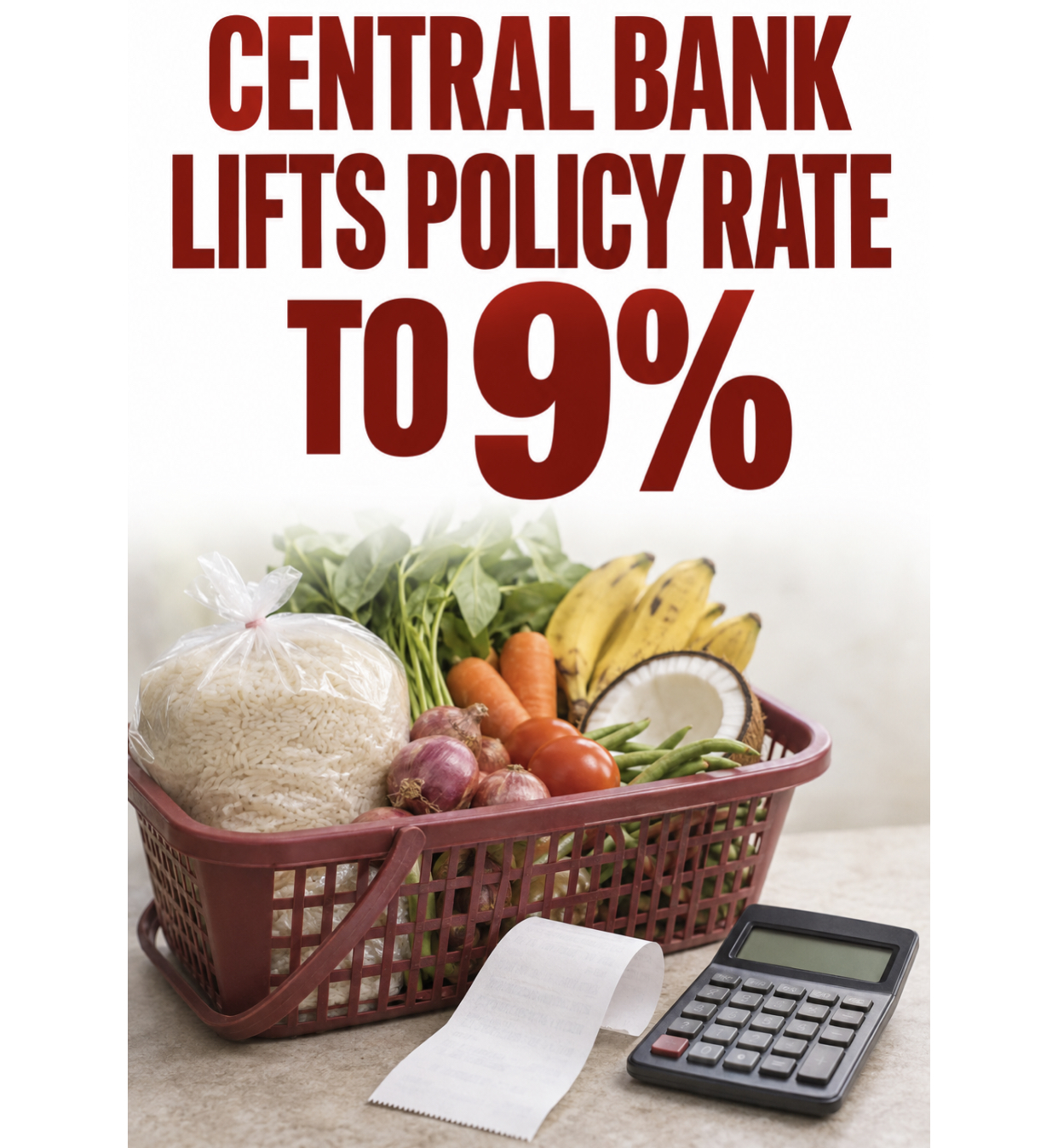
The Central Bank of Sri Lanka has raised its Overnight Policy Rate by a quarter percentage point to 9%, citing persistent pressure from food and energy prices. The decision, announced on November 20, followed an increase in annual inflation to 8.3% in October. The Bank expects inflation to remain elevated for longer than it previously projected and to return to its 5% target in the second half of 2027.
The Bank said the conflict in the Middle East had lasted longer than it expected, keeping pressure on global energy costs. International energy prices had eased somewhat by the time of the decision, but the Bank expects earlier increases to continue feeding through to domestic prices. That can happen when distributors, manufacturers or service providers are still working through contracts, stocks or transport bills priced at earlier levels.
The policy rate affects the cost of short-term money in the financial system. Banks can pass changes through to deposit and lending rates over time, with the pace varying between products. A household with a fixed-rate loan generally feels the change when it next borrows or refinances. A household on a floating rate needs to check when its bank can reset the rate and how the change will affect the repayment or the remaining term.
Submit Your Press Release
Get your company news, announcements, launches, appointments and events in front of a wider audience.


Small firms can feel the effects through overdrafts and other short-term borrowing used to buy stock or pay wages before customers settle invoices. The squeeze is sharper for a business that has already absorbed higher electricity or transport costs and has little scope to raise selling prices. Firms with good records and regular cash flow may have more room to negotiate terms than firms already using most of their available credit.
The Central Bank’s case for acting is that higher food and fuel prices can spread across the economy if businesses and households come to expect inflation to stay high. A higher policy rate can dampen demand and help contain those expectations. Cheaper transport, more reliable food distribution and greater competition in essential goods depend on action elsewhere in government.
One practical response would be for the Treasury and the agencies responsible for energy and food supply to explain which costs are still working their way into retail prices. A regular account of landed fuel costs, import lead times and selected wholesale and retail food prices would help distinguish pressures coming from abroad from those arising in domestic distribution. The Government could then target problems that changes to interest rates cannot directly fix.
The household test comes when wages, regular bills and the weekly shop are set against one another. Inflation returning to 5% would mean a slower rise in the general price level. For families whose incomes have fallen behind, how quickly earnings recover will determine how much relief they actually feel.