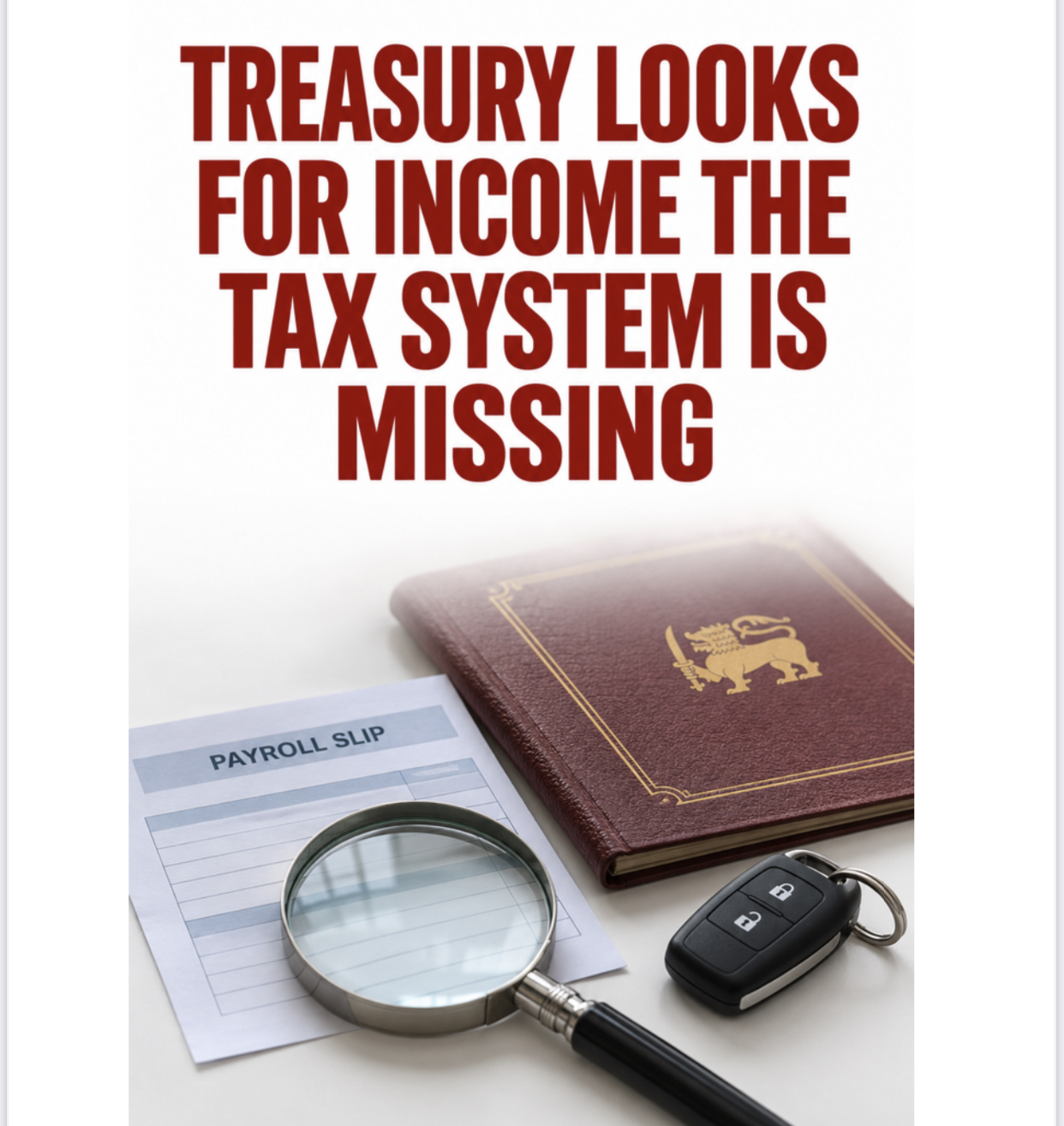
The Government is looking at ways to identify Sri Lankans who earn taxable income but remain outside the tax net. Presidential economic adviser Duminda Hulangamuwa says the Inland Revenue Department has a clearer view of salaries, bank interest and dividends because employers and financial institutions already report or deduct tax on these payments. Earnings from some private transactions and self-employed work are harder to trace, especially when an individual receives money from several sources.
Hulangamuwa has suggested linking information held by Inland Revenue, Customs, banks and land registries. A vehicle purchase or a property transfer could prompt an inquiry where the value of the transaction appears difficult to reconcile with the income a person has declared. Sri Lanka lacks a fully integrated system for making those comparisons, and Hulangamuwa says there is too little information to estimate reliably how much additional revenue the effort would yield.
That is an important admission. The Treasury can identify an area where it suspects tax is going uncollected, but it will take actual inquiries to establish how much is due. A vehicle may have been financed with a lease, a property bought with the proceeds from selling another, and a large bank deposit received as an inheritance. For a business, deposits can also reflect turnover from which wages, suppliers and other costs still have to be paid.
Submit Your Press Release
Get your company news, announcements, launches, appointments and events in front of a wider audience.


The government’s best starting point would be to examine substantial discrepancies that recur over time. A one-off purchase can have a straightforward explanation. A series of high-value transactions alongside consistently low declared income may justify a closer look, with the taxpayer given a written explanation of what prompted the inquiry and a reasonable opportunity to provide documents.
The Treasury also needs to decide how much information officers should see and who can authorise access. An assessor examining a land transaction may need its value, date and parties. That does not automatically justify access to records unrelated to the inquiry. The agencies involved could maintain a log showing who accessed a record, when and for which case, while giving taxpayers a way to correct a mistaken match or outdated entry.
It would also help to publish the results of an initial programme before the Treasury makes wider revenue projections. The number of notices sent tells the public little on its own. Parliament should be able to see how many inquiries led to additional assessments, how much tax was ultimately collected and how often an initial finding was overturned. Those figures would show both the revenue potential and the risk of errors.
For workers whose tax is deducted every month, the question is whether Inland Revenue will pursue income that takes more effort to uncover, including where the sums or influence involved are substantial. For anyone drawn into an inquiry, the question is whether they can see the basis for it and challenge a mistake without spending months navigating the system. A wider tax net will be judged on both counts.