
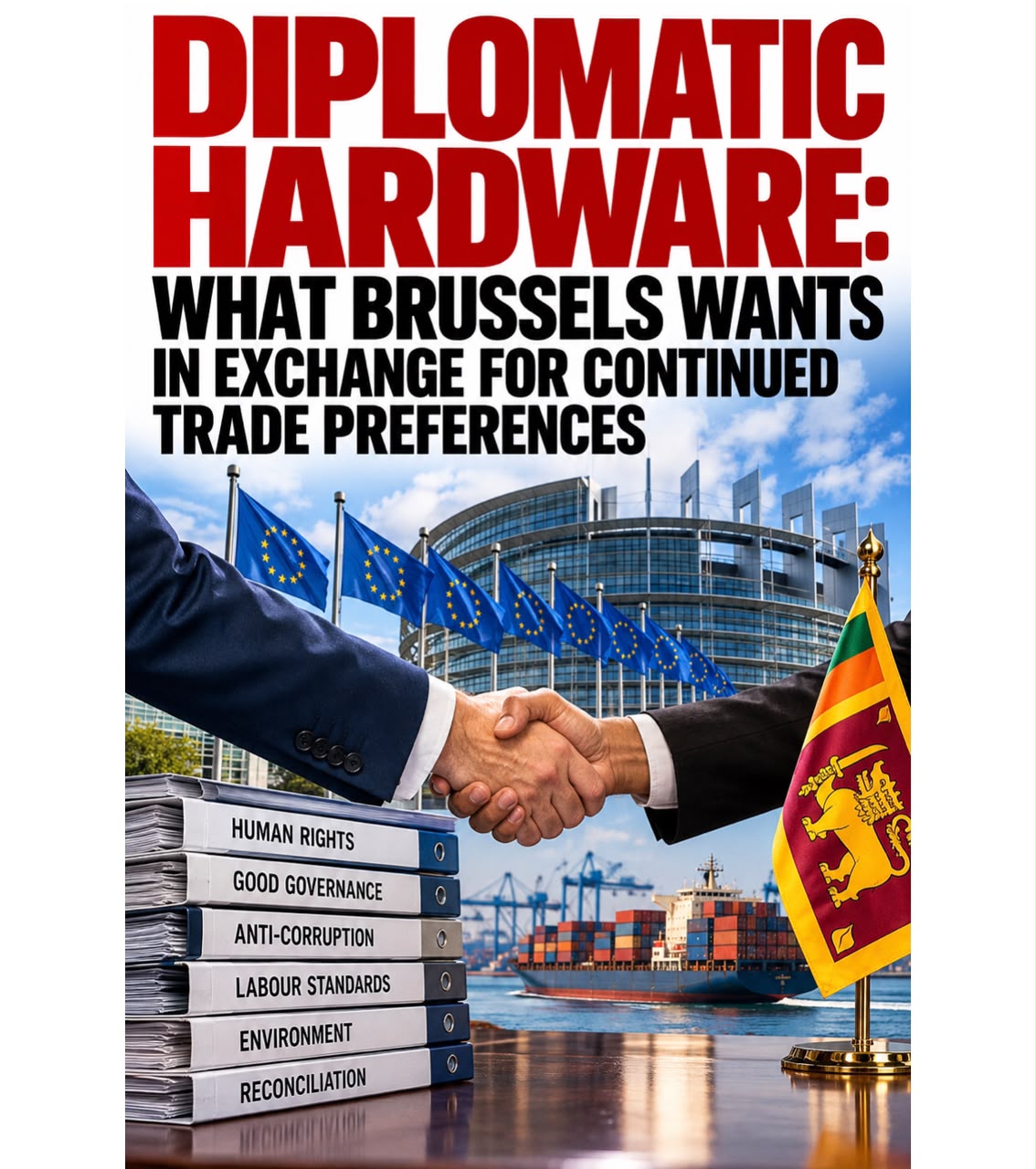
Following high-level talks between Sri Lankan parliamentary leadership and the European Parliament in Brussels, the political calculus surrounding Sri Lanka’s trade status has entered a crucial phase. The co-chaired EU-Sri Lanka Inter-Parliamentary Meeting focused heavily on economic stabilization, GSP+ compliance, and governance reforms. European representatives commended the island’s post-recovery trajectory while quietly reminding Colombo that continued tariff-free market access remains strictly conditional on institutional adherence to human rights, labor laws, and anti-corruption frameworks.
For the administration, maintaining GSP+ benefits is non-negotiable. European markets absorb a massive share of Sri Lankan apparel, tea, and processed agricultural exports, generating essential foreign currency earnings. However, European policymakers operate under strict domestic mandates that tie economic concessions to tangible legislative metrics. When Sri Lankan officials request extended trade support or Paris Club debt restructuring backing, European delegates counter by scrutinizing domestic statutory reforms, criminal justice procedures, and anti-terrorism legislation.
Navigating this trade diplomacy requires the government to balance domestic political priorities with international regulatory expectations. Drafting legislation that satisfies European human rights benchmarks while managing internal security concerns is a perpetual balancing act for the Ministry of Foreign Affairs. Domestic industries cannot afford a sudden disruption in tariff preferences, meaning parliamentary committees will have to accelerate statutory reviews to align local laws with international commitments.
Submit Your Press Release
Get your company news, announcements, launches, appointments and events in front of a wider audience.


Navigating this trade diplomacy requires the government to balance domestic political priorities with international regulatory expectations. Drafting legislation that satisfies European human rights benchmarks while managing internal security concerns is a perpetual balancing act for the Ministry of Foreign Affairs. Domestic industries cannot afford a sudden disruption in tariff preferences, meaning parliamentary committees will have to accelerate statutory reviews to align local laws with international commitments.



