
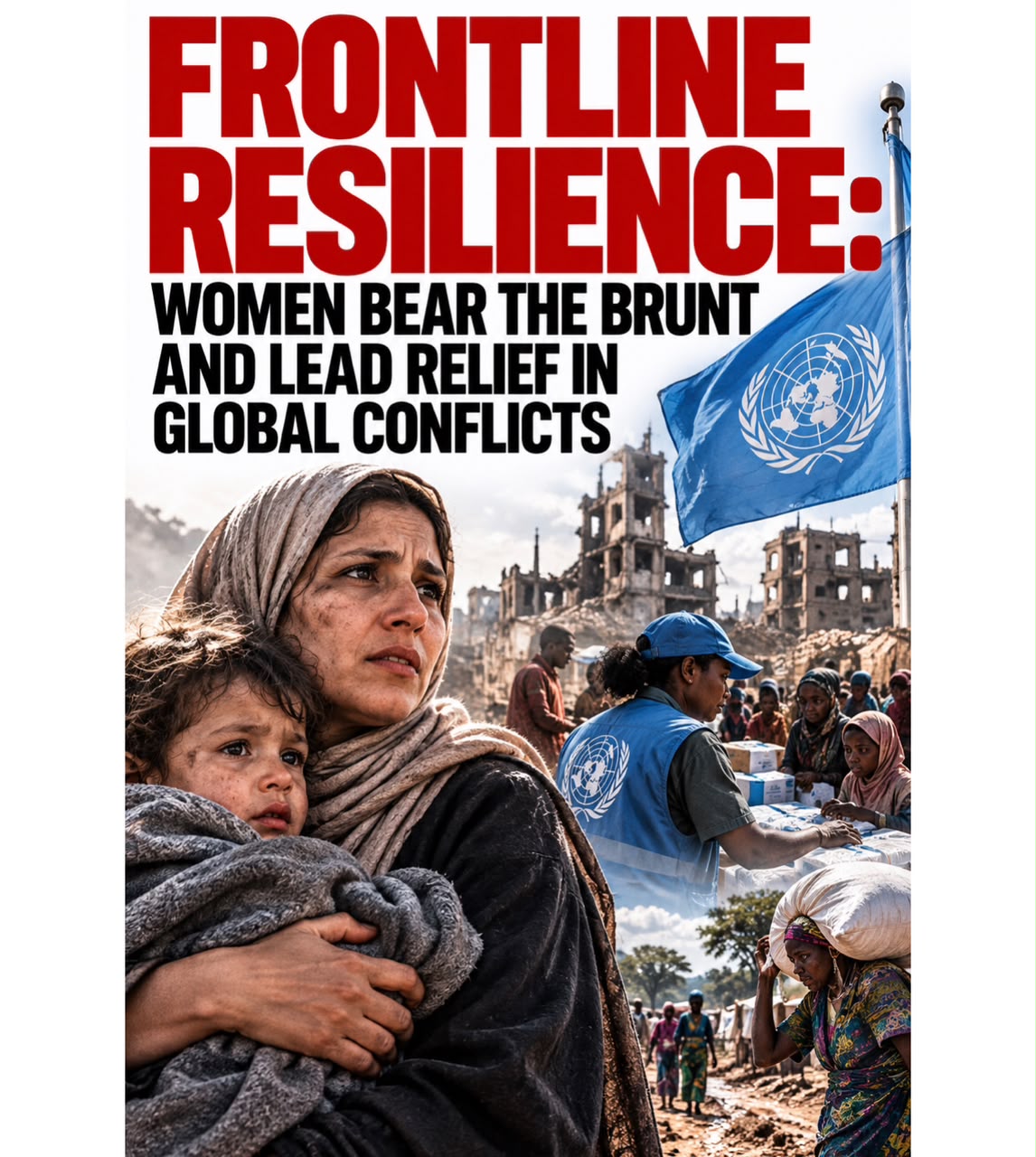
Marking the 81st anniversary of the United Nations, a comprehensive UN global report revealed that women are consistently the first to suffer under military sieges while simultaneously serving as the primary frontline responders in active conflict zones such as Sudan, Gaza, and Eastern DR Congo. The report highlights a stark humanitarian paradox: while civilian women face disproportionate risks of displacement, targeted violence, and loss of healthcare, community-led women’s networks manage over sixty percent of grass-roots emergency food distribution, medical triage, and shelter coordination in besieged areas where international aid agencies cannot reach.
In conflict zones across the globe, traditional state infrastructure collapses rapidly under military bombardments and blockades. When formal municipal services cease to function, informal networks organized by local women step in to establish community kitchens, manage clandestine medical clinics, and protect vulnerable children. Despite operating under extreme personal danger and acute resource scarcity, these grass-roots women’s organizations form the true operational backbone of civilian survival in active war zones.
However, international humanitarian funding structures routinely bypass these local female-led responder networks. Global aid allocations flow primarily to large international non-governmental organizations, leaving ground-level civilian groups operating on micro-donations and volunteer labor. Furthermore, despite carrying the physical burden of emergency response, women remain overwhelmingly excluded from formal peace negotiations and ceasefire discussions mediated by international diplomats.
Submit Your Press Release
Get your company news, announcements, launches, appointments and events in front of a wider audience.


Empowering women in conflict zones requires international humanitarian bodies to redirect direct funding and logistics support to local grass-roots networks. True peacebuilding demands that the women who risk their lives holding communities together during war are given central seats at the political tables where peace agreements are negotiated. Recognizing and funding frontline female responders is not just a humanitarian obligation; it is a fundamental prerequisite for building lasting global peace.



