
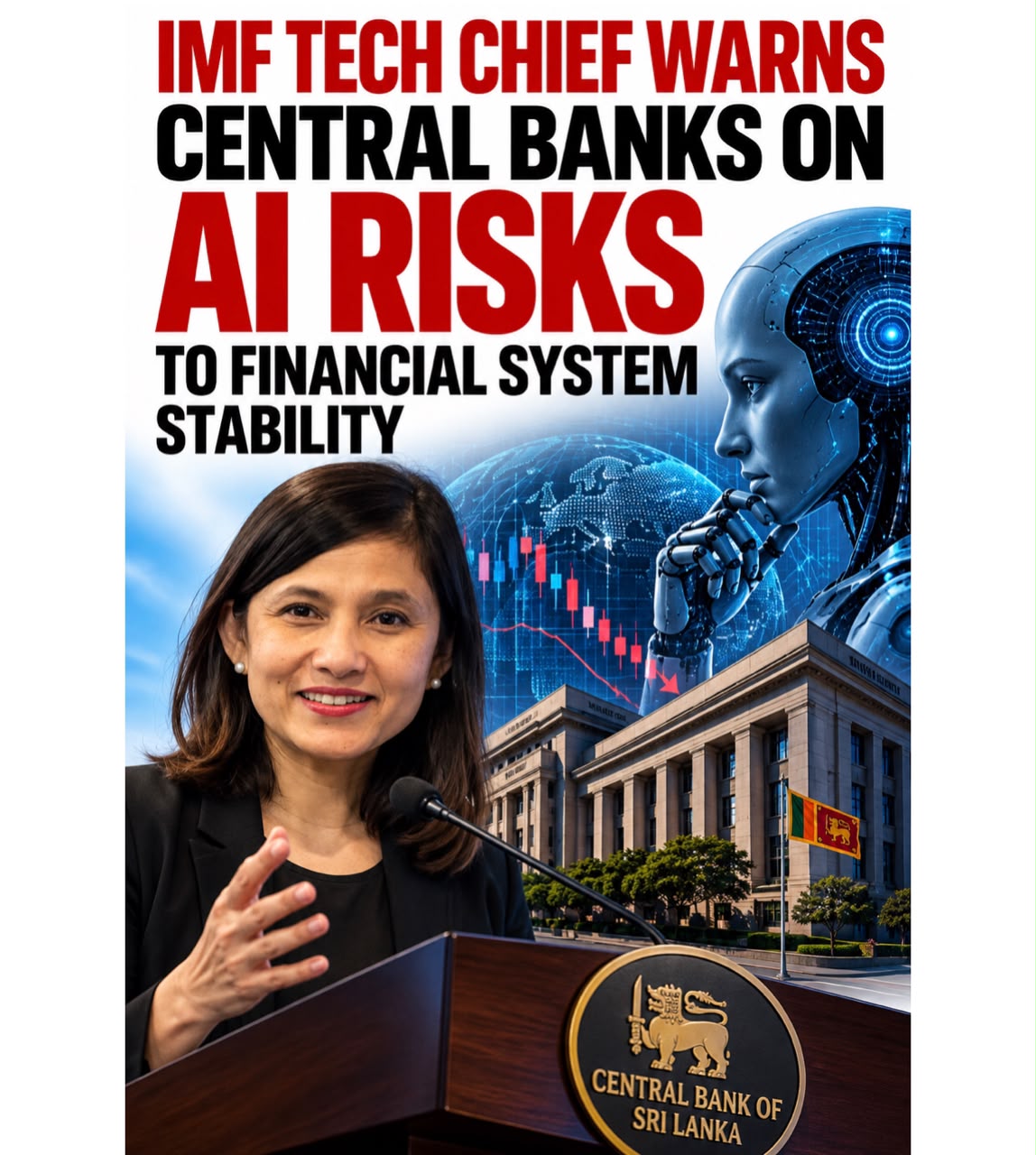
Delivering a keynote address at the Central Bank of Sri Lanka, International Monetary Fund Chief Information Officer Shirin Hamid issued a clear warning regarding the rapid deployment of artificial intelligence across commercial banking and regulatory systems. While AI tools offer unprecedented capabilities in fraud detection, credit scoring, and automated customer service, they also introduce novel systemic risks, including deepfake financial impersonation, automated market manipulation, and algorithmic cyber vulnerabilities. Central banks were urged to maintain strict human oversight and robust governance frameworks to prevent emerging technologies from undermining public trust in financial institutions.
The financial services sector in Sri Lanka has increasingly embraced digital transformation, integrating automated payment gateways, mobile banking applications, and AI-driven credit assessment tools to expand financial inclusion. However, as financial transactions move at machine speed, the speed and scale of potential cyber threats increase exponentially. Financial regulators face the complex challenge of supervising complex algorithmic systems that operate as black boxes, making it difficult to assess how automated decisions are reached during market stress or credit evaluations.
Building technological resilience inside the central bank and commercial institutions requires significant investment in specialized cybersecurity talent, threat monitoring systems, and regulatory tech infrastructure. Emerging threats like voice cloning and AI-generated identity fraud target the weakest link in the security chain: human trust. If retail banking customers lose faith in digital transaction security due to sophisticated automated scams, the national push toward a cashless, digital economy could suffer serious setbacks.
Submit Your Press Release
Get your company news, announcements, launches, appointments and events in front of a wider audience.


Regulatory bodies must balance the encouragement of financial technology innovation with unyielding systemic risk management. Establishing clear ethical guidelines for AI usage, mandating independent algorithmic audits, and ensuring human intervention mechanisms remain active across critical financial networks will be essential. As Sri Lanka modernizes its financial infrastructure, proactive technological governance will prove just as vital as traditional monetary policy in preserving economic stability.



