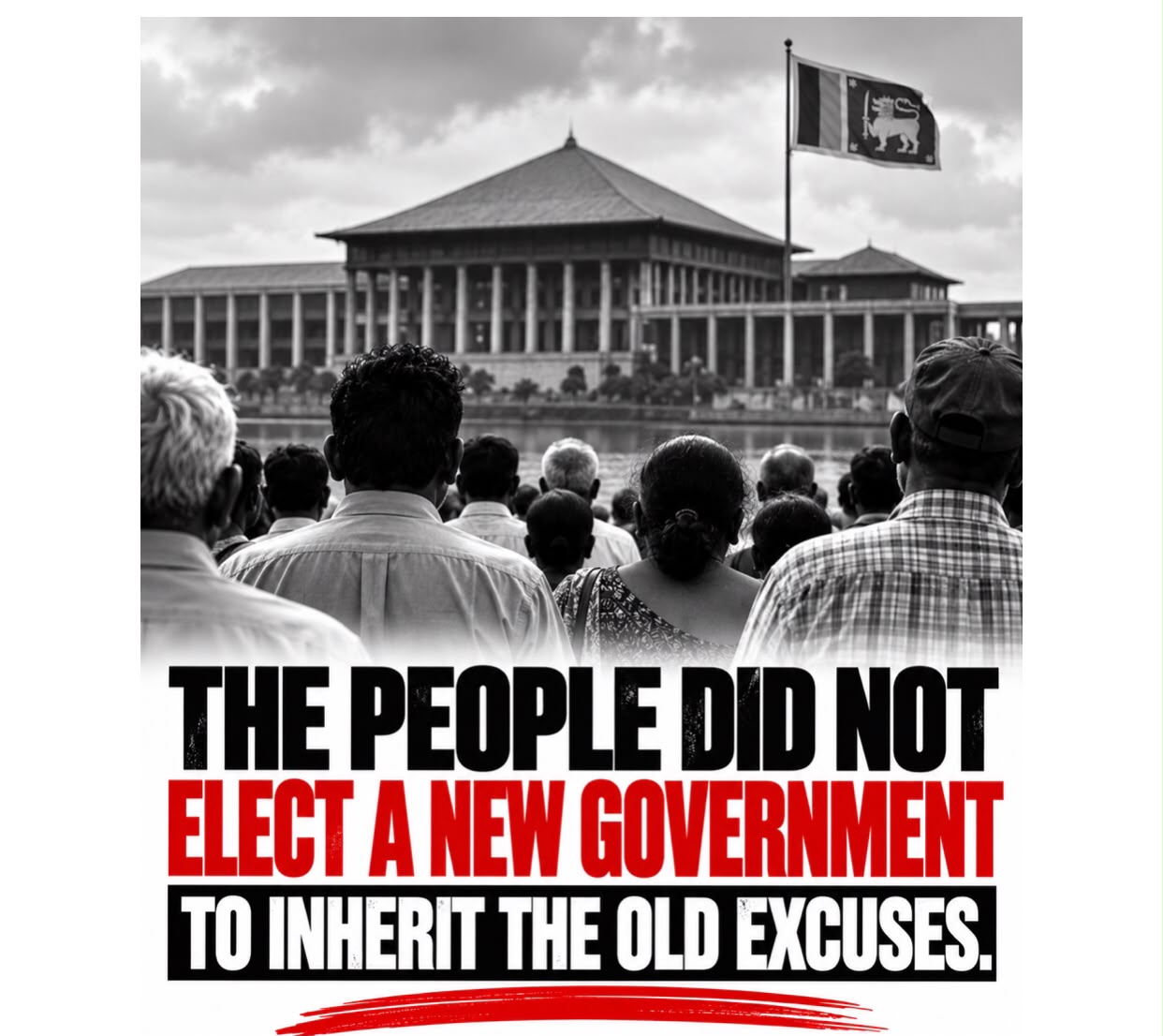
Sri Lanka did not vote for a change of faces. It voted for a change in the relationship between the State and its people. Nearly two years into the present administration, the question is no longer whether the Government inherited a broken system. It is whether it possesses the courage to stop behaving like the governments that broke it.
For decades, Sri Lankans were told to be patient while politicians became wealthy, institutions became dysfunctional and the public became poorer. Every government arrived with promises of reform and departed with explanations for why those promises had proved so difficult to fulfil.
The National People’s Power administration was elected with an extraordinary parliamentary majority of 159 seats. It was handed something most governments could only dream of: the political strength to confront entrenched interests without having to negotiate its survival after every difficult decision.
Submit Your Press Release
Get your company news, announcements, launches, appointments and events in front of a wider audience.


That majority was not a gift. It was a responsibility.
Yet the temptation to confuse parliamentary strength with public consent remains as dangerous today as it was under previous administrations. A government does not become accountable merely because its ministers appear less extravagant than their predecessors. Nor does a politician become virtuous simply because the politician he replaced was considerably worse.
Sri Lankans are entitled to more than comparisons with the failures of yesterday.
They deserve hospitals where essential medicines are available, schools where opportunity does not depend on family income, police who understand that arrest is not conviction, regulators who protect the public rather than their own institutions and a public service that remembers who pays its salaries.
They deserve to know why public money is spent, who benefits from government decisions and why accountability so often becomes painfully complicated when powerful interests are involved.
The Opposition, meanwhile, should abandon the comforting fiction that the public has forgotten its own record. Many of those now discovering the virtues of transparency had ample opportunity to practise them while occupying ministerial offices. Their present enthusiasm for accountability would be more persuasive had it been evident when they possessed the authority to deliver it.
But the failures of the Opposition cannot become the Government’s permanent defence.
There is a fundamental difference between investigating corruption and creating a culture in which the accusation itself becomes punishment. There is an equally important difference between strengthening the State and strengthening the safeguards against its abuse.
The test of democracy is not how efficiently a government can pursue its enemies. It is whether the same law applies to its friends.
Sri Lanka’s people have paid an extraordinary price for political incompetence, institutional arrogance and economic mismanagement. They have endured higher taxes, diminished purchasing power and the humiliation of being told that national recovery is proceeding splendidly while their household accounts suggest otherwise.
The economy may be recovering. The people are entitled to ask when that recovery intends to visit them.
President Anura Kumara Dissanayake and his Government have an opportunity to establish a different political standard. But opportunity is not achievement, and sincerity, however genuine, cannot substitute for competence, transparency or measurable results.
Be that as it may, the Government must understand something its predecessors discovered far too late. The people are not an inconvenience to be managed between elections. They are the reason government exists.
Sri Lanka does not need another ruling class convinced of its own righteousness. It needs a State that is answerable to its citizens. And if 159 parliamentary seats cannot deliver that, the problem is no longer a shortage of power. It is what those entrusted with that power have chosen to do with it.