Four years after Sri Lanka defaulted on its external debt, the country’s economic stabilisation is, by most conventional measures, a genuine achievement. Reserves have been rebuilt, a primary surplus delivered, debt restructuring is largely complete, and the sovereign rating has been moving in the right direction.
It was against this backdrop that Krishan Balendra, Chairman of the Ceylon Chamber of Commerce, used the Sri Lanka Retail Forum 2026 to argue that Sri Lanka should consider a follow-on International Monetary Fund (IMF)-supported programme, or an equivalent framework, once the current Extended Fund Facility (EFF) lapses in March 2027.
He deserves to be heard. Few people have watched the mechanics of this crisis and recovery as closely as he has, and his instinct that reform momentum should not evaporate the moment the programme’s final review is signed off is not wrong.
Submit Your Press Release
Get your company news, announcements, launches, appointments and events in front of a wider audience.


Where I part company with him is on the remedy.
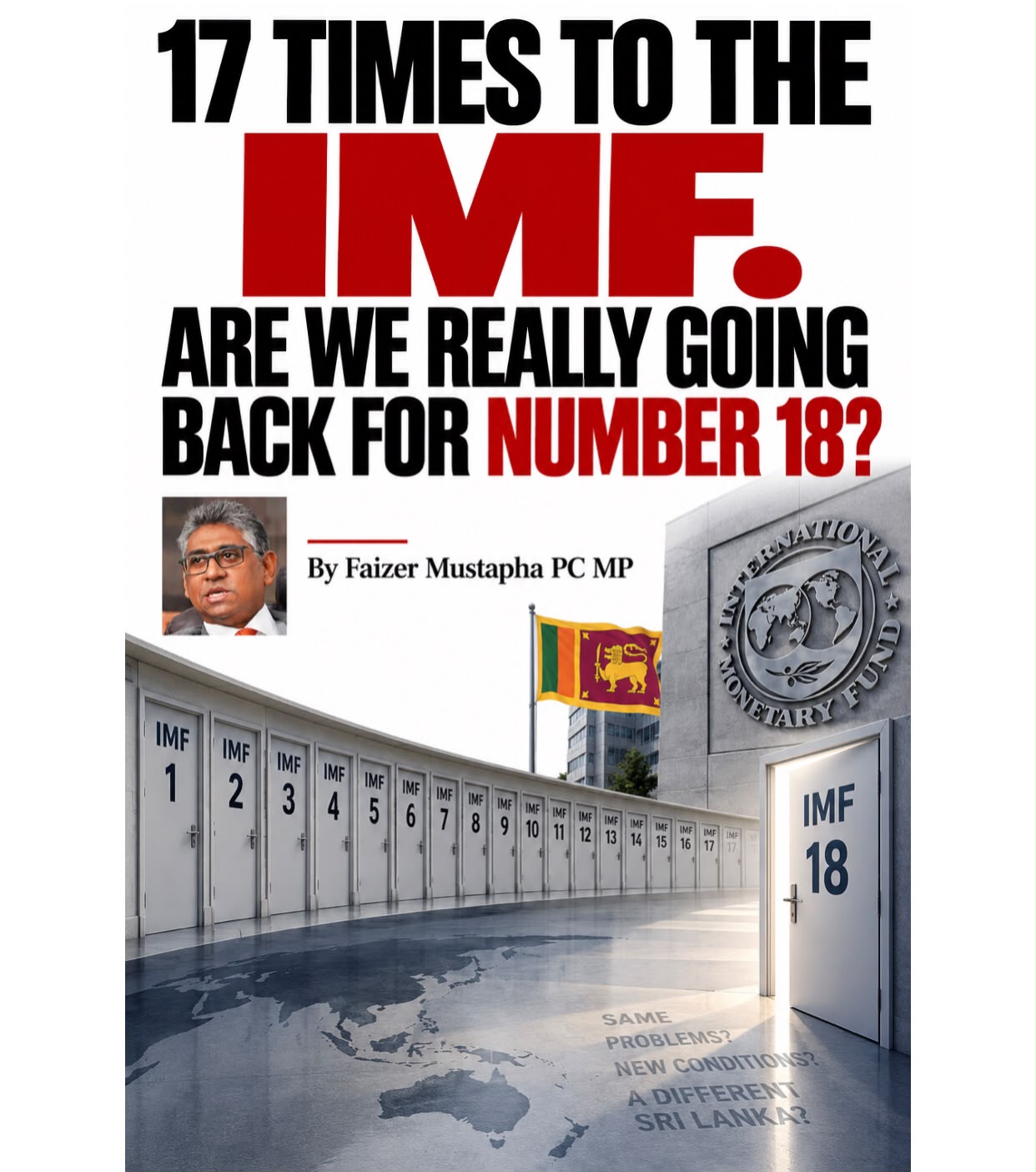
The question of what comes after March 2027 deserves a harder answer than an instinctive return to Washington. Four years into this programme, it is worth asking not only what the reform effort has built, and for whom, but whether a 17th encounter with the Fund, and now an 18th, is actually capable of fixing what is wrong with the model.
My own view is that it is not, and that Sri Lanka should resist the pull towards a follow-on arrangement rather than sign up for one.
THE HUMAN COST
Before the mechanics of fiscal policy, it is worth asking who has actually paid for this stabilisation. Public sector salaries were frozen for extended periods even as inflation eroded their value, hitting hardest the households least able to absorb it.
On the government’s own figures, more than four-fifths of state expenditure still goes on salaries, welfare and debt interest, leaving little room for the infrastructure, health and education spending that builds lasting resilience.
In a recent international comparison, Sri Lanka’s minimum wage, adjusted for purchasing power, ranked 120th out of 130 countries, among the lowest anywhere in the world, and the World Food Programme has had to mount an emergency response to worsening food insecurity even as Colombo’s investor conferences describe a recovery well under way.
None of this means adjustment was avoidable in 2022; it almost certainly was not. It does mean the human cost has been severe, is still being paid, and deserves to weigh as heavily in this debate as the movement of a sovereign rating.
THE TAX BURDEN
Start with an uncomfortable point at the heart of the programme’s own design. Sri Lanka’s overall tax revenue rose from roughly eight per cent of GDP in 2021 to almost 14 per cent by 2024, one of the fastest fiscal turnarounds anywhere, driven overwhelmingly by value added tax, raised to 18 per cent having been cut to as little as eight per cent in the tax giveaways of 2019 that helped trigger the crisis.
The standard corporate income tax rate rose to 30 per cent and, at the IMF’s own repeated urging, a raft of opaque tax holidays and what one 2024 assessment bluntly summarised as “corporate freebies” were wound down.
That correction was overdue. Generous, poorly targeted exemptions were, as researchers have documented, one of the quieter causes of the fiscal collapse, starving public services of revenue while doing little to broaden the economy. Nobody serious should want that regime back.
The trouble is what has, and has not, replaced it.
Sri Lanka cannot build a sustainable economy simply by repeatedly extracting more from the same narrow group of taxpayers. Nor can taxation substitute indefinitely for the harder work of expanding production, improving productivity, creating better-paid employment and broadening the tax base through genuine economic growth.
STABILITY IS NOT THE SAME AS PROSPERITY
The IMF programme was designed principally to restore macroeconomic stability. On that measure, it has achieved a great deal. Inflation was brought under control, reserves were rebuilt, the exchange rate stabilised and fiscal discipline returned after years in which political expediency repeatedly overwhelmed economic common sense.
But stabilisation is the foundation of recovery, not recovery itself.
A country does not become prosperous because its spreadsheets balance. It becomes prosperous when businesses invest, workers become more productive, exports expand, wages rise sustainably and households acquire enough disposable income to participate meaningfully in the economy.
The danger is that Sri Lanka begins treating the maintenance of IMF compliance as an economic strategy in itself rather than as the platform upon which a genuinely competitive economy must be constructed.
THE ARGUMENT FOR NUMBER 18
There is, of course, a serious argument for continuing with the Fund. Balendra is right that policy credibility matters. Investors contemplating long-term commitments to Sri Lanka need confidence that the country will not return to the fiscal indiscipline, arbitrary taxation, monetary financing and politically convenient exchange-rate management that helped produce the 2022 collapse.
A successor programme could provide an external anchor. It could reassure creditors and ratings agencies, reinforce fiscal discipline and make it politically harder for a future government to abandon reforms when they become inconvenient.
Those are not trivial benefits.
The question is whether Sri Lanka really requires another IMF programme to behave responsibly.
At some point, a sovereign state has to demonstrate that fiscal discipline is something it practises because it understands the consequences of doing otherwise, not because an international institution is standing over its shoulder.
THE ALTERNATIVE
Rejecting an 18th IMF arrangement does not mean rejecting reform. Quite the opposite. It requires Sri Lanka to own reform.
Parliament should establish binding fiscal rules capable of surviving changes of government. Independent institutions should be strengthened rather than weakened. State-owned enterprises should be required to operate transparently and commercially where appropriate. Procurement must become genuinely competitive. Tax administration must improve so that compliance expands without simply increasing rates on those already paying.
Above all, Sri Lanka needs a production strategy.
Agriculture, manufacturing, logistics, tourism, technology and internationally traded services cannot remain slogans appearing in policy documents. The country needs to identify where it possesses genuine competitive advantages and then remove the obstacles preventing businesses from exploiting them.
That means cheaper and more reliable energy, efficient ports, predictable taxation, faster approvals, better technical education, functioning commercial dispute resolution and an end to the habit of changing economic rules whenever political winds change.
None of that requires an IMF programme.
It requires government.
THE REAL TEST
There are risks in leaving the Fund without a successor arrangement. Markets may worry about policy slippage. Ratings agencies will watch fiscal performance closely. Borrowing costs could rise if investors believe Sri Lanka is returning to old habits.
Those risks should not be dismissed.
But neither should they become an argument for permanent economic supervision.
Sri Lanka has been to the IMF 17 times because successive governments repeatedly failed to fix the structural weaknesses that sent us there. If the answer to completing programme number 17 is simply to begin programme number 18, we should at least have the courage to ask what that says about everything we supposedly learned.
Krishan Balendra is right about one thing above all: reform momentum cannot stop in 2027.
Where we differ is over who should provide the discipline.
After 17 programmes, perhaps the most important reform Sri Lanka can make is learning to discipline itself.