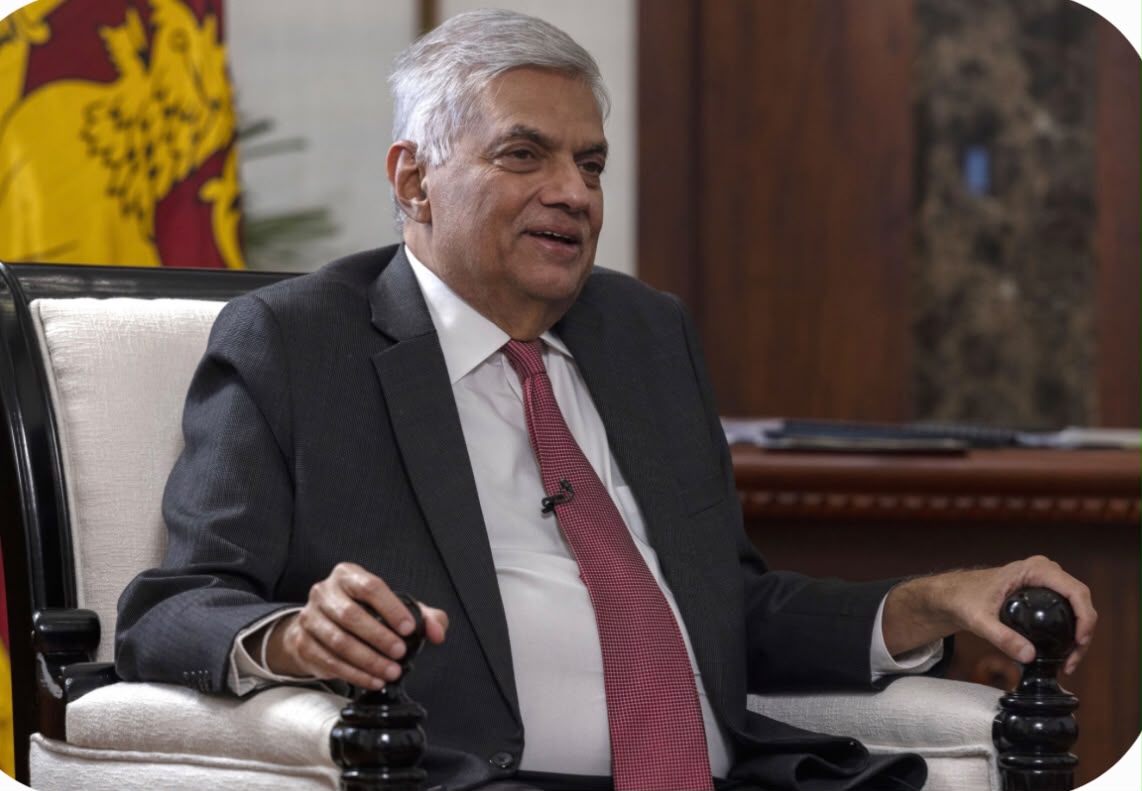
Former President warns heavier foreign-debt repayments could create another economic battle, while the NPP administration says stronger reserves and a different economic strategy will leave Sri Lanka prepared
COLOMBO – A political argument over Sri Lanka’s economic future has opened between former President Ranil Wickremesinghe and the NPP Government, with Wickremesinghe warning of a difficult new phase when heavier foreign-debt repayments arrive after 2028 and the administration insisting that the economy is being prepared to meet those obligations.
The dispute is important because it moves Sri Lanka’s political conversation beyond the familiar argument over who deserves credit for ending the 2022 economic collapse. It instead asks the more consequential question of whether the recovery now under way will remain strong enough when the country again confronts a substantially larger external debt-servicing burden.
Submit Your Press Release
Get your company news, announcements, launches, appointments and events in front of a wider audience.


Wickremesinghe, whose administration negotiated the IMF programme and began the sovereign-debt restructuring process after the 2022 default, has warned that Sri Lanka will require a considerably larger foreign-reserve buffer to negotiate the period ahead. He has argued that reserves should move towards approximately USD 15 billion by 2028 and described the approaching repayment challenge as another economic battle for the country. Deputy Finance Minister Prof. Anil Jayantha Fernando has pushed back against the former President’s assessment, arguing that the Government expects reserves to reach approximately USD 9 billion by the end of this year and is pursuing policies intended to strengthen the country’s ability to generate foreign exchange. The administration has also challenged aspects of the calculations being used to portray 2028 as the beginning of another crisis.
The political temptation will be to reduce the disagreement to a contest between Wickremesinghe and the NPP. The economic reality is less convenient for either side, because Sri Lanka’s debt obligations will exist regardless of which party occupies office when they become payable.
Wickremesinghe can legitimately argue that the debt restructuring negotiated during his presidency provided the breathing space from which the present recovery has benefited. The NPP can equally argue that it inherited the obligation to turn that breathing space into sustainable growth and that increasing reserves, stronger remittances and continued economic expansion demonstrate progress towards doing so.
What neither side can credibly argue is that Sri Lanka has permanently escaped its debt problem. Restructuring changed the timing and terms of obligations; it did not cause the underlying debt to disappear.
That makes the years immediately ahead unusually important. Sri Lanka must use the present period to expand exports, attract significantly greater foreign direct investment, improve tourism earnings and build reserves sufficiently large to withstand both renewed debt servicing and unexpected external shocks.
There is also an uncomfortable political lesson in the argument. Sri Lankan governments have repeatedly behaved as though the favourable portion of an economic cycle will continue indefinitely, only to discover that external conditions can change with extraordinary speed. The present disruption in the Middle East and the restriction of shipping through the Strait of Hormuz provide a timely reminder that a small energy-importing economy cannot control many of the forces capable of damaging it.
The most useful outcome of the Wickremesinghe–Government argument would therefore be greater transparency over the numbers. The Treasury should publish a clear year-by-year schedule showing expected sovereign external debt service, the assumptions behind those projections and the foreign-exchange earnings required to meet them without destabilising reserves.
Sri Lankans should not have to choose between one politician saying disaster is approaching and another saying everything is under control. They are entitled to see the arithmetic and make that judgement for themselves.
The debate over 2028 is consequently worth having now, while there is still time to prepare. If Wickremesinghe is overstating the danger, the numbers should demonstrate it; if he is identifying a genuine vulnerability, dismissing the warning because of its political source would be equally foolish.
Sri Lanka learned in 2022 what happens when economic warnings are postponed until the money has already disappeared. Whatever their political differences, both Government and Opposition should be able to agree that the country cannot afford to learn that lesson twice.