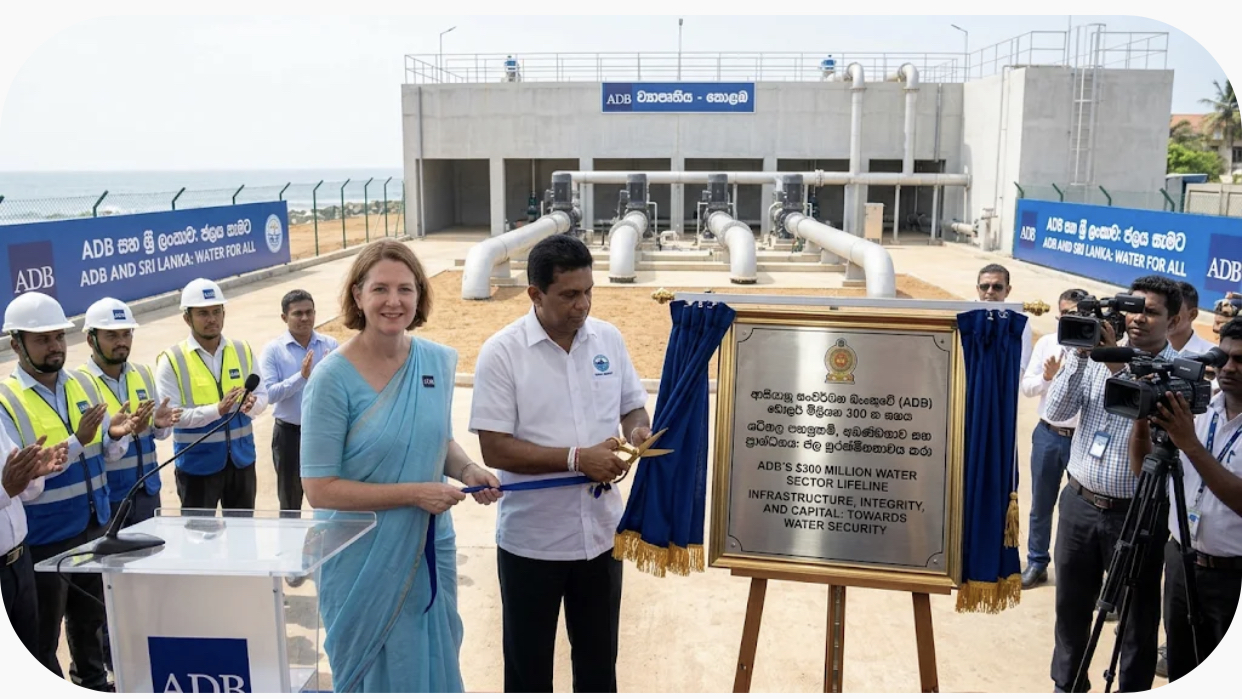
Sri Lanka is getting another 300 million dollars from the Asian Development Bank. The money is earmarked for two big jobs: fixing up broken water supply networks and building actual sanitation infrastructure.
Here is where the capital goes.
Two hundred million dollars funds physical construction work. Colombo and Lunugamwehera get new water treatment plants, storage reservoirs, and distribution pipes to supply 1.3 million people in the Western and Southern provinces. Up in Jaffna, the money pays for sewerage networks, pumping stations, and wastewater treatment for nearly 250,000 residents.
Submit Your Press Release
Get your company news, announcements, launches, appointments and events in front of a wider audience.


The remaining 100 million dollars funds policy reforms. That means adjusting water tariffs, changing how the National Water Supply and Drainage Board operates, and trying to get the utility back onto sound financial footing.
The timing is obvious. For a country dragged down by debt and years of financial chaos, getting concessional capital to fix basic utilities is a relief. Right now, billions of rupees wash down the drain every year because of non-revenue water. Leaking pipes, outdated meters, and illegal connections bleed the state dry. Fixing the physical network stops the loss of water and money.
The real question is how state officials handle the money.
Anyone who has watched public works in this country over the last thirty years knows the pattern. A foreign lender signs off on millions, politicians line up for photos, and then the project stalls. Procurement fights start, scope changes get added, costs balloon, and the finished asset ends up late and under-delivered. Taxpayers get stuck paying off foreign loans for infrastructure that barely functions.
This ADB package cannot follow that old script.
Ministry officials and Water Board engineers have to keep procurement clean and hold contractors to strict timelines. If a vendor underperforms or tries to inflate costs, the state needs to enforce penalties rather than hand out extensions.
The ADB Sri Lanka Country Director, Shannon Cowlin, noted that reliable water systems are essential for economic growth. She is right. But foreign loans only build lasting assets if our own institutions manage the money with basic discipline and honesty.