Heavy flooding has hit Bangkok and large parts of Thailand, disrupting schools, homes and everyday life while affecting tens of thousands of households. Thailand knows how to deal with monsoon rain. The harder question is why one of Asia’s great cities remains so vulnerable when extreme rainfall meets rapid development, overloaded drainage and a metropolis that is quite literally sinking.
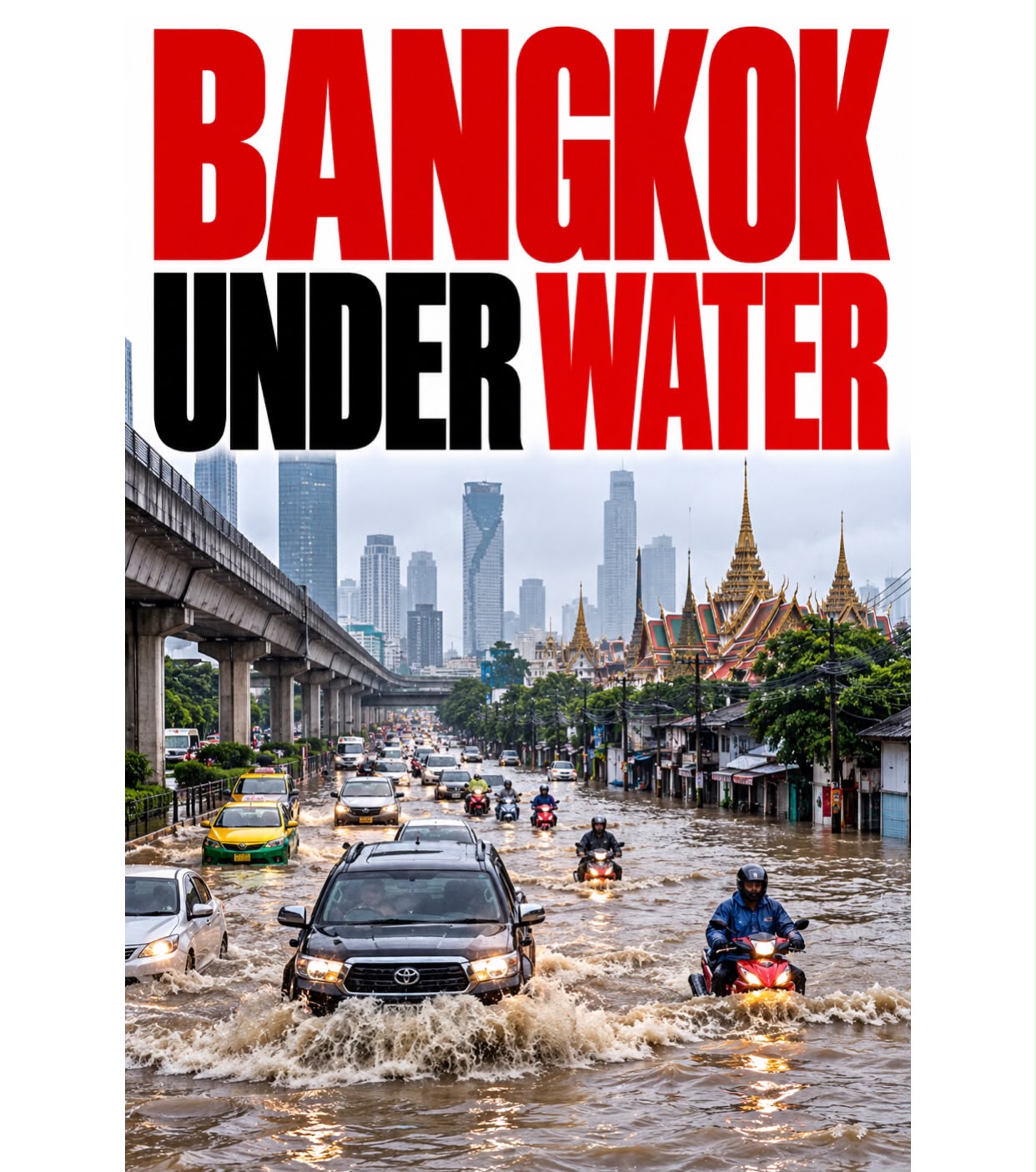
Floodwater in Bangkok produces images that have become uncomfortably familiar. Roads turn into waterways, traffic struggles through brown water, homes are inundated and pumps begin the race to remove water almost as quickly as the sky can replace it.
The latest flooding has affected Bangkok and provinces across Thailand, with eight deaths reported and more than 170,000 households affected nationally. Tens of thousands of households in the capital have also been caught by the flooding, while hundreds of municipal schools have been forced to close as authorities attempt to drain affected areas.
Submit Your Press Release
Get your company news, announcements, launches, appointments and events in front of a wider audience.


Some of the water is now receding, but that should not disguise the larger problem. Bangkok is not confronting an entirely unexpected natural phenomenon. Thailand has always had monsoon rains, and the capital sits in a low-lying delta where water management has been central to human settlement for generations.
What has changed is the city built on top of it.
Bangkok has expanded dramatically, replacing areas capable of absorbing water with roads, buildings, concrete and other impermeable surfaces. Rain that might once have dispersed across open land increasingly has to find its way through drains, canals and pumping systems that can be overwhelmed when enormous volumes arrive within a short period.
Then there is the ground beneath the city. Bangkok has long faced land subsidence, historically worsened by extraction of groundwater. Parts of the metropolis are barely above sea level, and a city that is slowly sinking does not acquire greater protection from flooding simply because its skyline is moving in the opposite direction.
Climate change adds another layer to the problem. A warmer atmosphere can hold more moisture, increasing the potential for intense rainfall events. That does not mean every flood can simply be labelled climate change, but it does mean cities designed around historical weather patterns increasingly have to consider whether yesterday’s definition of exceptional rainfall remains exceptional.
Bangkok is hardly alone. Major cities across Asia are discovering that drainage systems designed for one era are being asked to cope with another. Rapid urbanisation has placed millions more people, vehicles and buildings into areas where water once had somewhere else to go.
The engineering response is expensive. Bangkok has invested in tunnels, pumping stations, canals, retention areas and drainage improvements. Yet enormous infrastructure projects address only part of the problem if development continues without preserving sufficient space for water.
There is also an uncomfortable social dimension. Floods do not distribute their inconvenience equally. A wealthy household may lose access to a road or suffer damage to a vehicle. A poorer family living in a vulnerable neighbourhood can lose furniture, appliances, wages and perhaps the ability to remain in its home.
For workers paid by the day, even relatively brief disruption can become an economic emergency. Schools closing means parents must find childcare. Small businesses lose customers while still paying rent and wages. Flooding therefore becomes not merely a water-management problem but a household-income problem.
Thailand’s immediate priority is obvious: drain the water, assist affected communities and restore normal life. The more difficult work begins after the photographs disappear from the news.
How much additional development can Bangkok accommodate without fundamentally changing the way it handles water? Are drainage and flood-protection projects keeping pace with construction? Are building approvals accounting for cumulative impact rather than merely examining individual developments?
And perhaps most importantly, is the city planning for the weather it is likely to experience during the next thirty years or the weather engineers expected when much of its infrastructure was designed?
Bangkok is one of Asia’s most successful urban economies and among the world’s great tourism destinations. Nobody seriously proposes abandoning it because heavy rain falls.
But repeatedly pumping water away after it arrives is not the same thing as making a city resilient.
Thailand will get through this flood. Roads will reopen, schools will resume and Bangkok will return to doing what Bangkok does remarkably well.
The question is whether the city will use the dry days to prepare for the next wet ones.