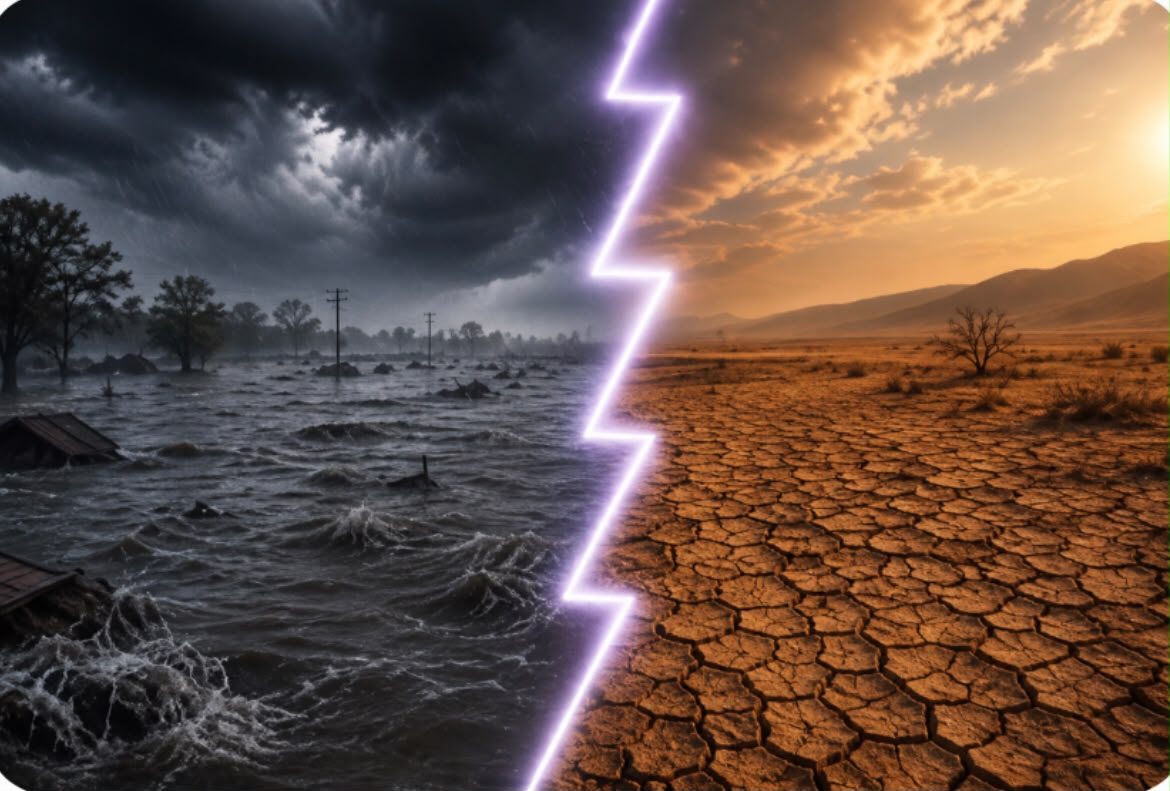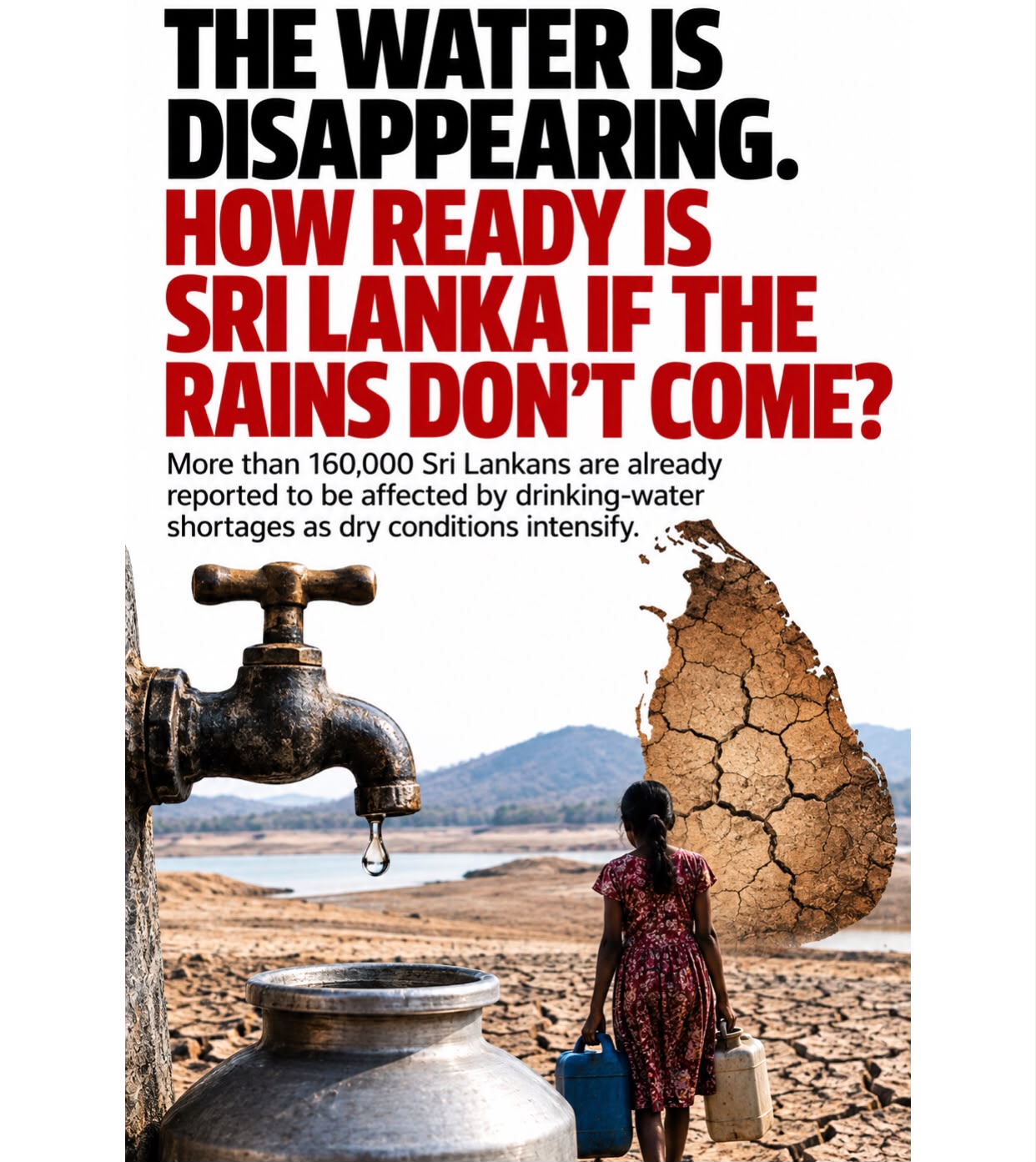
More than 160,000 Sri Lankans are already reported to be affected by drinking-water shortages as dry conditions intensify. Reservoirs are under pressure, parts of Yala have been closed to visitors and the prospect of a powerful El Niño hangs over the months ahead. Drought does not arrive with the drama of a cyclone. It simply keeps getting worse.
Sri Lanka is confronting a problem that develops slowly enough to be ignored until it becomes extremely difficult to solve. Prolonged dry weather has already created drinking-water shortages across several parts of the country, with more than 160,000 people reported to be affected. Water is being transported into some communities while reservoirs and other water sources come under increasing pressure.
The immediate difficulty is serious enough, but the larger concern is what happens if the expected weather pattern develops as feared and meaningful rainfall remains inadequate for an extended period. Sri Lanka’s Department of Meteorology has warned of a very high probability of a strong El Niño developing, bringing with it the possibility of hotter and drier conditions. Across Asia, governments are already examining the implications for water, agriculture and energy, and Sri Lanka should be doing considerably more than simply watching the forecasts.
Submit Your Press Release
Get your company news, announcements, launches, appointments and events in front of a wider audience.


Water security sits quietly underneath almost every important part of the economy. Agriculture needs it, hydroelectricity depends upon it, industry consumes it and tourism cannot operate without it. Every household discovers very quickly that virtually nothing functions normally when a tap stops producing water.
The decision to restrict access to drought-affected areas of Yala demonstrates how quickly an environmental problem can become an economic one. Tourism operators depend upon the park, communities around it depend upon those operators and wildlife depends upon increasingly scarce water sources inside the reserve. The same shortage can therefore affect livelihoods, Government revenue, food production and the environment simultaneously.
There is also the question of electricity. Sri Lanka has entered the present dry period with substantially improved renewable-energy capacity and new battery-storage technology beginning to strengthen the grid, but hydroelectric generation remains important. If reservoir levels fall sufficiently to reduce hydro generation, that electricity must be replaced from somewhere else and the replacement can become considerably more expensive.
The Government therefore needs to treat the present drought as a national planning exercise rather than simply a water-distribution operation. Bowsering drinking water into affected villages is necessary, but it is principally a response after a local water source has already become inadequate. The more important work is identifying which reservoirs are approaching critical levels, which communities are most vulnerable and what additional capacity exists if the number of people requiring drinking water doubles or triples.
Agriculture requires the same contingency planning. Farmers cannot wait until crops have failed to discover what water allocations will be available, while electricity planners need to understand what prolonged reservoir depletion would mean for generation. Industry, tourism and local authorities should equally know what restrictions would apply if conditions deteriorate substantially.
The most important question is therefore not whether Sri Lanka can cope with today’s drought. It is whether the country has prepared for the possibility that the rains simply do not arrive when historical experience tells us they should.
Climate variability is making those historical assumptions increasingly dangerous. Infrastructure designed around yesterday’s rainfall cannot automatically be expected to cope with tomorrow’s weather, particularly when a severe El Niño can affect large parts of the region simultaneously.
Sri Lanka knows what happens when a foreseeable problem is treated as tomorrow’s problem. In 2022 it was foreign exchange. In 2026, we should make certain it is not water.