Sri Lanka Customs has collected approximately Rs 2.1 trillion before the final quarter of the year, already reaching more than 95 percent of its full-year revenue target. Together with booming Inland Revenue collections, the Government’s tax machinery is having an extraordinary year. The question is how much comes from better collection and how much comes from Sri Lanka simply importing much more.
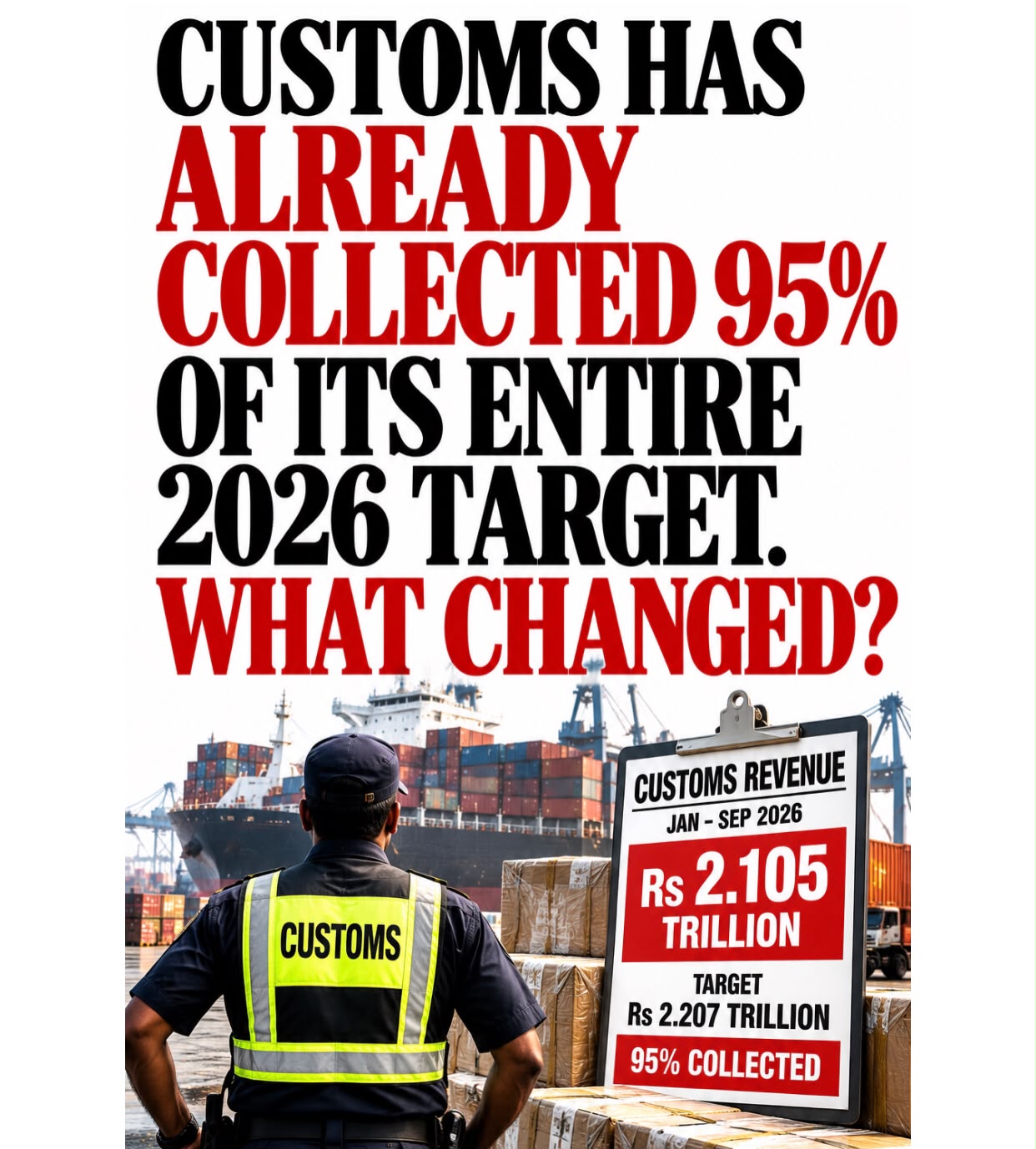
Sri Lanka Customs was given a revenue target of approximately Rs 2.207 trillion for 2026. By the end of September it had collected around Rs 2.105 trillion, leaving barely Rs 100 billion to collect during the remaining three months if it is merely to reach the original target.
It has also exceeded its monthly revenue target for nine consecutive months.
Submit Your Press Release
Get your company news, announcements, launches, appointments and events in front of a wider audience.


That is a significant achievement for an institution that sits at one of the most important intersections between government revenue, international trade and enforcement. Customs does considerably more than inspect suitcases at the airport. It collects duties and taxes on the enormous flow of goods entering the country and is responsible for preventing revenue leakage through undervaluation, misclassification, false declarations and smuggling.
There are several reasons why the money is flowing so strongly this year.
The first is obvious. Sri Lanka is importing much more.
Merchandise imports increased 24.1 percent during the first eight months of 2026 to approximately US$16.56 billion. When more taxable goods enter the country, Customs naturally has more transactions from which to collect revenue.
Vehicle imports are an especially important part of that change. Sri Lanka spent approximately US$1.68 billion importing motor vehicles during January to August after restrictions were removed. Vehicles carry substantial taxes and duties, making the reopening of that market particularly valuable to the Treasury.
Higher international prices can also increase collections. Sri Lanka spent approximately US$4 billion importing fuel during the first eight months as Middle Eastern instability drove petroleum costs sharply higher. Import taxes calculated against higher values can increase nominal revenue even though the country itself is not necessarily better off for paying more for the underlying commodity.
The exchange rate plays a role as well. Imports purchased in dollars ultimately acquire a rupee value for taxation purposes. When the rupee is weaker, the domestic value of the same dollar-priced shipment increases, potentially increasing the rupee amount collected through taxes linked to import value.
None of this diminishes the importance of improved enforcement.
Customs has attributed part of its revenue performance to stronger valuation practices, better monitoring and action against under-invoicing and incorrect declarations. If goods that previously entered at artificially low declared values are now being taxed at their proper value, the additional revenue represents something particularly valuable: money legally owed to the State that was previously being lost.
That is where the quality of the revenue increase matters.
There is a substantial difference between Customs collecting another Rs 100 billion because Sri Lanka imported more vehicles and collecting another Rs 100 billion because leakage, fraud and undervaluation were reduced. Both improve the Government’s accounts, but only the latter represents an improvement that can continue without requiring ever larger imports.
This becomes particularly important when Customs revenue is considered alongside the performance of Inland Revenue.
The IRD collected Rs 2.04 trillion during the first nine months, approximately 85 percent of its annual target. Customs collected approximately Rs 2.1 trillion, already more than 95 percent of its own target.
Between them, the two institutions have therefore collected more than Rs 4 trillion before the fourth quarter.
Sri Lanka once had a chronic government revenue problem. Revenue as a proportion of GDP had fallen to extraordinarily low levels before the economic crisis, leaving governments increasingly dependent upon borrowing to finance expenditure. Rebuilding revenue was consequently unavoidable.
The improvement is substantial.
But governments should be cautious about becoming accustomed to revenue generated by unusually strong import growth. A country does not become richer merely because it collects more tax on things purchased from overseas. Indeed, a rapidly widening trade deficit can mean precisely the opposite problem is developing elsewhere.
The more sustainable achievement would be collecting taxes efficiently from a growing domestic economy while simultaneously improving exports and reducing opportunities for tax avoidance and evasion.
There is also an accountability question that becomes stronger with every additional billion collected.
The State asked Sri Lankans to accept dramatically higher taxation because the country’s finances had collapsed. Sri Lankans largely did so, whether willingly or otherwise. The Government is now demonstrating that it can collect revenue at levels that would have appeared remarkable several years ago.
That changes the conversation.
The question can no longer be simply whether Sri Lanka collects enough.
It must increasingly become whether Sri Lanka spends what it collects well.