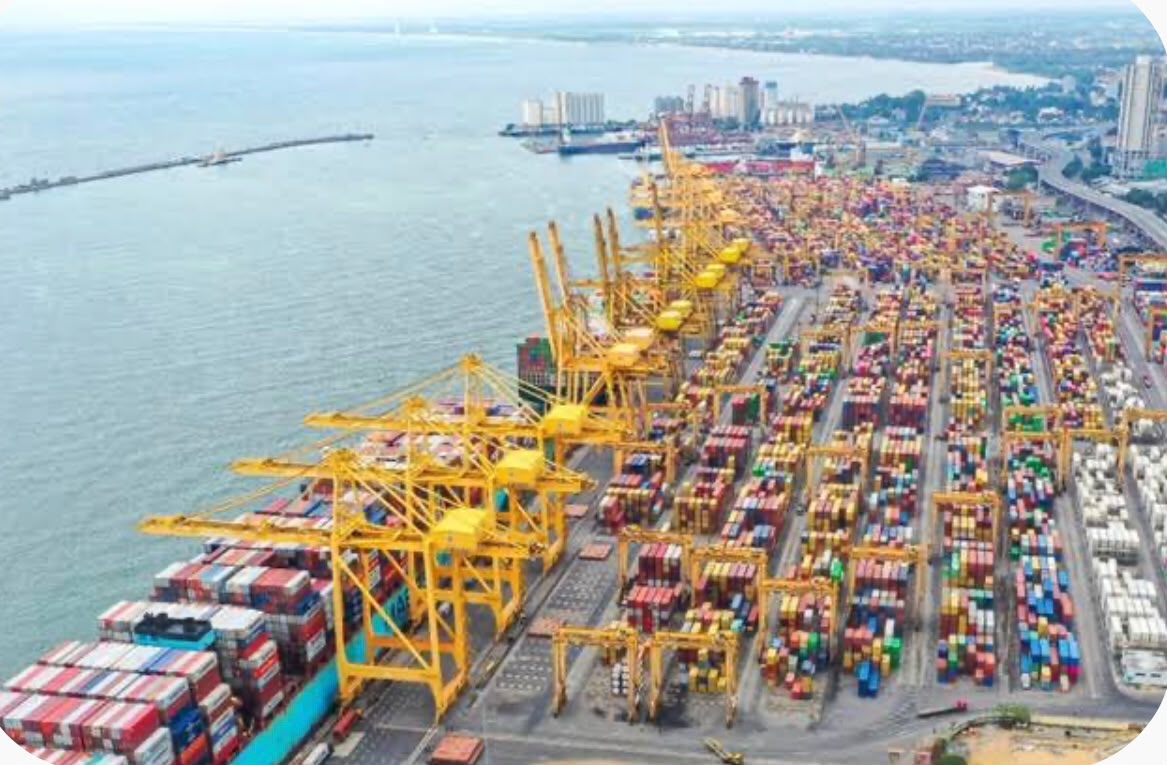
Sri Lanka imported US$16.56 billion worth of goods during the first eight months of 2026 while merchandise exports amounted to US$9.38 billion. Imports increased 24.1 percent. Exports increased just 3.3 percent. The result is a US$7.2 billion trade deficit and a question Sri Lanka has been avoiding for decades: what exactly are we going to sell to pay for everything we want to buy?
Economic recovery has reopened Sri Lanka’s appetite for imports with remarkable speed. During January to August, merchandise imports reached approximately US$16.56 billion while merchandise exports amounted to around US$9.38 billion. The difference between the two was approximately US$7.2 billion. A trade deficit is not automatically evidence of economic failure. Growing economies frequently import heavily because businesses buy machinery, raw materials and equipment while consumers regain sufficient income and confidence to purchase goods that were previously unaffordable or unavailable. Imports can therefore be a consequence of recovery rather than evidence against it.
The problem lies in the relative speed of the two sides.
Submit Your Press Release
Get your company news, announcements, launches, appointments and events in front of a wider audience.


Sri Lanka’s imports increased 24.1 percent during the first eight months of 2026 compared with the corresponding period last year. Merchandise exports increased only 3.3 percent. The trade deficit consequently widened from approximately US$4.3 billion during January to August 2025 to approximately US$7.2 billion this year.
That is a deterioration of almost US$3 billion in eight months.
Energy explains a substantial part of it. Sri Lanka spent approximately US$4 billion importing fuel during the first eight months, an increase of 61.6 percent from the same period last year as the Middle East crisis drove petroleum costs higher.
Vehicles matter too. Sri Lanka spent approximately US$1.68 billion importing motor vehicles during January to August following the reopening of vehicle imports. Those purchases represent pent-up demand accumulated during several years in which imports were restricted.
Neither category can simply be wished away. Sri Lanka requires petroleum and people are entitled to purchase vehicles where the law permits them to do so. Businesses also require imported machinery, intermediate goods and raw materials to produce what they sell locally and overseas.
The concern is the weakness on the other side of the equation.
Sri Lanka has spent decades talking about becoming an export economy, moving into higher-value production, attracting foreign investment and exploiting its location between major global markets. Yet merchandise export growth of 3.3 percent while imports expand by more than 24 percent suggests that the country’s capacity to consume foreign goods is recovering considerably faster than its capacity to sell goods overseas.
That model can survive only if the missing foreign currency comes from somewhere else.
Fortunately, much of it does.
Workers’ remittances reached approximately US$6.1 billion during the first eight months of the year, increasing almost 20 percent. Tourism generated another US$2.1 billion despite earnings being lower than during the corresponding period last year. Sri Lanka also earns foreign currency through other services and financial flows.
That is why the merchandise trade deficit should not be confused with the country’s entire external position.
But it raises an uncomfortable structural question. Sri Lanka increasingly relies upon people working overseas and tourists visiting the country to compensate for a persistent inability to export enough merchandise to pay for what it imports.
Remittances are enormously valuable, but they represent income earned by Sri Lankans working somewhere else. Tourism is similarly important but vulnerable to geopolitical shocks, recessions, pandemics and perceptions of safety. Neither removes the need for a stronger export-producing economy at home. There is also the composition of imports to consider. A dollar spent importing machinery that allows a Sri Lankan factory to manufacture US$2 of exports is very different from a dollar spent importing something that is simply consumed. Both appear as imports, but their future economic consequences are completely different.
That is why the US$7.2 billion number requires analysis rather than alarm.
If the widening deficit is partly the consequence of businesses rebuilding productive capacity after several suppressed years, some of today’s imports may contribute to tomorrow’s exports and growth. If it principally reflects a return to consumption financed by remittances, borrowing and other foreign-currency inflows, Sri Lanka may simply be rebuilding an old vulnerability.
The economic crisis temporarily solved Sri Lanka’s trade problem in the most brutal way possible. The country stopped importing many things because it did not have the dollars to buy them.
That was never reform. It was poverty.
Real reform is considerably harder. Sri Lanka must be able to afford normal imports because it generates sufficient foreign currency to pay for them.
Imports increasing 24 percent tells us that normal economic life is returning.
Exports increasing 3 percent tells us how much work remains.