
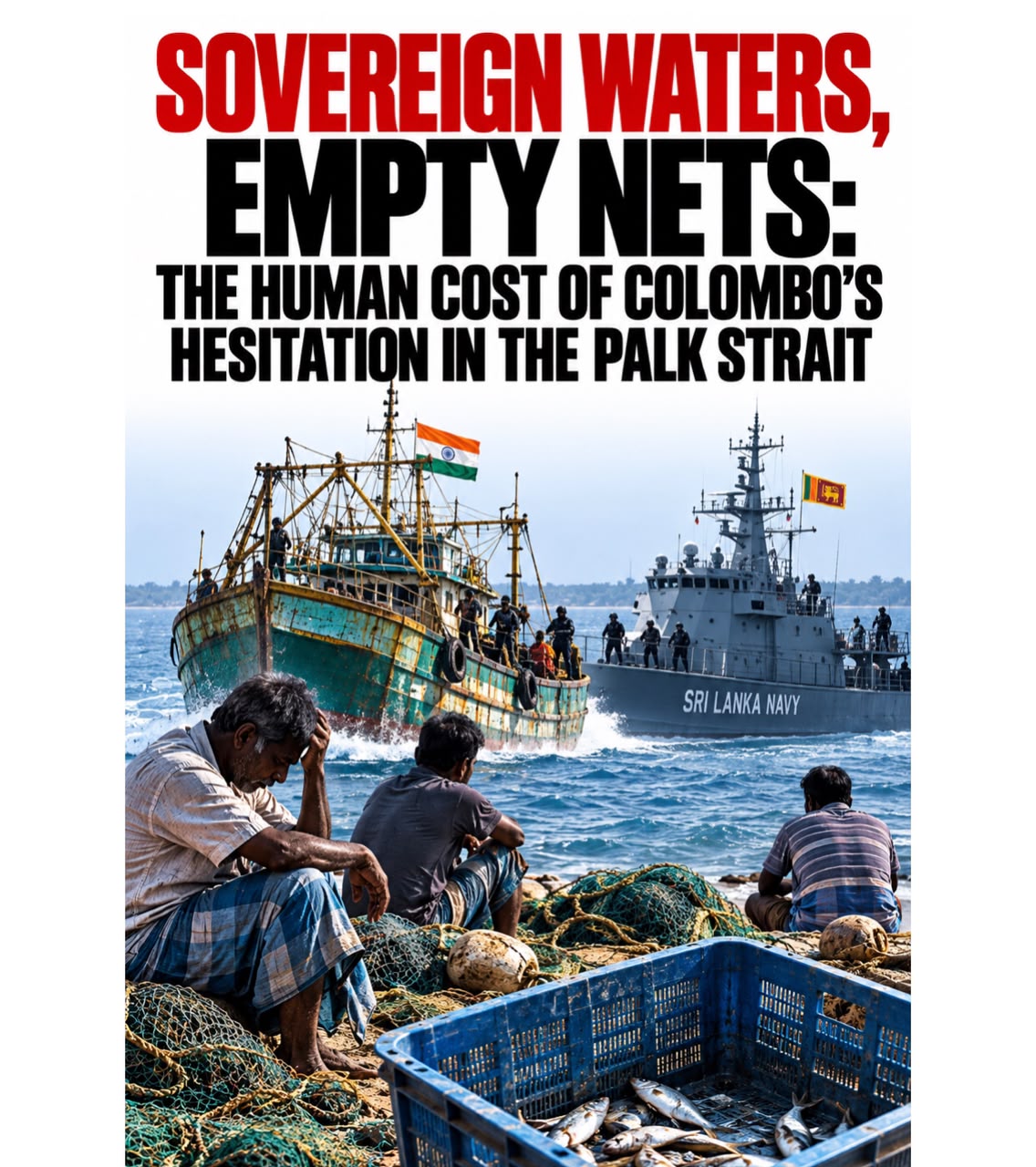
Every few weeks, the Sri Lanka Navy releases a predictable briefing to the press: a steel-hulled Indian trawler intercepted off Delft Island or Kankesanthurai, a handful of fishermen detained, and fishing gear impounded for judicial review. Official spokespersons tout these operational routine updates as evidence of active maritime vigilance. Yet, for Northern Sri Lankan fishing communities who watch their livelihoods dragged away in real time, the policy framework governing Indian poaching reads less like a decisive defense of territorial sovereignty and more like a carefully managed diplomatic compromise.
The crisis revolves around industrial bottom-trawling across the shallow waters of the Palk Strait. Steel-hulled mechanized fleets operating out of Tamil Nadu routinely sweep across the International Maritime Boundary Line, dragging heavy iron boards and fine-mesh nets along the ocean floor. The practice does not simply harvest fish. It crushes fragile reef ecosystems, tears up seagrass beds, and shreds the modest drift nets belonging to local Sri Lankan fishers. For families who spent years rebuilding their lives after decades of civil war sea restrictions, every torn net represents weeks of debt and empty dinner tables.
The Sri Lankan government remains caught in a painful paradox. Domestic law strictly bans bottom-trawling, allowing courts to confiscate illegal vessels and impose heavy fines on foreign skippers. In practice, however, enforcement stays carefully calibrated to avoid disturbing delicate diplomatic relations with New Delhi. Despite endless joint working group meetings and ministerial summits, state policy relies on periodic naval arrests as a temporary fix rather than enforcing an unyielding boundary line.
Submit Your Press Release
Get your company news, announcements, launches, appointments and events in front of a wider audience.


This gap between policy and reality falls hardest on working households across Jaffna, Kilinochchi, and Mannar. When a local fisher loses thousands of rupees in equipment overnight, there is no state insurance program or immediate relief fund to cushion the blow. Instead, local fishing unions are repeatedly asked to exercise patience while diplomats balance bilateral trade deals, regional security initiatives, and foreign aid packages with their northern neighbour.
A honest look at the situation shows that detaining a fraction of invading trawlers does little to stop the ruin of northern coastal communities. True sovereignty is not measured by navy photo opportunities or diplomatic press briefings. It is measured by whether a fisherman can launch his wooden boat at dusk and return at dawn with his nets intact and enough catch to feed his family. Until Colombo aligns its executive resolve with the daily survival of its northern citizens, the Palk Strait will remain a stretch of sea where ordinary lives are traded away for administrative comfort.



