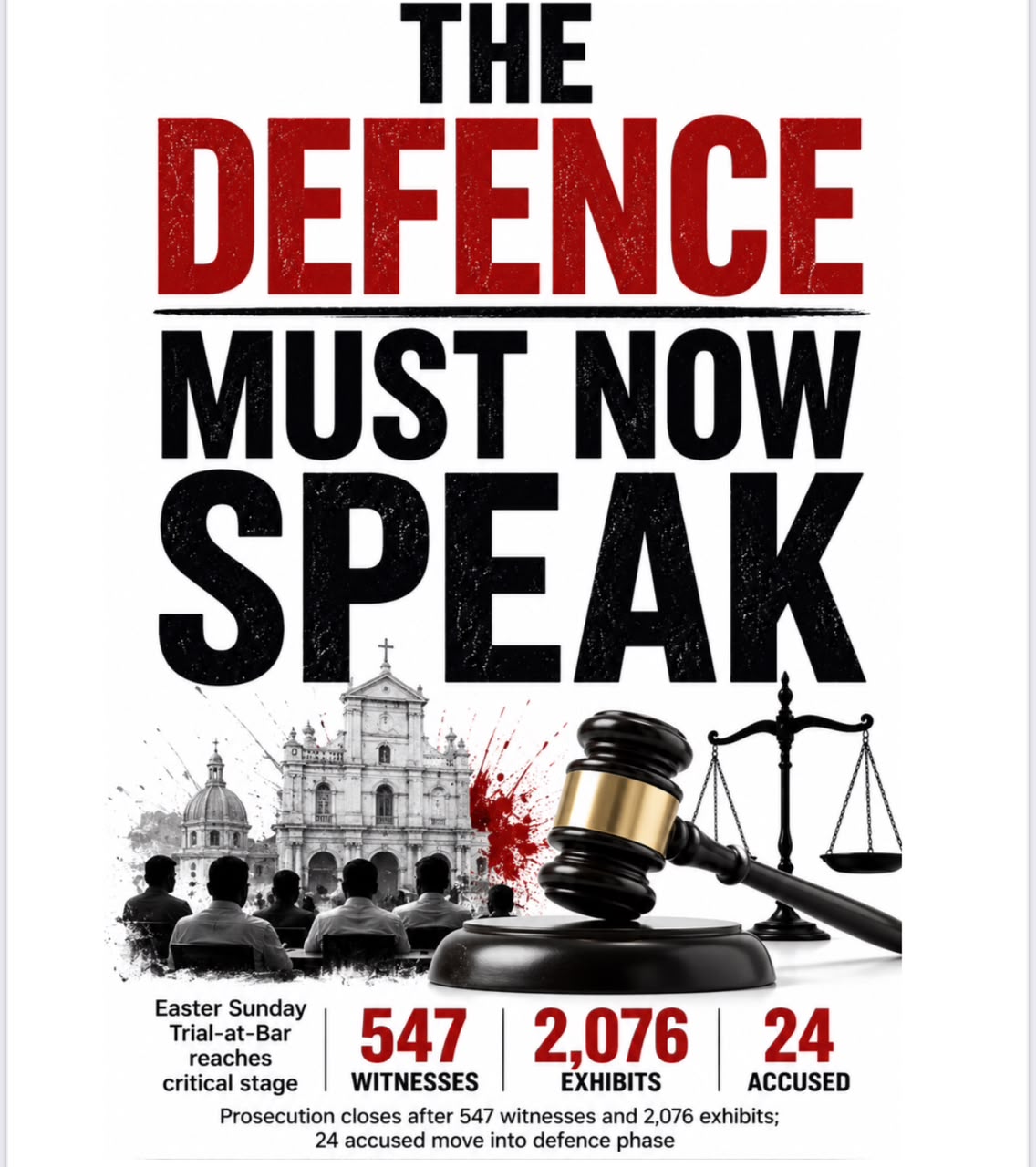
Easter Sunday Trial-at-Bar reaches critical stage as prosecution closes after 547 witnesses and 2,076 exhibits; 24 accused move into defence phase
COLOMBO, Sunday. One of the most consequential criminal trials arising from the 2019 Easter Sunday terror attacks enters a critical new phase tomorrow when the defence case is due to begin before the Colombo Permanent High Court Trial-at-Bar, following the conclusion of a prosecution that called 547 witnesses and produced 2,076 exhibits.
The case involves 24 accused facing thousands of charges arising from the coordinated Easter Sunday attacks which struck churches and luxury hotels on April 21, 2019, killing hundreds and injuring many more.
Submit Your Press Release
Get your company news, announcements, launches, appointments and events in front of a wider audience.


The Attorney General originally filed 23,270 charges, including allegations of conspiracy connected with the attacks. Twenty-five accused were originally indicted, but the proceedings are now continuing against 24 following the death of one accused.
The prosecution formally closed its case on Thursday, August 13, bringing to an end the evidentiary phase that began before the Trial-at-Bar in October 2023.
The three-member bench comprises Presiding Judge Navaratne Marasinghe and Judges Sujeewa Nissanka and Ramanathan Kannan.
With the prosecution case concluded, the proceedings now move into the defence phase, marking an important legal threshold in a trial that has taken years to reach this point.
The distinction is important.
Being called upon to present a defence does not amount to a finding that any accused is guilty. At the close of a prosecution case, the legal question is whether sufficient evidence has been presented to require an accused to answer the case. The ultimate question of guilt beyond reasonable doubt is determined only after the trial has run its full course.
That principle assumes particular importance given the scale, complexity and enormous public interest surrounding the Easter Sunday proceedings.
The attacks remain among the darkest events in Sri Lanka’s recent history. Churches celebrating Easter Mass and major Colombo hotels were struck in a coordinated series of suicide bombings, leaving families across Sri Lanka – and overseas – searching not merely for accountability but for a complete explanation of how such an operation was conceived, organised and allowed to proceed.
The criminal proceedings against the 24 accused are also distinct from other Easter Sunday cases and continuing investigations.
Earlier this month, former Defence Secretary Hemasiri Fernando and former Inspector General of Police Pujith Jayasundara were convicted and sentenced to death in separate proceedings concerning their failure to act upon intelligence warnings ahead of the attacks.
Other investigations concerning the circumstances surrounding the bombings have continued separately.
Tomorrow’s proceedings therefore represent another important milestone rather than the conclusion of Sri Lanka’s long search for answers over Easter Sunday.
For nearly three years, the Trial-at-Bar has heard the prosecution’s evidence. Hundreds of witnesses have testified and thousands of documents and other exhibits have been placed before court.
Now the prosecution has finished speaking.
The defence must answer.
And only when it has done so will the Court ultimately be called upon to decide whether the prosecution has proved its case against each accused beyond reasonable doubt.