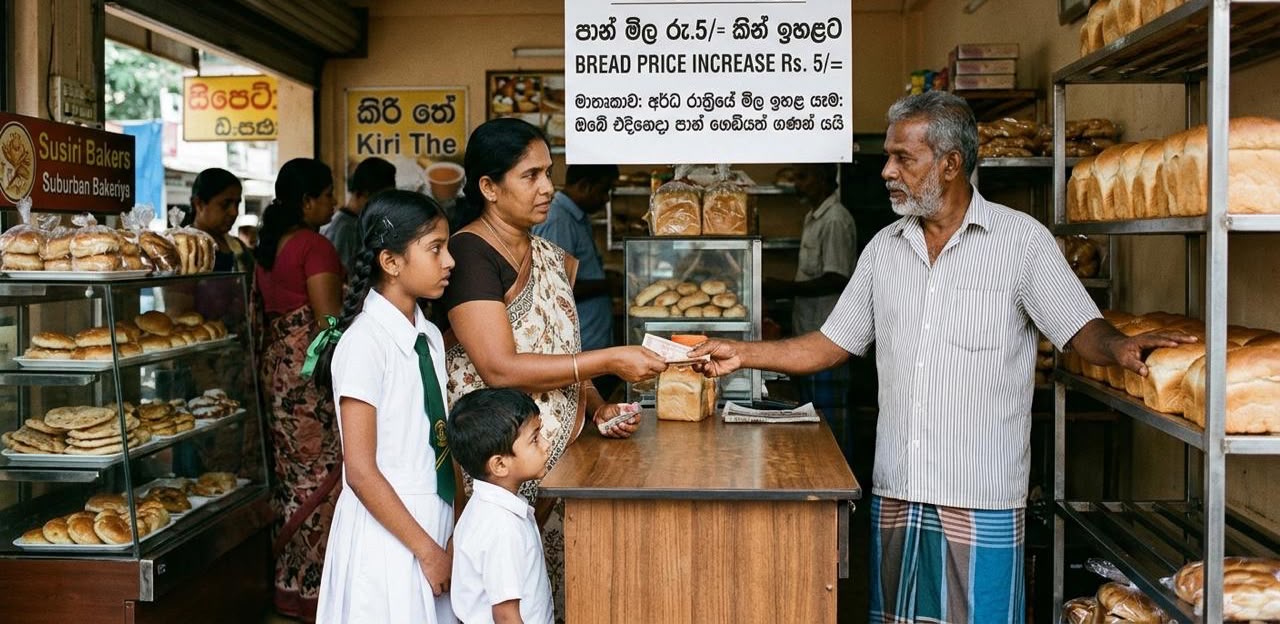
Starting today, your morning routine costs more. The All Ceylon Bakery Owners’ Association officially raised the price of a standard 450-gram loaf by Rs. 5, with the same flat increase applied across buns, rolls, and other bakery staples. For households across Sri Lanka, this change directly affects daily meal planning, especially for families relying on wheat-based foods as a quick, accessible option alongside rice.
To understand why this is happening, it helps to look beyond the bakery counter. Small and medium bakeries are not raising prices in isolation; they sit at the end of a long supply chain heavily exposed to broader economic factors. Sri Lanka relies almost entirely on imported wheat grain, meaning domestic flour prices are directly tied to foreign exchange rates, global commodity market shifts, and import duties. When global shipping costs shift or wheat prices fluctuate on international exchanges, local millers adjust their prices, which immediately trickles down to neighborhood bakeries.
Energy and operational overheads form the second major pressure point. Running commercial ovens and delivery vehicles requires steady supplies of LP gas, electricity, and diesel. Recent tariff restructuring across utility sectors and fuel pricing formulas mean that bakery owners face higher monthly bills to keep their doors open. For a small bakery operating on tight margins, absorbing higher flour, gas, and transport costs without adjusting retail prices eventually leads to business closure.
Submit Your Press Release
Get your company news, announcements, launches, appointments and events in front of a wider audience.


The broader challenge for Sri Lanka lies in how these incremental price shifts compound for everyday consumers. While a Rs. 5 increase on a single item appears small on paper, bread and wheat products represent a core calorie source for working professionals, school children, and daily wage earners. When basic food staples face repeated cost adjustments driven by global supply realities and domestic input costs, household budgets have to stretch further to cover the exact same essential meal.
Addressing the root cause requires long-term economic stability, including stable foreign exchange management, predictable agricultural import policies, and sustainable commercial energy pricing. Until those structural pressures normalize throughout the supply chain, local bakeries will continue to reflect the real, unfiltered cost of producing basic food on the island.