
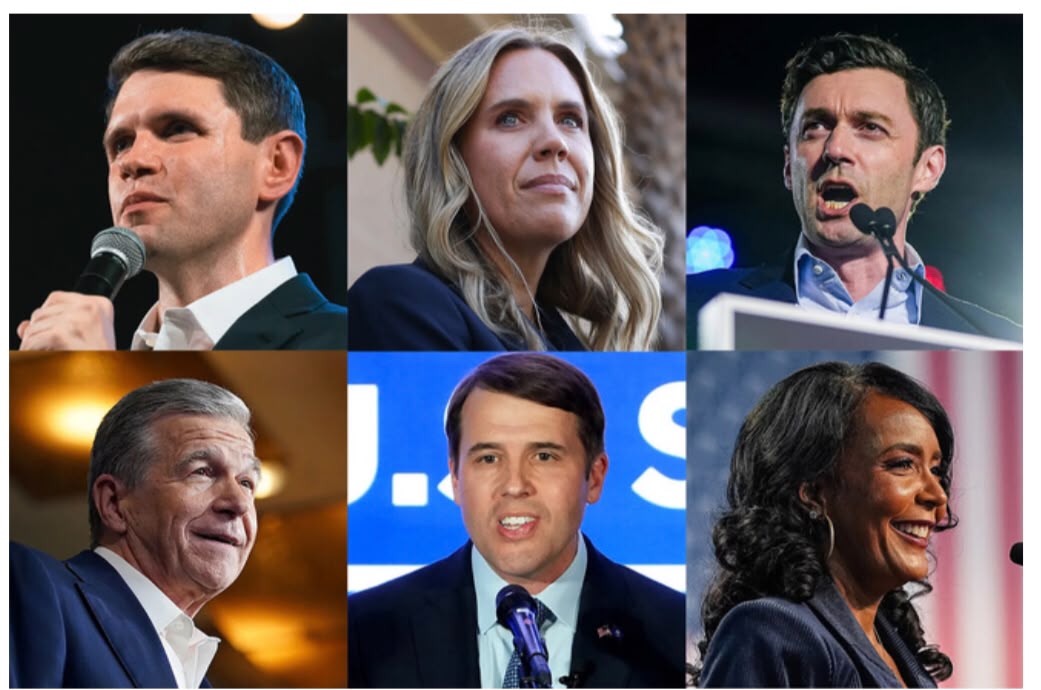
If American politics is a theater of public grievances, election night pulled back the curtain to reveal a crowd that finally got tired of the noise. The official vote tallies from the 2026 midterm elections handed the Democratic Party a sweeping mandate, delivering the House of Representatives back into Democratic hands, securing crucial Senate seats in battleground states, and leaving the White House scrambling to spin a mathematical rout as a mere technicality.
The undisputed main event of the night unfolded in Michigan, where progressive leader and former Detroit health commissioner Dr. Abdul El-Sayed claimed victory in the race for the United States Senate. Facing off against Republican contender Mike Rogers for the seat vacated by retiring Senator Gary Peters, El-Sayed crossed the finish line with 2,497,852 votes—capturing 52.5 percent of the total turnout. Rogers trailed with 2,162,890 votes, or 45.5 percent. The remaining ballots went to minor candidates, leaving El-Sayed with a massive margin of over 334,000 votes.
When El-Sayed takes the oath of office in January, he will become the first Muslim elected to the United States Senate in American history. But the victory was as much a triumph over political insult as it was over raw vote totals. During the closing weeks of the campaign, Vice President JD Vance flew into Michigan to rally behind Rogers, famously calling El-Sayed a “little weasel” who ought to “shut his mouth”. Vance went further, claiming that El-Sayed was ashamed of American heritage and hated things near and dear to local voters, like Mackinac Island and high school football.
Submit Your Press Release
Get your company news, announcements, launches, appointments and events in front of a wider audience.


El-Sayed’s response at a rally of 1,300 supporters in Marquette was an instant classic in political clapback. Refusing to take the bait quietly, El-Sayed lit into the Vice President’s Buckeye roots. “J.D. Vance called me a little weasel today,” El-Sayed told the cheering crowd. “I’m like, no, no, no. What you’re talking about is a fucking Wolverine. You can take your Buckeye and go shove it somewhere else, Ohio. Here, we might be Wildcats, we might be Spartans, we might be Wolverines, but we will never be Buckeyes.”
Taking direct aim at Vance’s lectures on patriotism, El-Sayed added a sharp reality check for the out-of-state Vice President. “In America, we don’t discriminate against people for who they love, how they identify, how they pray, or the color of their skin. We believe in an America big enough for all of us. So don’t you dare come from Ohio to lecture me about America. You don’t know a damn thing about America. Never have, never will.”
The political hit job collapsed, and the voters of Michigan agreed with the Wolverine.
Across the rest of the national map, the Democratic wave washed over critical suburban corridors. In the House of Representatives, Democrats comfortably cleared the 218-seat line, securing 225 seats to the Republican party’s 139 in preliminary tallies. Suburbs across Pennsylvania, Virginia, New York, and California that had strayed toward Republicans in prior years swung back hard toward Democratic candidates. Voters cited unrelenting inflation, high healthcare costs, and constant executive overreach as their primary reasons for flipping back. In the Senate, Democrats held their defensive line while picking up key battlegrounds, effectively building a hard legislative brick wall right across the Oval Office doorway.
Naturally, the White House reaction to these uncompromising numbers was a masterclass in post-election copium. Having declared just hours before poll closures that this was “the most important midterm election in our lifetime,” President Donald Trump woke up to a reality he clearly had no interest in accepting. Addressing reporters and taking to social media in a late-night marathon, the President completely sidestepped the actual vote tallies to launch a familiar tirade of excuses, pointing fingers at “crooked voting systems,” biased media coverage, and alleged disloyalty within his own party.
Before the first polls had even closed, Trump had already signaled his copium strategy to reporters, declaring, “I think we’re going to do great. But if we didn’t win, I veto everything. I’ll be vetoing, vetoing… I guess I’ll become Mr. Veto.”
Instead of reflecting on why suburban voters abandoned the Republican ticket, the President’s messaging team scrambled to put lipstick on a pig. Surrogates flooded cable news channels emphasizing narrow victories in deep-red rural enclaves, claiming the MAGA base had turned out in numbers never seen before and dismissing the massive losses in Congress as a standard historic midterm slump that every sitting president faces.
Yet, for all the political posturing and talk of becoming “Mr. Veto,” rhetoric does not change who holds the gavel.
When the new Congress convenes in January, the political dynamic in Washington will undergo an absolute shock. The new Democratic majority in the House will take over every committee chair, hold every subpoena pen, and control the purse strings of the federal budget. The administrative free ride is officially over. As the dust settles on the 2026 midterms, the takeaway is simple: you can call your opponents weasels and blame the media all night long, but when the vote count comes in, the math always wins.



