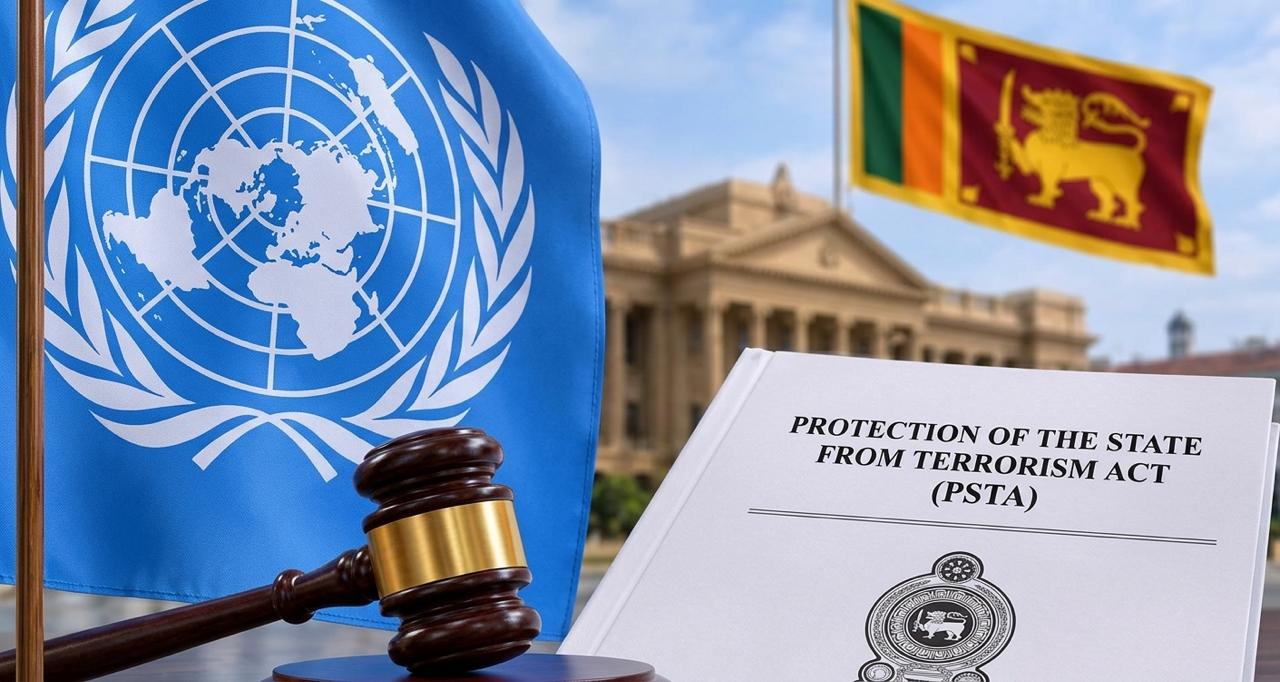
In a detailed 31-page joint intervention, five United Nations human rights mandates have formally urged the Sri Lankan government to halt the proposed Prevention of Organised Crimes Bill. The diagnosis from international experts is unequivocal: beneath official assurances of tackling criminal syndicates, the draft legislation threatens to entrench arbitrary executive detention, state coercion, and systemic abuses.
The primary alarm point for international watchdogs is the bill’s sweeping expansion of police custody powers. The text allows authorities to hold suspects for up to 72 hours before presenting them to a magistrate, while ministry-issued detention orders can keep individuals locked inside police stations for up to a full year. UN rapporteurs highlighted that prolonged, isolated detention in police facilities significantly increases the risk of torture, forced confessions, and procedural denial of basic legal rights.
Equally concerning to international legal observers is a drastic shift in evidentiary safeguards. Statements made to senior police officers would become admissible in court as evidence against the accused, effectively reversing the burden of proof. If a detainee alleges that a confession was extracted through violence or intimidation, the responsibility falls squarely on the accused to prove coercion while remaining behind bars. Human rights groups have noted that this mechanism mirrors some of the most criticized features of the Prevention of Terrorism Act.
Submit Your Press Release
Get your company news, announcements, launches, appointments and events in front of a wider audience.


The scrutiny extends beyond station cells to civic freedoms. The draft law grants law enforcement broad, unchecked authority to intercept private communications, compel data decryption, and access telecommunications records without judicial warrants. Furthermore, journalists face potential criminal penalties for reporting on relevant court proceedings without prior judicial authorization. Sweeping definitions of “organized criminal groups” create additional risks that trade unions, student movements, and peaceful protest networks could be ensnared in state dragnets.
While the UN mandate holders recognize that countering organized crime remains a legitimate security goal, they stress that legislation must align with Sri Lanka’s international commitments.
With international bodies, domestic rights commissions, and civil society groups advocating a comprehensive overhaul, Sri Lanka faces a clear choice: heed international warnings or allow crime-fighting tools to compromise constitutional protections.