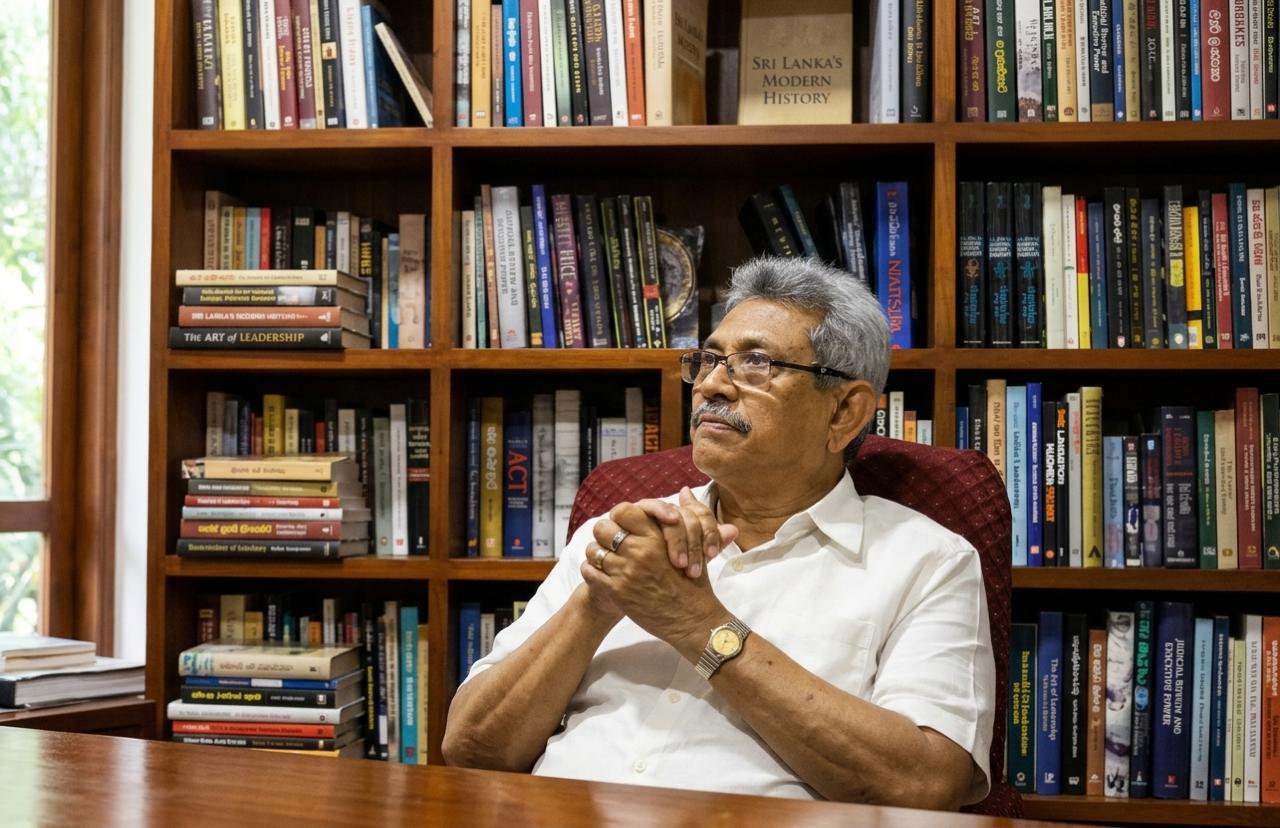
Former President Gotabaya Rajapaksa’s attempt to unseal his travel documents has run straight into a wall of judicial skepticism and bureaucratic hesitation. The Colombo Fort Magistrate’s Court deferred its ruling on Rajapaksa’s application to lift his overseas travel ban until November 25, leaving the former chief executive grounded while state investigators struggle to articulate their own conditions.
The legal friction stems from ongoing investigations into the 2019 Easter Sunday terror attacks. In June 2026, the court imposed travel restrictions on Rajapaksa and several former intelligence heads as investigators probed potential security lapses and intelligence failures surrounding the bombings. Months later, the former President filed a motion seeking permission to travel abroad, prompting the court to demand explicit clarification from the Criminal Investigation Department (CID) regarding their stance.
When CID officials appeared before Fort Magistrate Pasan Amarasena, their position offered a masterclass in institutional fence-sitting. State investigators voiced grave concerns that should Rajapaksa board an outbound flight, he might simply decide not to return to face ongoing inquiries. Yet, in the same breath, the CID informed the court it would not oppose lifting the ban provided robust legal safeguards were established to guarantee his return. In short: they were happy to let him fly, provided someone else guaranteed he would land back in Colombo.
Submit Your Press Release
Get your company news, announcements, launches, appointments and events in front of a wider audience.


The Magistrate was quick to point out the procedural absurdity of the request. Observing that Gotabaya Rajapaksa has not been formally named as an accused suspect in the main proceedings, Magistrate Amarasena noted that the court possesses no legal mechanism to enforce a return guarantee on an unindicted citizen once an overseas travel ban is lifted. The court cannot invent legal sureties out of thin air to cover for prosecutorial hesitation.
The legal impasse highlights the government’s delicate balance in handling high-profile investigations linked to the 2019 tragedy. While the CID wants to preserve its investigative footprint, it has stopped short of formal indictments. By deferring the order to November 25, the court has thrown the ball squarely back into the state’s court: either produce formal legal grounds to justify restricting a former president’s movement, or accept that an unindicted citizen cannot be held in perpetual transit limbo.