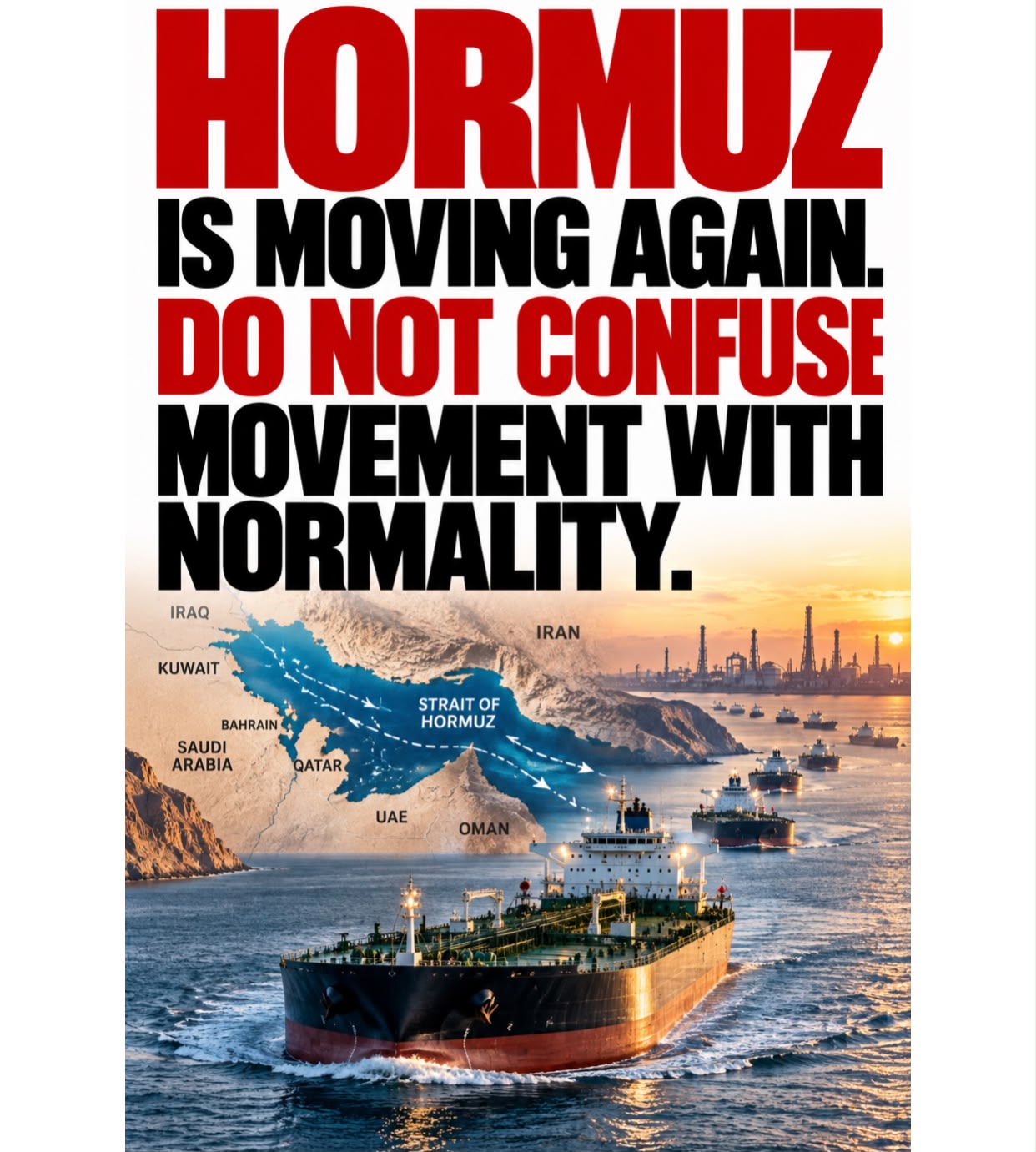
More Middle Eastern oil is finding its way to market and Saudi Arabia has sharply increased exports through the Gulf. Yet ordinary commercial traffic through the Strait of Hormuz remains a fraction of what it was before the conflict. The oil may be moving, but one of the world’s most important waterways is nowhere near normal.
There are finally signs of life around the Strait of Hormuz, but anyone tempted to declare the crisis over should look carefully at what is actually happening.
Saudi Arabia has dramatically increased the amount of crude leaving its eastern terminals, while producers, traders and shipping companies have developed increasingly elaborate methods of getting oil through or around the world’s most important energy chokepoint. Middle Eastern crude exports have consequently recovered substantially during September.
Submit Your Press Release
Get your company news, announcements, launches, appointments and events in front of a wider audience.


That is the good news.
The uncomfortable news is that much of this recovery is being achieved through extraordinary arrangements that would scarcely have been contemplated before the conflict. Ships are being repositioned, oil is being transferred from one tanker to another, cargoes are being rerouted and Saudi Arabia is simultaneously trying to maintain alternative outlets on both sides of the Arabian Peninsula.
The numbers demonstrate the scale of the disruption. Before the conflict escalated at the end of February, roughly 125 large commercial vessels crossed Hormuz each day. On September 21, preliminary shipping data recorded only two commodity vessels making the crossing, down from ten the previous day. Some vessels may have travelled without transmitting their normal tracking signals, but even allowing for that, the comparison with pre-war traffic is extraordinary.
Saudi Arabia has nevertheless found ways of pushing significantly more crude towards buyers. After disruption to its East-West pipeline and Red Sea exports, Saudi Aramco loaded around 14 million barrels onto seven very large crude carriers at Ras Tanura on September 20. Saudi oil flows through Hormuz subsequently rose towards 2.9 million barrels a day, compared with around 700,000 barrels a day during August.
That recovery matters to Sri Lanka.
Every additional barrel reaching the international market eases some of the supply pressure that helped drive oil prices above US$100. Sri Lanka imports virtually all the petroleum it consumes, meaning that developments thousands of kilometres away eventually arrive at our fuel pumps, foreign exchange market and Treasury.
But increased oil exports should not be confused with restored freedom of navigation.
Two vessels were struck while travelling through the Strait on September 21. Both continued their journeys, but the incidents underline the risk still confronting shipowners, crews and insurers. The normal commercial calculation of how quickly and cheaply cargo can be moved has been replaced by another question: whether the ship and its crew can make the voyage safely.
The situation has produced an extraordinary distortion in the tanker market. Demand for very large crude carriers has surged as producers attempt to move greater quantities under difficult conditions. Freight rates have risen sharply and the Gulf of Oman has become an enormous transfer point for oil emerging from the Gulf.
This is why the headline price of crude never tells Sri Lanka the whole story.
The country ultimately pays not merely for petroleum but for getting petroleum here. Freight, insurance, risk premiums, financing and the exchange rate all find their way into the landed cost. A barrel becoming slightly cheaper while transportation becomes substantially more expensive does not provide the relief consumers might expect.
Hormuz therefore remains the number to watch.
Iran has indicated that reopening arrangements could form part of negotiations with Washington, but the diplomatic positions remain far apart. Until merchant ships can again pass routinely through the Strait without elaborate precautions, expensive insurance or fear of attack, the global energy system will continue operating with one of its principal arteries partially constricted.
For Sri Lanka, the temptation will be to celebrate every decline in Brent crude as evidence that the worst has passed. That would be premature.
The oil is moving again, but it is moving through a system held together by rerouting, tanker transfers, additional costs and political uncertainty. Normality will arrive when those extraordinary measures are no longer necessary.
Be that as it may, Hormuz has taught the world something useful during the past seven months. A shipping lane does not have to be completely closed to inflict enormous economic damage. It merely has to become dangerous enough that everybody starts charging more to use it.